


Do flat washers affect the torque of a bolt?
Jul 03, 2025
Leave a message
In the realm of mechanical engineering and fastening systems, bolts and washers are ubiquitous components. Flat washers, in particular, are simple yet crucial elements that often accompany bolts in various applications. A question that frequently arises among engineers, mechanics, and DIY enthusiasts is whether flat washers affect the torque of a bolt. As a supplier of flat washers, I've encountered this query numerous times and have delved into the science behind it to provide a comprehensive answer.
Understanding Torque and Its Significance
Before we explore the relationship between flat washers and bolt torque, it's essential to understand what torque is and why it matters. Torque, often referred to as the "twisting force," is the measure of the force that can cause an object to rotate around an axis. In the context of bolts, torque is applied to tighten the bolt, creating a clamping force that holds two or more components together.
The proper application of torque is critical for several reasons. Insufficient torque can result in a loose connection, which may lead to vibration, noise, and ultimately, component failure. On the other hand, excessive torque can cause the bolt to stretch or break, damage the mating surfaces, or even strip the threads. Therefore, achieving the correct torque is essential for ensuring the safety, reliability, and longevity of a fastening system.
The Role of Flat Washers
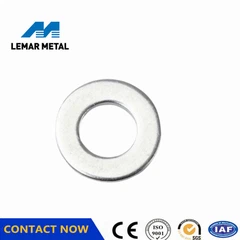
Flat washers are thin, flat discs with a hole in the center, designed to distribute the load of a bolt or nut over a larger area. They serve several important functions in a fastening system:
- Load Distribution: By spreading the load over a larger surface area, flat washers help prevent damage to the mating surfaces, such as cracking or deformation.
- Friction Reduction: Flat washers can reduce the friction between the bolt head or nut and the mating surface, making it easier to achieve the desired torque.
- Alignment: They can help align the bolt and nut, ensuring a proper fit and preventing misalignment.
- Corrosion Protection: In some cases, flat washers can act as a barrier between the bolt and the mating surface, protecting against corrosion.
How Flat Washers Affect Bolt Torque
Now, let's address the question at hand: Do flat washers affect the torque of a bolt? The answer is yes, but the extent of the effect depends on several factors, including the type of washer, the material of the washer and the mating surfaces, the surface finish, and the tightening method.
Friction and Torque
One of the primary ways flat washers affect bolt torque is through friction. When a bolt is tightened, the friction between the bolt head or nut and the mating surface resists the rotation of the bolt, requiring additional torque to achieve the desired clamping force. Flat washers can reduce this friction by providing a smooth, low-friction surface between the bolt and the mating surface.
For example, a stainless steel flat washer may have a lower coefficient of friction than a steel mating surface. By placing a stainless steel washer between the bolt head and the mating surface, the overall friction in the system is reduced, allowing the bolt to be tightened with less torque. This can be particularly beneficial in applications where high torque is required, as it can help prevent over-tightening and reduce the risk of bolt failure.
Washer Material and Hardness
The material and hardness of the flat washer can also affect the torque required to tighten a bolt. Softer materials, such as aluminum or brass, may deform more easily under load, increasing the friction between the washer and the mating surface. This can result in a higher torque requirement to achieve the desired clamping force.
On the other hand, harder materials, such as carbon steel or stainless steel, are less likely to deform and may provide a more consistent friction coefficient. This can make it easier to achieve the correct torque and ensure a reliable connection. For instance, Carbon Steel Washers are known for their high strength and durability, making them a popular choice for applications where high torque is required.
Surface Finish
The surface finish of the flat washer and the mating surfaces can also have a significant impact on torque. A smooth, polished surface finish will generally have a lower coefficient of friction than a rough or textured surface. Therefore, using flat washers with a smooth surface finish can help reduce the torque required to tighten a bolt.
In addition, the surface finish can affect the wear and corrosion resistance of the washer. A washer with a corrosion-resistant coating, such as zinc or chrome plating, can help protect the washer and the mating surfaces from rust and corrosion, ensuring a long-lasting connection.
Tightening Method
The method used to tighten the bolt can also influence the effect of flat washers on torque. Manual tightening methods, such as using a wrench or a socket, rely on the operator's judgment and experience to apply the correct torque. In these cases, the use of flat washers can help reduce the friction and make it easier to achieve the desired torque.
However, in applications where precise torque control is required, such as in automotive or aerospace industries, a torque wrench or a power tool with a torque control feature is typically used. These tools are designed to apply a specific amount of torque, regardless of the friction in the system. In such cases, the effect of flat washers on torque may be less significant, as the torque is controlled by the tool rather than the friction between the bolt and the mating surface.
Practical Considerations
When using flat washers in a fastening system, it's important to consider the following practical factors:
- Washer Size and Thickness: The size and thickness of the flat washer should be selected based on the size and type of the bolt, as well as the application requirements. Using a washer that is too small or too thin may not provide sufficient load distribution, while a washer that is too large or too thick may increase the overall height of the fastening system and cause clearance issues.
- Washer Type: There are several types of flat washers available, including plain washers, spring washers, and lock washers. Each type has its own unique characteristics and applications. For example, spring washers are designed to provide a spring force that helps prevent the bolt from loosening due to vibration, while lock washers are used to prevent the nut from rotating.
- Installation Guidelines: It's important to follow the manufacturer's installation guidelines when using flat washers. This may include specific torque values, tightening sequences, and lubrication requirements. Failure to follow these guidelines can result in improper installation, reduced performance, and potential safety hazards.
Conclusion
In conclusion, flat washers can have a significant impact on the torque of a bolt, primarily through their effect on friction. By reducing the friction between the bolt and the mating surface, flat washers can help make it easier to achieve the desired clamping force with less torque. However, the extent of the effect depends on several factors, including the type of washer, the material of the washer and the mating surfaces, the surface finish, and the tightening method.
As a supplier of flat washers, we offer a wide range of high-quality Stainless Steel 304 Flat Washer and Flat Square Washer to meet the diverse needs of our customers. Our washers are available in various sizes, materials, and finishes, and are designed to provide reliable performance in a wide range of applications.
If you have any questions about flat washers or need assistance in selecting the right washer for your application, please don't hesitate to contact us. Our team of experts is always ready to help you find the best solution for your fastening needs. We look forward to the opportunity to work with you and contribute to the success of your projects.


References
- Budynas, R. G., & Nisbett, J. K. (2011). Shigley's Mechanical Engineering Design. McGraw-Hill.
- Machinery's Handbook (31st Edition). Industrial Press Inc.
- VDI 2230 - Systematic calculation of high duty bolted joints. Verein Deutscher Ingenieure.
Send Inquiry