


How do flat washers help in maintaining bolt pre - load?
Apr 24, 2026
Leave a message
Flat washers are unassuming yet indispensable components in numerous mechanical and structural applications. As a trusted flat washer supplier, I've witnessed first - hand the importance of these small parts in maintaining bolt pre - load. In this blog, we'll delve into how flat washers contribute to the upkeep of bolt pre - load and why they are a crucial choice for various projects.
Understanding Bolt Pre - Load
Before we explore the role of flat washers, it's essential to understand what bolt pre - load is. Bolt pre - load is the tension force applied to a bolt when it is tightened. This pre - load is vital as it ensures a secure connection between two or more parts by clamping them together. When a joint is under load, the pre - load counteracts external forces, preventing the joint from coming apart, loosening, or causing structural failure.


How Flat Washers Aid in Maintaining Bolt Pre - Load
1. Distributing Pressure
One of the primary functions of flat washers is to distribute the pressure exerted by the bolt head or nut evenly across the surface of the connected parts. When a bolt is tightened, the force is concentrated at the contact points between the bolt head or nut and the material. Without a flat washer, this concentrated pressure can cause several problems. The material may deform, especially if it is soft or thin. This deformation can lead to a reduction in the bolt pre - load over time as the material "creeps" or settles under the pressure.
A flat washer, however, spreads the load over a larger area. This evenly distributed pressure reduces the risk of deformation and maintains a more stable pre - load. For example, in a wooden structure, a flat washer prevents the bolt head from sinking into the wood, which could loosen the joint. Similarly, in a metal - to - metal connection, it minimizes the damage to the surface of the metal, ensuring that the pre - load remains constant.
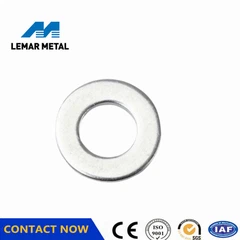
If you're looking for a high - quality flat washer to help distribute pressure, check out our Stainless Steel 304 Flat Washer. Made from durable stainless steel 304, it offers excellent corrosion resistance and can effectively distribute pressure in various applications.
2. Preventing Friction - Related Losses
Friction plays a significant role in bolt pre - load. When a bolt is tightened, a certain amount of the applied torque is used to overcome the friction between the bolt threads and the nut, as well as between the bolt head or nut and the contact surface. Over time, this friction can change due to factors such as wear, corrosion, or the presence of contaminants.
Flat washers can help reduce these friction - related issues. They provide a smooth surface between the bolt head or nut and the connected part, which can minimize the variation in friction. This consistency in friction ensures that the bolt pre - load set during the initial tightening remains more stable. For instance, in a high - vibration environment, a flat washer can prevent the loosening of the bolt caused by the changing friction conditions.
Our Stainless Steel Square Plate Washers are designed to provide a smooth contact surface. Their square shape offers additional stability and can better resist rotation, further helping to maintain the bolt pre - load in challenging conditions.
3. Compensating for Surface Imperfections
In real - world applications, the surfaces of the connected parts are rarely perfectly smooth or flat. Surface imperfections, such as machining marks, rust, or unevenness, can affect the distribution of the bolt pre - load. These irregularities can cause the load to be concentrated in certain areas, leading to premature failure of the joint.
Flat washers act as a buffer between the bolt and the rough surface. They can conform to the minor irregularities of the surface, ensuring that the pre - load is evenly distributed. This compensation for surface imperfections helps to maintain the integrity of the joint and the pre - load of the bolt.
For applications where surface imperfections are common, our Brass Flat Washer is an ideal choice. Brass is a relatively soft material that can easily adapt to the surface condition, providing a more uniform distribution of the bolt pre - load.
4. Protecting the Threads
The threads of a bolt are critical for maintaining the pre - load. If the threads are damaged, the bolt may not be able to hold the required tension, leading to a loss of pre - load. When a nut is tightened against a rough or hard surface without a flat washer, there is a risk of thread galling, which is the adhesion and seizing of the threads.
Flat washers protect the threads by acting as a barrier between the nut and the surface. They prevent direct contact between the nut and the potentially abrasive surface, reducing the likelihood of thread damage. This protection ensures that the bolt can maintain its pre - load over a longer period, contributing to the long - term reliability of the joint.
Factors Affecting the Performance of Flat Washers in Maintaining Bolt Pre - Load
While flat washers are effective in maintaining bolt pre - load, several factors can influence their performance:
1. Material Selection
The material of the flat washer is crucial. Different materials have different properties, such as hardness, corrosion resistance, and elasticity. For example, stainless steel flat washers are corrosion - resistant and suitable for outdoor or moist environments. Brass flat washers, on the other hand, are more malleable and can better conform to surface irregularities. The choice of material should be based on the specific application requirements, including the environment, the type of connected materials, and the expected load.
2. Thickness and Size
The thickness and size of the flat washer also matter. A thicker washer can typically distribute pressure more effectively, but it may also add unnecessary weight and space requirements. The outer and inner diameters of the washer should be appropriate for the bolt size and the surface area of the connected parts. A washer that is too small may not distribute the load evenly, while one that is too large may be difficult to install and may not fit properly in the assembly.
3. Installation Quality
Proper installation of the flat washer is essential for maintaining bolt pre - load. The washer should be placed correctly between the bolt head or nut and the connected part, and the bolt should be tightened to the appropriate torque. Over - tightening or under - tightening the bolt can lead to an inconsistent pre - load, which may compromise the performance of the joint.
Contact Us for Your Flat Washer Needs
As a flat washer supplier, we understand the importance of high - quality flat washers in maintaining bolt pre - load. We offer a wide range of flat washers in different materials, sizes, and shapes to meet your specific requirements. Whether you need stainless steel, brass, or other materials, we have the products to ensure the reliability of your joints.
If you're interested in learning more about our flat washers or would like to discuss a potential project, please don't hesitate to contact us. We're always ready to provide you with the best solutions and support.
Send Inquiry