

How to calculate the number of flat washers needed for a project?
Aug 04, 2026
Leave a message
Hey there! As a flat washer supplier, I often get asked about how to calculate the number of flat washers needed for a project. It's a crucial question because getting the quantity right can save you time, money, and a whole lot of hassle. In this blog post, I'll walk you through the process step by step, so you can make sure you have the perfect amount of flat washers for your next project.
Understanding the Basics of Flat Washers
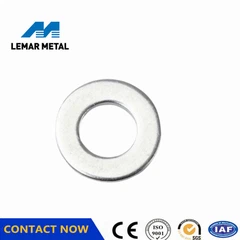
Before we dive into the calculations, let's quickly go over what flat washers are and what they do. Flat washers are thin, flat discs with a hole in the middle. They're typically used to distribute the load of a fastener, like a bolt or a nut, over a larger area. This helps prevent damage to the surface being fastened and ensures a more secure connection.
There are different types of flat washers available, each with its own unique properties and uses. For example, Stainless Steel 304 Flat Washers are known for their corrosion resistance, making them ideal for outdoor or high-moisture environments. On the other hand, Galvanized Flat Washers are coated with a layer of zinc to protect against rust and corrosion. And if you need a washer with a larger surface area, Stainless Steel Square Plate Washers might be the way to go.
Step 1: Determine the Number of Fasteners
The first step in calculating the number of flat washers needed is to figure out how many fasteners you'll be using in your project. This could be bolts, nuts, screws, or any other type of fastener that requires a washer. Count the total number of fasteners you'll need and write it down.


For example, let's say you're building a wooden deck and you need to use 50 bolts to secure the boards. In this case, you'll need at least 50 flat washers.
Step 2: Consider the Type of Joint
The type of joint you're using can also affect the number of washers you need. There are two main types of joints: permanent and non-permanent.
- Permanent Joints: In permanent joints, the fasteners are tightened and left in place. For these types of joints, you'll typically need one washer per fastener. This helps distribute the load evenly and prevents the fastener from loosening over time.
- Non-Permanent Joints: Non-permanent joints are those that need to be disassembled and reassembled, such as in machinery or equipment. In these cases, you might want to use two washers per fastener. One washer is placed under the head of the fastener, and the other is placed under the nut. This provides extra protection and helps prevent the fastener from coming loose.
Step 3: Account for Spares
It's always a good idea to have a few extra washers on hand in case something goes wrong. Things like damaged washers, incorrect sizing, or unexpected changes in the project can all lead to the need for additional washers. As a general rule, I recommend adding an extra 10% to 15% to your total washer count to account for spares.
Using our previous example of the wooden deck, if you need 50 washers for the bolts, you might want to order 55 to 58 washers to have some spares.
Step 4: Calculate the Total Number of Washers
Now that you've determined the number of fasteners, considered the type of joint, and accounted for spares, it's time to calculate the total number of washers you need.
Let's say you're using 50 bolts for a permanent joint and you want to add a 10% spare. Here's how you would calculate the total number of washers:
- Number of fasteners: 50
- Number of washers per fastener (for permanent joint): 1
- Total washers without spares: 50 x 1 = 50
- Spare washers (10% of 50): 50 x 0.1 = 5
- Total washers with spares: 50 + 5 = 55
So, in this case, you would need 55 flat washers for your project.
Step 5: Check the Sizing
Once you've calculated the number of washers you need, it's important to make sure you're using the right size. Flat washers come in a variety of sizes, and using the wrong size can lead to a poor fit and a less secure connection.
To determine the correct size of washer, you'll need to know the diameter of the fastener you're using. The washer should have an inner diameter that's slightly larger than the diameter of the fastener. You can find sizing charts online or consult with a professional if you're unsure.
Conclusion
Calculating the number of flat washers needed for a project doesn't have to be complicated. By following these steps, you can ensure that you have the right amount of washers for your project and avoid any unnecessary headaches.
If you're in the market for high-quality flat washers, look no further! As a trusted flat washer supplier, we offer a wide range of washers in different materials, sizes, and finishes to meet your specific needs. Whether you need Stainless Steel 304 Flat Washers, Galvanized Flat Washers, or Stainless Steel Square Plate Washers, we've got you covered.
If you have any questions or need help with your washer selection, don't hesitate to reach out. We're here to assist you every step of the way. Let's work together to make your project a success!
Send Inquiry