


How to improve the welding efficiency of weld nuts?
Aug 28, 2025
Leave a message
As a dedicated weld nut supplier, I understand the pivotal role that welding efficiency plays in both large - scale manufacturing and smaller fabrication projects. In this blog, I'll share some practical strategies and insights on how to enhance the welding efficiency of weld nuts, ensuring that your operations run smoothly and cost - effectively.
1. Select the Right Weld Nut
The first step in improving welding efficiency is choosing the appropriate weld nut for the job. Different applications require different types of nuts. For instance, if you are working on a project that demands a high - strength connection with a stable base, Square Weld Nut could be an excellent choice. Their square shape provides more surface area for welding, enhancing the stability and robustness of the joint.
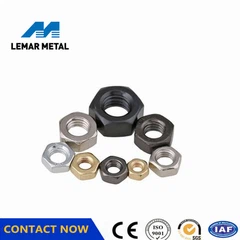
On the other hand, Hexagon Spot Welding Nut is ideal for applications where you need to save space and still achieve a strong weld. The hexagonal shape allows for easy tightening and alignment during the welding process.
If precise positioning and a flat - surface finish are your priorities, Square Spot Welding Nut might be the right option. These nuts are designed to be welded in place with minimal distortion, ensuring a clean and accurate weld.
2. Prepare the Workpiece
Proper workpiece preparation is crucial for efficient welding. Before welding the nut, make sure the surface of the workpiece is clean and free from any contaminants such as rust, oil, or paint. These impurities can interfere with the welding process, leading to weak joints and potential defects.
You can use a wire brush, sandpaper, or a chemical cleaner to clean the surface. Once the surface is clean, check for any irregularities or damage. If there are any dents or scratches, it's best to repair them before welding. A smooth and even surface will ensure better contact between the nut and the workpiece, resulting in a stronger and more efficient weld.
3. Optimize Welding Parameters
Welding parameters such as current, voltage, and welding time have a significant impact on the efficiency and quality of the weld. Each type of weld nut and workpiece material has its own optimal set of parameters.


For example, when welding steel weld nuts to a steel workpiece, a higher current might be required to ensure proper fusion. However, too high a current can cause overheating, distortion, and even burn - through. On the other hand, a lower current may result in an incomplete weld.
It's essential to conduct some tests to determine the ideal parameters for your specific application. You can start with the manufacturer's recommended settings and then make small adjustments based on the results of your tests. Monitoring the welding process closely and making real - time adjustments can help you achieve the best results.
4. Use the Right Welding Equipment
Investing in high - quality welding equipment is a must for improving welding efficiency. A good welding machine should be able to provide a stable and consistent welding current. It should also have adjustable settings to accommodate different types of weld nuts and workpiece materials.
In addition to the welding machine, using the right welding electrodes or wires is also important. The electrode or wire should be compatible with the weld nut and the workpiece material. Using the wrong electrode can lead to poor weld quality, increased spatter, and reduced efficiency.
Regular maintenance of your welding equipment is also crucial. Keep the machine clean, check the cables for any damage, and replace worn - out parts in a timely manner. Well - maintained equipment will not only improve welding efficiency but also extend its lifespan.
5. Train Your Welders
Even with the best equipment and materials, the skill of the welder plays a vital role in welding efficiency. Providing comprehensive training to your welders can significantly improve their performance.
Training should cover not only the basic welding techniques but also the specific requirements for welding weld nuts. Welders should be taught how to properly prepare the workpiece, set the welding parameters, and handle the welding equipment.
In addition, continuous training and skill development can help welders keep up with the latest welding technologies and best practices. Encourage your welders to participate in industry seminars, workshops, and certification programs. A well - trained workforce will be more productive, make fewer mistakes, and produce higher - quality welds.
6. Implement Quality Control Measures
Implementing strict quality control measures is essential for ensuring welding efficiency. Regular inspections should be carried out during and after the welding process. This can help identify any potential issues early on and prevent them from becoming major problems.
Inspections can include visual checks for weld appearance, such as the presence of cracks, porosity, or incomplete fusion. Non - destructive testing methods such as ultrasonic testing or X - ray inspection can also be used to detect internal defects.
By monitoring the quality of the welds, you can make adjustments to the welding process as needed. This will not only improve the overall quality of the products but also reduce the need for rework, saving both time and money.
7. Streamline the Welding Process
Streamlining the welding process can also improve efficiency. This can involve organizing the work area in a logical way, so that the welder has easy access to all the necessary tools and materials.
You can also implement a standardized work process, where each step of the welding process is clearly defined and documented. This will help ensure consistency and reduce the time spent on decision - making.
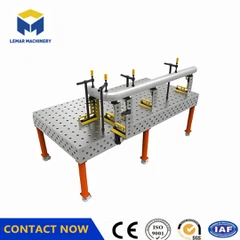
In addition, consider using jigs and fixtures to hold the workpiece and the weld nut in place. This can improve accuracy and reduce the time spent on alignment, resulting in a more efficient welding process.
Conclusion
Improving the welding efficiency of weld nuts requires a combination of the right materials, equipment, techniques, and processes. By selecting the appropriate weld nut, preparing the workpiece properly, optimizing welding parameters, using high - quality equipment, training your welders, implementing quality control measures, and streamlining the welding process, you can achieve significant improvements in efficiency and productivity.
If you are looking for high - quality weld nuts and need more information or advice on welding them efficiently, I'm here to help. Feel free to reach out to me to discuss your specific requirements and start a procurement negotiation. Together, we can find the best solutions for your welding needs.
References
- AWS Welding Handbook, American Welding Society
- Welding Metallurgy and Weldability of Stainless Steels, John C. Lippold
- Principles of Welding: Processes and Applications, Larry Jeffus
Send Inquiry