










Is a PIN the same as a password?
Aug 20, 2025
Leave a message
In the realm of security and access control, the terms "PIN" and "password" are frequently used, often interchangeably. However, a closer examination reveals that they are not identical. As a PIN supplier, I am well - versed in the nuances between these two concepts and their applications. In this blog, we will delve into the differences and similarities between a PIN and a password, and explore how they are used in various contexts.
Definitions and Basic Concepts
A Personal Identification Number (PIN) is a numeric code used for authentication purposes. It is typically a short sequence of digits, often ranging from 4 to 6 numbers. PINs are commonly associated with bank cards, where customers use them to access their accounts at ATMs. For example, when you insert your debit card into an ATM, you are prompted to enter your PIN. This simple numeric code acts as a key to unlock your account and perform transactions.
On the other hand, a password is a more general term that can consist of a combination of letters (both uppercase and lowercase), numbers, and special characters. Passwords are used in a wide range of applications, from logging into a social media account to accessing a corporate network. For instance, when you sign in to your Gmail account, you need to enter your password, which could be a complex string of alphanumeric and special characters.
Security Aspects
One of the primary differences between a PIN and a password lies in their security levels. Due to their numeric nature and relatively short length, PINs are generally considered less secure than passwords. The number of possible combinations for a 4 - digit PIN is only 10,000 (from 0000 to 9999). This limited set of combinations makes PINs more vulnerable to brute - force attacks, where an attacker tries every possible combination until they find the correct one.
Passwords, on the other hand, offer a much larger number of possible combinations. For example, if a password consists of 8 characters, including uppercase and lowercase letters, numbers, and special characters, the number of possible combinations is astronomically high. This makes it significantly more difficult for an attacker to guess the password through brute - force methods.
However, it's important to note that the security of a PIN or a password also depends on how well it is managed. If a user chooses an easily guessable PIN, such as 1234 or their birthdate, its security is severely compromised. Similarly, a weak password like "password123" is just as vulnerable as a bad PIN.

Usability
PINs have the advantage of being easy to remember and quick to enter. Their numeric nature makes them simple to input on a keypad, which is why they are so commonly used in situations where speed is important, such as at an ATM. Customers can quickly punch in their 4 - or 6 - digit PIN and complete their transaction without much hassle.
Passwords, on the other hand, can be more difficult to remember, especially if they are long and complex. This often leads to users writing them down, which can pose a security risk. However, modern password managers have made it easier for users to store and manage their passwords securely. Passwords are also more suitable for applications where a higher level of security is required, such as online banking or corporate systems.
Application Contexts
As a PIN supplier, I have seen how PINs are used in a variety of industries. In addition to the banking sector, PINs are also used in access control systems for buildings and vehicles. For example, some car keys use a PIN code in addition to the physical key for an extra layer of security. PINs are also used in mobile devices for unlocking the screen or accessing certain features.
Passwords, on the other hand, are ubiquitous in the digital world. They are used for email accounts, social media platforms, online shopping websites, and cloud storage services. Any application that requires user authentication and a higher level of security is likely to use passwords.
Physical Pins in Industrial Applications
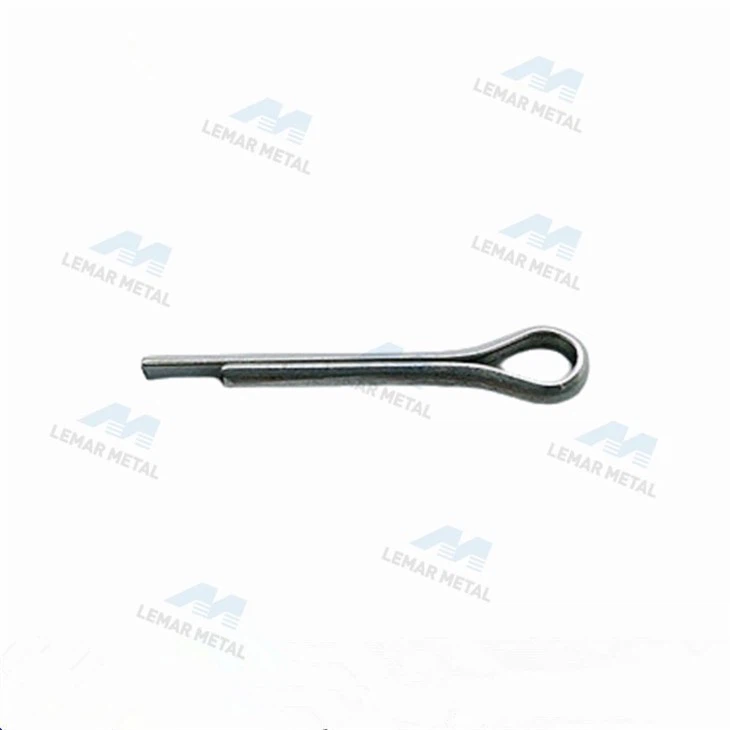
In addition to the digital PINs we've been discussing, there are also physical pins used in industrial applications. For example, Split - Cotter Fastening Pins are used to secure components in machinery. These pins are designed to prevent parts from coming loose during operation, ensuring the safety and reliability of the equipment.
R - Type Split Pin is another type of physical pin that is commonly used in automotive and aerospace industries. It provides a quick and easy way to fasten two components together, and can be easily removed when necessary.
Hairpin Cotter Pins are often used in electrical and mechanical applications. They are designed to fit into holes and hold components in place, preventing them from moving or vibrating.
Conclusion
In conclusion, while PINs and passwords share the common goal of authentication, they have distinct differences in terms of security, usability, and application contexts. PINs are simple, quick to use, but generally less secure, making them suitable for applications where speed and convenience are important. Passwords, on the other hand, offer a higher level of security but can be more difficult to manage.
As a PIN supplier, I understand the importance of providing high - quality products that meet the diverse needs of our customers. Whether it's digital PINs for security systems or physical pins for industrial applications, we are committed to delivering reliable solutions.
If you are interested in purchasing our PIN products, whether digital or physical, we invite you to reach out to us for further discussions. We are more than happy to assist you in finding the right PIN solutions for your specific requirements.
References
- Schneier, B. (2000). Secrets and Lies: Digital Security in a Networked World. Wiley.
- Stallings, W. (2018). Cryptography and Network Security: Principles and Practice. Pearson.
Send Inquiry