

What are the different types of hinges?
Oct 31, 2025
Leave a message
When it comes to hardware, hinges play a crucial role in various applications, from simple cabinet doors to heavy - duty industrial equipment. As a hinge supplier, I've had the opportunity to work with a wide range of hinge types, each with its unique features, advantages, and best - fit scenarios. In this blog, I'll introduce you to some of the most common types of hinges available in the market.
Butt Hinges
Butt hinges are perhaps the most widely recognized type of hinge. They consist of two rectangular leaves joined by a pin. One leaf is attached to the door, and the other to the frame. These hinges are known for their simplicity and durability. They come in different sizes and materials, such as brass, stainless steel, and zinc alloy.
Butt hinges are commonly used on interior doors, cabinets, and small furniture pieces. Their straightforward design allows for easy installation and smooth operation. For light - duty applications, a smaller and thinner butt hinge may suffice, while heavy - duty versions are available for larger and heavier doors. The choice of material depends on the environment and the level of corrosion resistance required. For example, in a bathroom or a coastal area, Stainless Steel Hydraulic Hinge is a great option due to its excellent resistance to rust and moisture.
Continuous Hinges
Continuous hinges, also known as piano hinges, are long, narrow hinges that run the entire length of the door or the joint. They are typically made of a single piece of metal that is bent to form the hinge. Continuous hinges provide a high level of support and stability, making them ideal for applications where a large amount of weight needs to be evenly distributed.
These hinges are commonly used on doors that require extra strength, such as garage doors, toolboxes, and large cabinets. They are also popular in architectural applications, like gates and partition walls. The long length of the continuous hinge helps to prevent sagging and ensures smooth operation over time. Additionally, they can be cut to the desired length, offering flexibility in installation.
Concealed Hinges
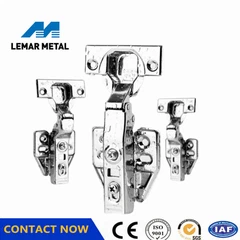
Concealed hinges, as the name suggests, are designed to be hidden from view when the door is closed. They are often used in modern cabinetry to achieve a clean and minimalist look. Concealed Cabinet Hinge typically consists of two parts: one part is attached to the cabinet frame, and the other to the door. The hinge mechanism is hidden inside the cabinet, allowing the door to appear as if it is floating.
These hinges come in different styles, including European - style concealed hinges and American - style concealed hinges. European - style concealed hinges are known for their adjustability, allowing for fine - tuning of the door position in three dimensions (up - down, left - right, and in - out). This makes them very popular in high - end cabinetry. American - style concealed hinges, on the other hand, are often used in more traditional cabinet designs.
Pivot Hinges
Pivot hinges are designed to allow a door to rotate around a single point or axis. They are commonly used on doors that need to swing in both directions, such as double - acting doors in commercial kitchens or saloon doors in Western - style establishments. Pivot hinges can be either floor - mounted or top - mounted, depending on the application.
Floor - mounted pivot hinges are installed on the floor and the bottom of the door, while top - mounted pivot hinges are attached to the top of the door and the frame. Pivot hinges provide a smooth and stable rotation, and they can handle heavy doors. However, they require precise installation to ensure proper alignment and operation.
Spring Hinges
Spring hinges are equipped with a spring mechanism that automatically closes or opens the door after it has been pushed or pulled. They are available in different tension levels, allowing you to choose the appropriate force for the door's weight and size. Spring hinges are commonly used on doors that need to be self - closing, such as screen doors, interior doors in commercial buildings, and cabinets in industrial settings.
There are two main types of spring hinges: single - acting and double - acting. Single - acting spring hinges close the door in one direction only, while double - acting spring hinges can close the door from either side. The spring in these hinges can be adjusted to change the closing speed and force, providing flexibility in different applications.
Soft - Close Hinges
Soft - close hinges have become increasingly popular in recent years, especially in kitchen and bathroom cabinetry. Soft Close Cabinet Door Hinge are designed to slow down the closing motion of the door, preventing it from slamming shut. This not only reduces noise but also extends the lifespan of the door and the hinge itself.
These hinges use a hydraulic or pneumatic mechanism to control the closing speed. When the door is about to close, the mechanism kicks in and gently guides the door to a stop. Soft - close hinges are available in both concealed and exposed styles, making them suitable for a variety of cabinet designs. They are a great addition to any home or commercial space where a quiet and smooth - operating environment is desired.
Butterfly Hinges
Butterfly hinges are decorative hinges that are often used on small boxes, jewelry cases, and antique furniture. They have a unique shape that resembles a butterfly, with two wings that open and close. Butterfly hinges are typically made of brass or other decorative metals and are available in various finishes, such as antique brass, nickel, and chrome.
These hinges not only provide a functional way to join two parts but also add an aesthetic touch to the item. They are easy to install and are suitable for light - duty applications. Butterfly hinges can be used to create a vintage or rustic look, making them a popular choice for restoration projects.
Strap Hinges
Strap hinges are long, narrow hinges with one or two straps that extend from the hinge leaves. They are commonly used on gates, barn doors, and large wooden doors. Strap hinges provide a high level of strength and stability, and their design is often considered to be very traditional and decorative.
The straps on strap hinges can be of different lengths and widths, depending on the application. They can be attached to the door and the frame using screws or bolts. Strap hinges are available in various materials, including wrought iron, steel, and brass. In addition to their functional use, they can also enhance the overall appearance of the door or gate.


Choosing the Right Hinge
Selecting the right hinge for your application is crucial to ensure proper functionality and longevity. Here are some factors to consider:
- Weight and Size of the Door: Heavier and larger doors require hinges with higher load - bearing capacity. For example, a heavy wooden door may need a continuous hinge or a heavy - duty butt hinge.
- Frequency of Use: If the door is used frequently, choose a hinge that is durable and can withstand repeated opening and closing. Soft - close hinges and spring hinges are good options for high - traffic areas.
- Environment: Consider the environment in which the hinge will be used. In wet or humid areas, corrosion - resistant materials like stainless steel are recommended. In a high - temperature environment, choose a hinge that can withstand heat.
- Aesthetic Requirements: If the appearance of the hinge is important, such as in a decorative cabinet or a high - end furniture piece, choose a hinge that complements the overall design. Concealed hinges and butterfly hinges are great for achieving a specific aesthetic look.
As a hinge supplier, I understand the importance of providing high - quality hinges that meet the diverse needs of my customers. Whether you are a homeowner looking to upgrade your cabinetry or a contractor working on a large - scale project, I can offer a wide range of hinge types to suit your requirements. If you have any questions about hinge selection, installation, or need further information, please don't hesitate to contact me for a procurement discussion. I'm here to help you find the perfect hinge solution for your project.
References
- "Handbook of Hardware Design and Specification" by Charles A. Hurd
- "The Complete Guide to Cabinet Hardware" by The Taunton Press
Send Inquiry