

What is the brittleness of a lock washer?
Jun 22, 2026
Leave a message
Hey there, folks! As a lock washer supplier, I've been in the business long enough to know that there's a lot to talk about when it comes to these little but mighty components. One of the most frequently asked questions I get is about the brittleness of lock washers. So, let's dive right in and break it down.
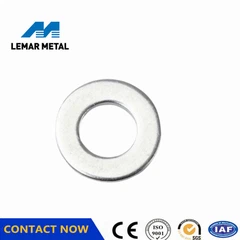
First off, what exactly are lock washers? Well, they're those small, often overlooked parts that play a crucial role in keeping bolts and nuts tight. They come in all shapes and sizes, like the External Serrated Lock Washer, which has those cool serrations on the outside to grip the surface and prevent loosening. There's also the Safety Lock Washer, designed to add an extra layer of security, and the External Serrated Gasket, which combines the functions of a washer and a gasket.


Now, let's get to the heart of the matter: brittleness. Brittleness in lock washers is a big deal because it can affect their performance and durability. A brittle lock washer is more likely to crack or break under stress, which can lead to all sorts of problems. For example, if a lock washer breaks in a critical application, like in a machine or a vehicle, it could cause the bolt or nut to loosen, potentially leading to equipment failure or even an accident.
So, what causes lock washers to be brittle? There are a few factors at play here. One of the main culprits is the material they're made from. Some materials, like certain types of steel, can become brittle if they're not heat-treated properly. Heat treatment is a process that helps to strengthen the material and improve its ductility, which is the ability to deform without breaking. If the heat treatment is done incorrectly, the lock washer may end up being too hard and brittle.
Another factor that can contribute to brittleness is the manufacturing process. If the lock washer is stamped or formed too quickly, it can cause internal stresses in the material, making it more prone to cracking. Additionally, if the washer is not machined or finished properly, it can create sharp edges or notches that can act as stress concentrators, further increasing the risk of brittleness.
The environment in which the lock washer is used can also play a role. For example, if the washer is exposed to extreme temperatures, chemicals, or moisture, it can cause the material to degrade over time, making it more brittle. In some cases, the combination of these environmental factors and mechanical stress can accelerate the brittleness of the lock washer.
So, how can you tell if a lock washer is brittle? Well, there are a few signs to look out for. One of the most obvious is visible cracking or chipping. If you see any cracks or chips on the surface of the washer, it's a pretty good indication that it's brittle. Another sign is if the washer breaks or shatters easily when you try to bend or deform it slightly. A normal, ductile lock washer should be able to bend a little without breaking.
As a supplier, we take brittleness very seriously. We use high-quality materials and state-of-the-art manufacturing processes to ensure that our lock washers are as strong and durable as possible. We also conduct rigorous quality control tests to check for brittleness and other defects before we send our products out to our customers.
But even with the best quality control measures in place, it's still important for our customers to use the right lock washer for the right application. Different applications have different requirements, and using the wrong type of lock washer can increase the risk of brittleness and other problems. For example, if you're using a lock washer in a high-vibration environment, you'll need a washer that's designed to withstand that kind of stress.
In addition to choosing the right lock washer, it's also important to install it correctly. Improper installation can put unnecessary stress on the washer, increasing the risk of brittleness and failure. Make sure to follow the manufacturer's instructions carefully when installing the lock washer, and use the right tools and techniques.
So, there you have it, a quick rundown of the brittleness of lock washers. As a supplier, we're always here to help you choose the right lock washer for your needs and answer any questions you might have. If you're in the market for lock washers, whether it's the External Serrated Lock Washer, the Safety Lock Washer, or the External Serrated Gasket, don't hesitate to reach out. We're ready to have a chat about your requirements and help you find the perfect solution.
Send Inquiry