


What is the locking mechanism of a deformed thread lock nut?
Jul 31, 2025
Leave a message
As a seasoned lock nut supplier, I've had the privilege of delving deep into the intricacies of various locking mechanisms. One of the most fascinating and effective types in the market is the deformed thread lock nut. In this blog, I'll explain what the locking mechanism of a deformed thread lock nut is, how it works, and its advantages.
Understanding Deformed Thread Lock Nuts
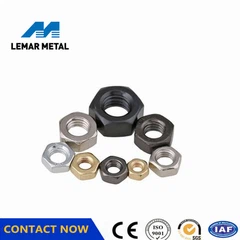
Before we explore the locking mechanism, let's understand what a deformed thread lock nut is. A deformed thread lock nut is a specialized fastener designed to prevent loosening due to vibration, shock, or other external forces. Unlike standard nuts, which rely solely on the friction between the threads and the bolt, deformed thread lock nuts have a unique design that provides an additional locking feature.
The Locking Mechanism
The key to the locking mechanism of a deformed thread lock nut lies in its deformed threads. These threads are intentionally distorted or modified in a specific way to create a high level of friction and interference when tightened onto a bolt. Here's a step-by-step breakdown of how the locking mechanism works:
1. Initial Engagement
When the deformed thread lock nut is first threaded onto the bolt, the deformed threads begin to interact with the standard threads of the bolt. The irregular shape of the deformed threads causes them to make contact with the bolt threads at multiple points, rather than just along the helix of the thread. This increased contact area creates a higher level of friction compared to a standard nut.
2. Elastic Deformation
As the nut is tightened, the deformed threads are forced to conform to the shape of the bolt threads. This process causes elastic deformation of the nut threads, which in turn generates a radial force that acts perpendicular to the axis of the bolt. This radial force creates a clamping effect between the nut and the bolt, further increasing the friction and preventing the nut from loosening.
3. Self-Locking Feature
The elastic deformation of the deformed threads also creates a self-locking feature. Once the nut is tightened, the deformed threads remain in a state of stress, which means they continue to exert a force on the bolt threads even after the tightening torque is removed. This self-locking feature ensures that the nut stays securely in place, even under extreme conditions such as vibration or shock.
Advantages of Deformed Thread Lock Nuts
The locking mechanism of deformed thread lock nuts offers several advantages over traditional nuts:
1. High Resistance to Loosening
The increased friction and clamping force provided by the deformed threads make these nuts highly resistant to loosening. This makes them ideal for applications where vibration, shock, or other external forces are present, such as automotive, aerospace, and machinery industries.
2. Reusability
Unlike some other types of locking nuts, deformed thread lock nuts can be reused multiple times without losing their locking effectiveness. The elastic deformation of the threads is reversible, which means the nut can be removed and reinstalled without significant loss of performance.
3. Cost-Effective
Deformed thread lock nuts are relatively inexpensive compared to other types of locking fasteners, such as prevailing torque nuts or lock washers. This makes them a cost-effective solution for applications where a reliable locking mechanism is required.
4. Easy to Install
Installing deformed thread lock nuts is as simple as installing a standard nut. No special tools or techniques are required, which makes them a convenient choice for both professional and DIY applications.
Applications of Deformed Thread Lock Nuts
Deformed thread lock nuts are used in a wide range of applications across various industries. Some common applications include:
1. Automotive Industry
In the automotive industry, deformed thread lock nuts are used to secure critical components such as engine mounts, suspension systems, and brake assemblies. The high resistance to loosening provided by these nuts ensures the safety and reliability of the vehicle.
2. Aerospace Industry
The aerospace industry requires fasteners that can withstand extreme conditions, such as high temperatures, vibration, and shock. Deformed thread lock nuts are commonly used in aircraft engines, landing gear, and other critical components to ensure the integrity of the structure.
3. Machinery Industry
In the machinery industry, deformed thread lock nuts are used to secure moving parts, such as gears, bearings, and shafts. The self-locking feature of these nuts prevents loosening due to vibration and ensures the smooth operation of the machinery.
Other Types of Lock Nuts
In addition to deformed thread lock nuts, there are several other types of lock nuts available in the market. Here are a few examples:


- Lock Nut With External Tooth: These nuts have external teeth that bite into the surface of the mating part, providing a locking effect.
- Self Clinching Nut: Self clinching nuts are designed to be pressed into a pre-drilled hole in a sheet metal or plastic part, creating a permanent and secure fastening.
- Round Tee Nut: Round tee nuts are used in applications where a threaded hole is required in a thin material. They are typically used in furniture, electronics, and other industries.
Conclusion
The locking mechanism of a deformed thread lock nut is a simple yet effective way to prevent loosening and ensure the reliability of a fastening. By creating a high level of friction and clamping force, these nuts provide a secure and long-lasting solution for a wide range of applications. As a lock nut supplier, I highly recommend considering deformed thread lock nuts for your next project.
If you're interested in learning more about our lock nuts or would like to discuss your specific requirements, please don't hesitate to contact us. Our team of experts is always ready to assist you in finding the right locking solution for your needs.
References
- "Fasteners Handbook" - A comprehensive guide to fasteners and their applications.
- "Mechanical Engineering Design" - A textbook that covers the principles of mechanical design, including the design of fasteners.
- Industry standards and specifications for lock nuts, such as ASTM, ISO, and DIN.
Send Inquiry