


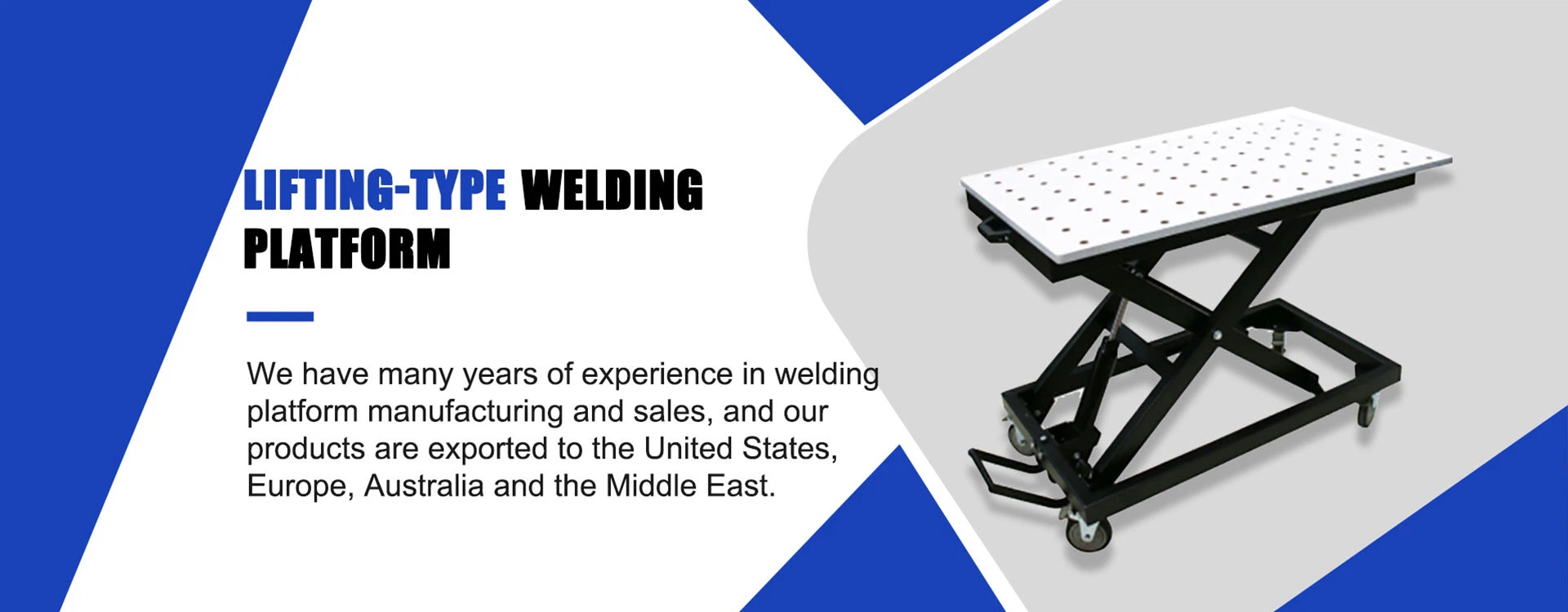
What methods can be used to prevent deformation of a 3D welding workbench?
Mar 23, 2026
Leave a message
I. Selecting High-Stability Materials to Enhance Deformation Resistance
Materials are the first line of defense against deformation:
Prioritize the use of HT300 cast iron or Q345 low-alloy steel. These materials have high rigidity and good bending resistance, effectively resisting mechanical and thermal load deformation.
Ensure the material undergoes double aging treatment (natural aging + thermal aging) to eliminate internal residual stress and prevent slow plastic deformation due to stress release during long-term use.
II. Optimizing Structural Design to Enhance Overall Rigidity
A reasonable structural design can reduce the risk of deformation from the source:
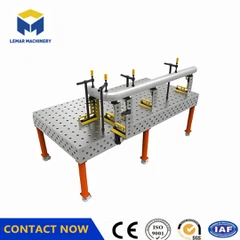
Utilize a gridded high-precision hole system structure with a hole spacing of 100mm/50mm and a hole position tolerance ≤±0.05mm, ensuring even stress distribution and avoiding localized stress concentration.
Modular splicing design: Multiple platforms can be connected on five sides to form an overall frame, improving torsional and bending resistance, suitable for welding large workpieces.
Symmetrical layout of support points and weld paths allows thermal shrinkage forces to cancel each other out, reducing angular and bending deformation.
III. Strengthening Thermal Deformation Control to Meet the Challenges of High-Temperature Operations
For high-temperature environments, an active thermal management mechanism must be established:
Implement cold-state + hot-state dual-stage leveling: After leveling at room temperature, re-detect and fine-tune when the equipment heats up to its operating temperature (e.g., above 80°C) to compensate for differences in thermal expansion.
Add heat insulation and temperature equalization devices: Install ceramic fiber heat insulation boards or air ducts around the platform to prevent high-temperature airflow from directly impacting localized areas and maintain a uniform temperature field.
Deploy temperature and displacement sensors: Monitor deformation trends under thermal cycling in real time to guide preventative maintenance decisions.
IV. Optimizing Welding Processes to Reduce External Heat Input
Controlling heat input from the process source can significantly reduce deformation driving forces:
Use low-heat-input welding methods, such as pulsed MAG welding and laser-MAG hybrid welding, to reduce line energy and angular deformation.
Scientific Welding Sequence Planning: Weld symmetrically from the center outwards to ensure even heat distribution. Use segmented back-welding for long welds to avoid heat concentration.
Preset Reverse Deformation: Pre-set a small reverse deformation during clamping to counteract deformation caused by welding shrinkage.
V. Standard Use and Maintenance to Prevent Deformation Caused by Human Factors
Operating habits directly affect platform lifespan:
Regular Leveling and Accuracy Verification: It is recommended to perform systematic leveling every 6 months to ensure flatness error ≤ 0.1mm/m.
Timely Workpiece Removal: Remove workpieces immediately after welding to avoid plastic deformation caused by prolonged load.
Prohibition of Hard Object Impact: Never use hammers or other tools to directly strike the platform to prevent localized dents that could damage the overall structure.
Cleaning and Protection: Remove welding slag and oil before each use; spray anti-spatter liquid during welding to protect the hole system and surface accuracy.

Send Inquiry