

Do spring washers have a significant impact on the cost of the assembly?
Dec 09, 2025
Leave a message
Do spring washers have a significant impact on the cost of the assembly? That's a question I've been asked quite a few times as a spring washer supplier. I've seen all sorts of projects, from small DIY jobs to large - scale industrial assemblies. So, let's dive right in and break this down.
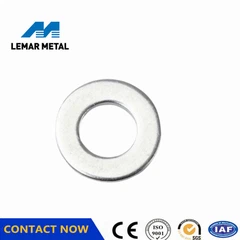
First off, what are spring washers? They're those little guys that look like they've been given a bit of a squiggle. Their main job is to create a spring - like force between two surfaces, usually when a nut or bolt is tightened. This helps to prevent loosening due to vibration, shock, or thermal expansion and contraction.
Now, let's talk about the cost. When you're looking at the cost of an assembly, there are two main areas where spring washers can have an impact: the direct cost and the indirect cost.
Direct Cost
The direct cost is pretty straightforward. It's the price you pay to buy the spring washers. Spring washers come in different materials, sizes, and designs, and all of these factors affect the price.
For example, stainless steel spring washers are more corrosion - resistant than regular steel ones. You can check out Stainless Steel Spring Washers on our website. They're great for applications where the assembly will be exposed to moisture or chemicals. But because of the better material, they're also more expensive.
Disc spring washers, on the other hand, are designed to handle high loads in a small space. You can find more about them at Disc Spring Washer. Their unique design often means a more complex manufacturing process, which can drive up the cost.
Internal tooth starlock washers are another type. They have teeth that bite into the surfaces they're in contact with, providing excellent anti - loosening properties. You can learn more about them here: Internal Tooth Starlock Washers. These specialized washers might also cost a bit more due to their design and functionality.
But here's the thing. Sometimes, using a more expensive spring washer can actually save you money in the long run. Let's say you're working on a project where the assembly will be subject to a lot of vibration. If you use a cheap, low - quality spring washer, it might loosen over time. Then you'll have to spend time and money to fix it, and in some cases, it could even lead to more serious problems with the whole assembly.
Indirect Cost
Indirect costs are a bit more tricky to calculate. They include things like labor costs, downtime, and potential damage to other parts of the assembly.
Let's start with labor costs. If you choose a spring washer that's easy to install, you can save on labor. For instance, a well - designed spring washer that fits perfectly into the assembly can be installed quickly, reducing the time your workers spend on that part of the job. On the other hand, if you use a washer that's difficult to handle or doesn't fit well, it can take extra time to get it in place, increasing labor costs.
Downtime is another big factor. If a spring washer fails and causes the assembly to stop working, you'll lose production time. This can be extremely costly, especially in a large - scale industrial setting. For example, in a manufacturing plant, every hour of downtime can mean thousands of dollars in lost production. Using a high - quality spring washer can reduce the risk of such failures and minimize downtime.
Potential damage to other parts is also important. If a spring washer fails and causes other components in the assembly to break, you'll have to replace those parts as well. This can add up to a significant cost. So, even though a high - quality spring washer might cost more upfront, it can protect your other components and save you money on replacement parts.
Case Studies
Let me share a couple of real - life examples to illustrate these points.
One of our customers was working on a construction project for a bridge. They initially considered using a cheap spring washer to save on costs. But after some calculations and discussions with our team, they decided to go with a more expensive, high - quality stainless steel spring washer. The bridge was in a coastal area, so corrosion was a major concern.
Over the years, the spring washers held up well. There were no issues with loosening or corrosion, which meant no costly repairs or maintenance due to spring washer failure. In the end, they saved a lot of money compared to what they would have spent if they had gone with the cheaper option.
Another customer was in the automotive industry. They were using a low - quality spring washer in a critical engine component. The washers started to fail after a relatively short time, causing engine problems and frequent breakdowns. This led to a lot of customer complaints, warranty claims, and lost production time. After switching to a high - quality spring washer, the failure rate dropped significantly, and they saw a big improvement in their bottom line.
Conclusion
So, do spring washers have a significant impact on the cost of the assembly? The answer is yes. While the direct cost of spring washers is an obvious factor, the indirect costs can be even more important. Choosing the right spring washer can save you money in the long run by reducing labor costs, minimizing downtime, and preventing damage to other parts of the assembly.


If you're in the process of planning an assembly project, I encourage you to take a close look at your spring washer options. Don't just go for the cheapest one. Consider the long - term costs and benefits.
If you have any questions or want to discuss your specific needs, feel free to reach out. We're here to help you make the best choice for your project and ensure that your assembly is reliable and cost - effective.
References
- "Fastener Handbook" by Industrial Fasteners Institute
- "Mechanical Design Handbook" by Myer Kutz
Send Inquiry