

How do I install a lock nut correctly?
Apr 28, 2026
Leave a message
As a lock nut supplier, I understand the importance of correctly installing lock nuts in various applications. A well - installed lock nut provides reliable fastening, preventing loosening due to vibration, thermal expansion, or other external forces. In this post, I'll share with you a detailed guide on how to install a lock nut correctly.
Understanding the Types of Lock Nuts
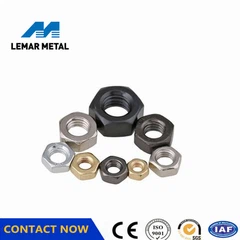
Before we get into the installation process, it's essential to know the different types of lock nuts available in the market. There are several common types, each with its own unique design and function.
One popular type is the Stainless Steel Hexagonal Self - locking Nut. It features a nylon insert that deforms around the threads of the bolt when tightened, creating a high - friction locking mechanism. This type of nut is corrosion - resistant and suitable for a wide range of applications, especially in environments where exposure to moisture or chemicals is a concern.
Another type is the Flat Head Knurled Nut. The knurled surface on the head of this nut allows for easy hand - tightening, making it convenient for applications where frequent adjustments are required. It's often used in light - duty applications such as electronics or small machinery.
The Steel Self Locking Counter Nut is designed with a special self - locking feature that resists loosening under heavy vibration. Its robust construction makes it ideal for use in automotive, industrial, and construction applications.
Pre - installation Preparation
- Inspect the Parts
- Before starting the installation, carefully inspect the lock nut, bolt, and the mating surface. Look for any signs of damage, such as cracks, burrs, or deformed threads on the nut or bolt. A damaged part may not provide a proper fit or secure fastening, leading to potential failures in the future.
- Check the mating surface to ensure it is clean, flat, and free of debris. Any dirt or unevenness can affect the installation and the performance of the lock nut.
- Select the Right Tools
- The choice of tools depends on the type and size of the lock nut. For most lock nuts, a wrench is the primary tool. Select a wrench that fits the size of the lock nut precisely. Using an ill - fitting wrench can damage the nut and make the installation difficult.
- In some cases, a torque wrench may be required to ensure that the nut is tightened to the correct specification. This is especially important for applications where proper torque is critical for safety and performance.
- Determine the Torque Specification
- Different types and sizes of lock nuts have different torque specifications. These specifications can usually be found in the product manual or provided by the manufacturer. Adhering to the correct torque value is crucial as over - tightening can damage the nut or the bolt, while under - tightening may result in the nut coming loose over time.
Installation Process
- Align the Nut with the Bolt
- Start by placing the lock nut on the end of the bolt. Make sure the threads of the nut align properly with the threads of the bolt. Do not force the nut onto the bolt if it doesn't start to turn smoothly. If the alignment is difficult, check for any burrs on the threads and remove them if necessary.
- Initial Hand - Tightening
- Once the nut is properly aligned, begin tightening it by hand. This helps to ensure that the nut starts to engage the threads evenly. As you turn the nut, feel for any resistance or binding. If there is excessive resistance, stop and check for misalignment or damage.
- Use the Wrench for Tightening
- After hand - tightening the nut as much as possible, use the appropriate wrench to continue the tightening process. For a standard wrench, apply a smooth and steady force in the clockwise direction. Make sure to keep the wrench perpendicular to the nut to avoid damaging the corners.
- If using a torque wrench, set it to the specified torque value. Slowly turn the wrench until you hear or feel the clicking sound indicating that the correct torque has been reached. Remember to follow the proper technique for using the torque wrench, such as applying a gradual and consistent force.
- Special Considerations for Different Types of Lock Nuts
- Nylon - insert lock nuts: When tightening a nylon - insert lock nut, you will feel increased resistance as the nylon insert comes into contact with the bolt threads. This is normal and indicates that the locking mechanism is working. Continue tightening until the recommended torque is achieved.
- Flanged lock nuts: Flanged lock nuts have a built - in washer - like flange that provides a larger bearing surface. Ensure that the flange is fully seated against the mating surface during installation. This helps to distribute the load evenly and prevent damage to the surface.
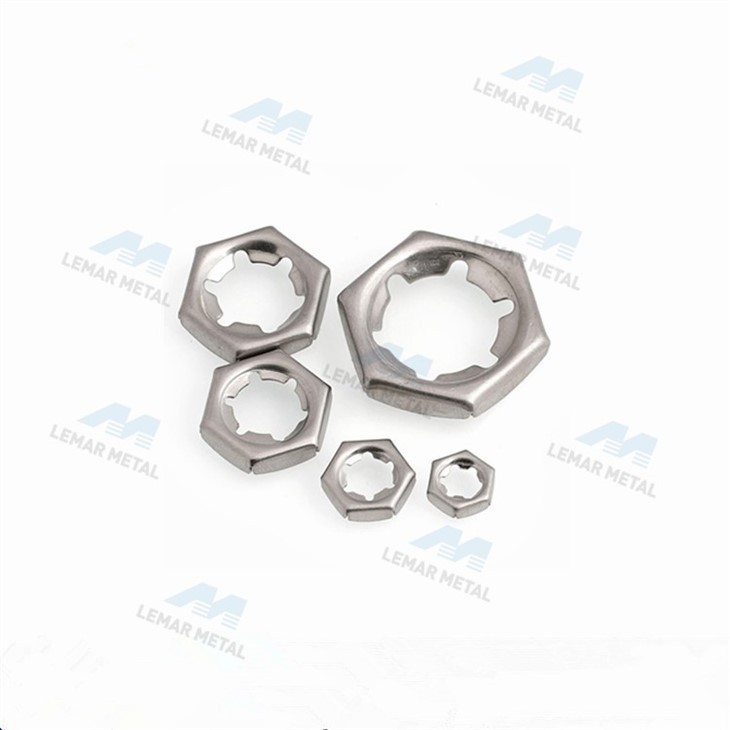
- Prevailing - torque lock nuts: These nuts have a non - circular feature, such as a deformed section, that creates a locking force. When installing them, you may need to use a bit more force compared to regular nuts. However, still follow the torque specification to avoid over - tightening.
Post - installation Checks
- Inspect the Installation
- After tightening the lock nut, visually inspect the installation. Check that the nut is fully tightened and that it is flush against the mating surface. Look for any signs of damage or deformation on the nut, bolt, or the surrounding area.
- Check for Looseness
- Gently try to move the component that is fastened by the lock nut. There should be no visible movement or play. If you detect any looseness, re - check the torque and make sure the nut is properly tightened.
Conclusion
Proper installation of lock nuts is essential for ensuring the safety and reliability of your applications. By understanding the different types of lock nuts, preparing adequately, following the correct installation process, and performing post - installation checks, you can achieve a secure and long - lasting fastening.
If you are in the market for high - quality lock nuts or need more information on their installation and application, feel free to contact us. We are a leading lock nut supplier, committed to providing top - notch products and professional advice. Our team of experts is ready to assist you with your specific requirements. Whether you need a small quantity for a DIY project or a large - scale order for an industrial application, we have the solutions for you. Let's start a discussion on how our lock nuts can meet your needs.

Send Inquiry