


What are the disadvantages of using a slotted nut?
May 19, 2026
Leave a message
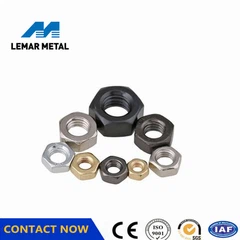
As a slotted nut supplier, I've witnessed firsthand the widespread use and benefits of these fasteners in various industries. Slotted nuts, such as the Steel Hex Castle Nut, Hex Slotted Castle Nut, and Slotted Hex Nut, are known for their ability to secure a bolt with a cotter pin or a safety wire, preventing it from loosening due to vibration. However, like any product, slotted nuts have their disadvantages. In this blog post, I'll delve into some of these drawbacks to provide a comprehensive understanding for potential customers.
1. Limited Reusability
One significant disadvantage of slotted nuts is their limited reusability. When a slotted nut is used with a cotter pin or safety wire to secure it in place, the process of installation and removal can cause damage to both the nut and the pin or wire. For example, when removing a cotter pin, it may get bent or distorted, and in some cases, it can break. If a broken cotter pin is left in the slot of the nut, it can be difficult to remove, and it may also damage the slot itself.
Moreover, repeated tightening and loosening of the nut can cause wear on the threads. The slots in the nut can also weaken the overall structure, making it more prone to cracking or breaking over time. This means that after a few uses, the slotted nut may no longer be reliable and may need to be replaced, which can increase the long - term cost of a project.
2. Complex Installation Process
The installation of slotted nuts is more complex compared to standard nuts. Unlike regular nuts that can be simply tightened onto a bolt, slotted nuts require an additional step of inserting a cotter pin or safety wire. This process demands a certain level of skill and precision.
First, the nut needs to be tightened to the correct torque. Then, the slots in the nut must be aligned with the holes in the bolt so that the cotter pin can be inserted. This alignment can be challenging, especially in hard - to - reach areas or when working with large numbers of fasteners. If the alignment is not perfect, the cotter pin may not fit properly, which can compromise the security of the connection.
In addition, using safety wire requires even more expertise. The wire must be threaded through the slots in a specific pattern and tightened to an appropriate tension. Any mistakes in the installation process can lead to a loose connection, which can be dangerous in applications where safety is critical, such as in automotive or aerospace industries.


3. Higher Cost
Slotted nuts are generally more expensive than standard nuts. The manufacturing process of slotted nuts is more complex because it involves cutting slots in the nut. This additional machining operation increases the production time and cost.
Furthermore, the need for cotter pins or safety wires adds to the overall cost. These additional components not only have their own cost but also require additional storage and inventory management. For large - scale projects, the cost difference between slotted nuts and standard nuts can be substantial, and it may force project managers to look for more cost - effective alternatives.
4. Vulnerability to Corrosion
The slots in slotted nuts create areas where moisture, dirt, and other contaminants can accumulate. This makes slotted nuts more vulnerable to corrosion compared to standard nuts. Corrosion can weaken the nut's structure, causing the threads to seize and making it difficult to remove or adjust the nut.
In environments with high humidity, saltwater, or chemicals, the corrosion problem becomes even more severe. For example, in marine applications, the saltwater can quickly corrode the slotted nuts, leading to premature failure of the fasteners. Even if the nuts are made of corrosion - resistant materials such as stainless steel, the presence of slots still provides a path for corrosion to start and spread.
5. Limited Range of Sizes and Materials
Compared to standard nuts, slotted nuts are available in a more limited range of sizes and materials. This can be a problem for customers who have specific requirements for their projects.
In terms of sizes, some applications may require non - standard or very large/small slotted nuts, which may not be readily available. This can lead to delays in the project as the customer may need to wait for custom - made nuts to be produced.
Regarding materials, while slotted nuts are commonly available in steel and stainless steel, there may be a lack of options for other specialized materials. For example, in high - temperature applications, customers may require nuts made of heat - resistant alloys, but finding slotted nuts in these materials can be difficult.
6. Aesthetics
In some applications where aesthetics are important, slotted nuts may not be the best choice. The slots in the nut can make it look less smooth and finished compared to standard nuts. This can be a drawback in industries such as furniture manufacturing or architectural applications, where the appearance of the fasteners is a consideration.
Conclusion
Despite the disadvantages mentioned above, slotted nuts still have their place in many industries due to their unique locking mechanism. However, it's important for customers to be aware of these drawbacks when considering using slotted nuts in their projects.
If you're still interested in exploring the use of slotted nuts for your specific application and would like to discuss your requirements in more detail, we're here to help. We can provide you with more information on our products, including the Steel Hex Castle Nut, Hex Slotted Castle Nut, and Slotted Hex Nut. Contact us to start a procurement discussion and find the best solution for your needs.
References
- Machinery's Handbook, 31st Edition
- Fastener Technology Handbook, Second Edition
Send Inquiry