


What is the locking mechanism of a spring - type lock nut?
May 20, 2025
Leave a message
As a lock nut supplier, I often encounter customers who are curious about the locking mechanisms of different types of lock nuts. Among them, the spring - type lock nut is a popular choice, and in this blog, I'll delve deep into its locking mechanism.
The Basics of Spring - Type Lock Nuts
Spring - type lock nuts are designed to prevent loosening under vibration, shock, or dynamic loads. They achieve this by applying a constant force that resists the rotational movement of the nut relative to the bolt. Unlike regular nuts that rely solely on the friction between the threads, spring - type lock nuts introduce an additional locking element - the spring.
The Structure of Spring - Type Lock Nuts
A typical spring - type lock nut consists of a standard nut body and a spring element. The spring can take different forms, such as a split ring or a series of spring - like protrusions. For example, some spring - type lock nuts have a split design, where a cut is made through the nut body, creating a gap. This split allows the nut to flex slightly, and when tightened onto a bolt, the spring action of the split nut creates a radial force against the bolt threads.
Another common design is the use of spring - like teeth or protrusions on the inside of the nut. These teeth bite into the bolt threads, providing an extra grip and preventing the nut from turning. This design is especially effective in high - vibration environments.
The Locking Mechanism in Detail
Friction Augmentation
The primary way a spring - type lock nut works is by increasing the friction between the nut and the bolt. When the nut is tightened onto the bolt, the spring element deforms slightly. This deformation causes the nut to apply a greater normal force on the bolt threads. According to the laws of friction, the frictional force (F) is proportional to the normal force (N), given by the equation F = μN, where μ is the coefficient of friction. By increasing the normal force, the spring - type lock nut effectively increases the frictional force that resists the loosening of the nut.
Self - Locking Effect
The spring action of the lock nut also creates a self - locking effect. As the nut is tightened, the spring element stores elastic potential energy. This energy acts as a restoring force that constantly tries to keep the nut in place. Even if external forces try to rotate the nut, the stored energy in the spring opposes this rotation, making it more difficult for the nut to loosen.
Resistance to Vibration
In vibrating environments, regular nuts can gradually loosen due to the cyclic forces acting on them. Spring - type lock nuts, however, are much more resistant to vibration. The spring element absorbs and dampens the vibrational energy, preventing it from being transferred into rotational motion of the nut. For instance, the split in a split - type spring lock nut can act as a shock absorber, flexing and unflexing with the vibrations, rather than allowing the nut to turn.
Advantages of Spring - Type Lock Nuts
- Reliable Locking: They provide a high level of locking security, ensuring that the connection remains tight even under harsh conditions.
- Reusability: Many spring - type lock nuts can be reused multiple times without significant loss of their locking properties. This makes them a cost - effective solution in the long run.
- Easy Installation: Installing a spring - type lock nut is similar to installing a regular nut, requiring no special tools or techniques.
Applications of Spring - Type Lock Nuts
Spring - type lock nuts are used in a wide range of industries. In the automotive industry, they are used to secure critical components such as engine mounts, suspension parts, and brake systems. In the aerospace industry, where safety and reliability are of utmost importance, spring - type lock nuts are used in the assembly of aircraft structures and engines. They are also commonly used in machinery, electronics, and construction applications.
Our Product Range
As a lock nut supplier, we offer a diverse range of spring - type lock nuts to meet the different needs of our customers. For example, our Spring Leaf T Nut is a unique design that combines the advantages of a spring - type lock with the functionality of a T - nut. It is ideal for applications where quick and easy installation is required, such as in furniture assembly and paneling.
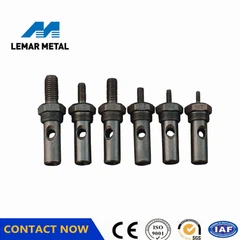
Our Three Hole Lock Nut is another popular product. The three - hole design provides additional points of contact and locking, making it suitable for high - torque applications. It is often used in heavy - duty machinery and equipment.
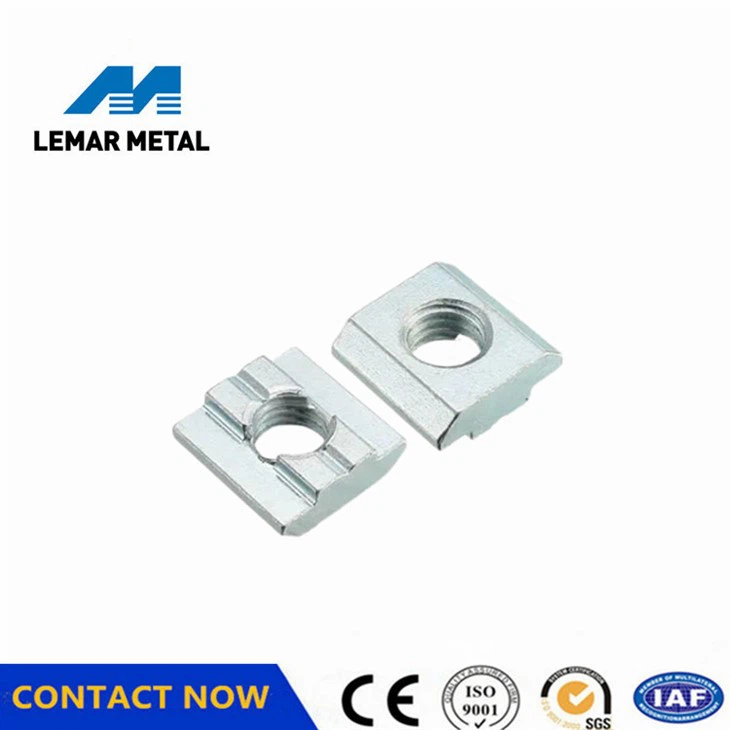

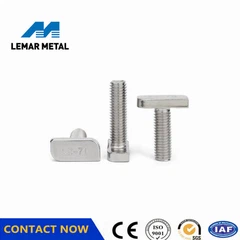
We also offer T Slot Nut, which is designed to fit into T - shaped slots. These nuts are commonly used in linear motion systems, such as in machine tools and automation equipment.
Contact Us for Procurement
If you are in need of high - quality spring - type lock nuts or any other lock nut products, we would be more than happy to assist you. Our team of experts can help you choose the right product for your specific application and provide you with detailed technical support. Whether you are a small business or a large corporation, we can offer competitive prices and reliable delivery. Contact us today to start a procurement discussion and find the perfect lock nut solution for your needs.
References
- "Mechanical Design Handbook" by Robert C. Juvinall and Kurt M. Marshek
- "Fasteners and Their Applications" by William H. Krouse
- Industry standards and guidelines related to lock nuts from relevant organizations
Send Inquiry