





How do lock nuts perform in low - temperature environments?
Jun 03, 2026
Leave a message
Hey there! I'm a supplier of lock nuts, and today I wanna chat about how lock nuts perform in low - temperature environments. It's a topic that's super important, especially for industries that operate in cold regions or those that need to maintain machinery in frigid conditions.
Understanding the Basics of Lock Nuts
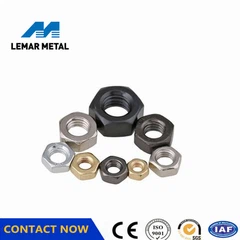
First off, let's quickly go over what lock nuts are. Lock nuts are designed to prevent loosening due to vibrations, shocks, or other external forces. They come in various types, like the T - Nut With Ball, T Slot Nut, and Steel Hexagon Lock Nut. Each type has its own unique features and applications, but they all share the common goal of keeping things tight.
Effects of Low Temperatures on Lock Nuts
Low temperatures can have a significant impact on lock nuts. One of the main issues is the change in material properties. Metals, which are commonly used in lock nuts, tend to become more brittle as the temperature drops. This brittleness can lead to cracking or even breakage under stress. For example, if a lock nut is tightened to a certain torque at normal temperatures and then exposed to extremely cold conditions, the metal may not be able to withstand the stress, and it could crack.
Another problem is the contraction of materials. As the temperature decreases, the lock nut and the bolt it's attached to will contract. This contraction can cause a change in the pre - load of the joint. If the pre - load decreases too much, the lock nut may start to loosen, which can be a serious safety hazard, especially in critical applications like aerospace or automotive.
Performance of Different Types of Lock Nuts in Low Temperatures
Let's take a closer look at how different types of lock nuts perform in low - temperature environments.
T - Nut With Ball
The T - Nut With Ball is known for its self - locking mechanism. The ball inside the nut provides a constant pressure against the bolt threads, preventing loosening. In low - temperature environments, the ball mechanism can still work effectively, but the material of the nut and the ball needs to be carefully selected. If the material becomes too brittle, the ball may not be able to maintain the necessary pressure, and the nut could loosen. However, if high - quality materials are used, this type of lock nut can perform well in cold conditions.
T Slot Nut
The T Slot Nut is often used in applications where it needs to slide along a T - slot. In low - temperature environments, the sliding action can be affected by the contraction of the nut and the slot. If the contraction is not uniform, the nut may get stuck or not slide smoothly. Additionally, the locking mechanism of the T slot nut may also be affected by the change in material properties. For example, if the locking feature relies on friction, the decrease in temperature could change the coefficient of friction, leading to potential loosening.
Steel Hexagon Lock Nut
The Steel Hexagon Lock Nut is a popular choice due to its strength and durability. However, in low - temperature environments, the steel can become more brittle. To mitigate this, special alloys or heat - treatment processes can be used. For instance, some stainless steel alloys are designed to maintain their toughness at low temperatures. These alloys can help the lock nut withstand the stress and prevent cracking.
Testing and Quality Assurance
To ensure that our lock nuts perform well in low - temperature environments, we conduct rigorous testing. We simulate low - temperature conditions in our testing facilities and subject the lock nuts to various stress tests. We measure the pre - load, the torque required for tightening and loosening, and the overall integrity of the lock nut.
We also work closely with our material suppliers to source high - quality materials that are suitable for low - temperature applications. By using the right materials and conducting thorough testing, we can guarantee that our lock nuts will meet the needs of our customers in cold environments.


Applications in Low - Temperature Industries
Lock nuts are used in a wide range of industries that operate in low - temperature environments. In the aerospace industry, for example, lock nuts are used to secure critical components in aircraft that fly at high altitudes where the temperature can be extremely low. In the automotive industry, lock nuts are used in engines and other parts that may be exposed to cold weather.
In the oil and gas industry, lock nuts are used in equipment that operates in cold regions, such as pipelines and drilling rigs. The reliability of lock nuts in these applications is crucial to ensure the safety and efficiency of the operations.
Choosing the Right Lock Nut for Low - Temperature Environments
When choosing a lock nut for a low - temperature environment, there are several factors to consider. First, the material of the lock nut is crucial. As mentioned earlier, materials that can maintain their toughness at low temperatures are preferred. Second, the design of the lock nut should be suitable for the application. For example, if the lock nut needs to be tightened and loosened frequently, a design with a reliable locking mechanism is essential.
It's also important to consider the size and thread specifications of the lock nut. The lock nut should fit properly on the bolt to ensure a secure connection. Additionally, the pre - load requirements of the joint should be taken into account. A lock nut that can maintain the necessary pre - load in low - temperature conditions is essential for a reliable connection.
Conclusion
In conclusion, lock nuts play a vital role in low - temperature environments. While low temperatures can pose challenges to their performance, with the right materials, design, and testing, lock nuts can perform effectively and safely. As a lock nut supplier, we're committed to providing high - quality products that meet the needs of our customers in cold conditions.
If you're in the market for lock nuts for low - temperature applications, don't hesitate to reach out. We'd be more than happy to discuss your requirements and help you choose the right lock nuts for your project. Whether it's the T - Nut With Ball, T Slot Nut, or Steel Hexagon Lock Nut, we've got you covered.
References
- "Mechanical Design Handbook" by Robert C. Juvinall and Kurt M. Marshek
- "Materials Science and Engineering: An Introduction" by William D. Callister Jr. and David G. Rethwisch
Send Inquiry