




What are the common surface roughness requirements for weld nuts?
Dec 26, 2025
Leave a message
Surface roughness is a critical factor in the manufacturing and application of weld nuts. As a professional weld nut supplier, I have witnessed firsthand the importance of understanding and meeting the common surface roughness requirements for these components. In this blog post, I will delve into the significance of surface roughness, the common requirements, and how they impact the performance and quality of weld nuts.
The Significance of Surface Roughness in Weld Nuts
Surface roughness refers to the irregularities on the surface of a material, which can affect various aspects of a weld nut's performance. Firstly, it plays a crucial role in the welding process. A proper surface roughness can ensure good contact between the weld nut and the workpiece, facilitating the flow of current and heat during welding. This leads to a stronger and more reliable weld joint, reducing the risk of weld failures such as cracking or detachment.
Secondly, surface roughness affects the corrosion resistance of weld nuts. A smooth surface is less likely to trap moisture and contaminants, which can cause corrosion over time. By controlling the surface roughness, we can enhance the durability of weld nuts, especially in harsh environments.
Moreover, the surface roughness of weld nuts can influence their aesthetic appearance. In some applications, such as automotive or consumer products, the visual appeal of the components is also important. A well - finished surface with appropriate roughness can enhance the overall look of the product.
Common Surface Roughness Requirements
Ra (Arithmetic Average Roughness)
Ra is one of the most commonly used parameters to measure surface roughness. It represents the arithmetic average of the absolute values of the surface height deviations from the mean line within a specified sampling length. For weld nuts, the typical Ra values can vary depending on the application and the manufacturing process.
In general, for most standard weld nuts used in general industrial applications, the Ra value may range from 3.2 to 12.5 micrometers. A lower Ra value, such as 3.2 micrometers, indicates a smoother surface. This is often required in applications where a tight fit or a good seal is needed, or where the weld nut is in contact with other precision components. For example, in the aerospace industry, where high - precision and reliability are crucial, weld nuts with lower Ra values are preferred.
On the other hand, a higher Ra value, around 12.5 micrometers, may be acceptable for less critical applications or where the cost - effectiveness is a major consideration. For instance, in some construction or agricultural machinery, where the environment is relatively harsh and the precision requirements are not as strict, weld nuts with higher surface roughness can still function well.
Rz (Ten - Point Height of Irregularities)
Rz measures the average difference between the five highest peaks and the five deepest valleys within a sampling length. It provides more information about the large - scale irregularities on the surface. For weld nuts, the Rz values are also related to the application requirements.
Typically, the Rz values for weld nuts can range from 20 to 100 micrometers. A lower Rz value implies a more uniform surface with less significant height differences between peaks and valleys. This is beneficial for applications where the weld nut needs to be in close contact with the mating surface, such as in electronic equipment or high - end machinery. In contrast, a higher Rz value may be suitable for applications where the surface can tolerate some irregularities, like in heavy - duty industrial equipment.
Impact of Surface Roughness on Different Types of Weld Nuts
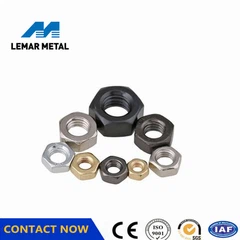
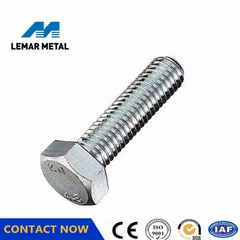
Hex Weld Nut
Hex weld nuts are widely used in various industries due to their easy installation and high - strength connection. The surface roughness requirements for hex weld nuts are often determined by the mating parts and the welding method. For example, if the hex weld nut is to be welded to a thin - walled sheet metal, a smoother surface (lower Ra and Rz values) may be required to prevent excessive heat concentration during welding, which could cause deformation of the sheet metal.


In addition, the surface finish of hex weld nuts can also affect their torque - tension characteristics. A smoother surface can reduce the friction between the nut and the bolt, ensuring a more accurate and consistent tightening torque. This is particularly important in applications where precise fastening is required, such as in the assembly of mechanical components.
Hexagon Spot Welding Nut
Hexagon spot welding nuts are designed for spot welding applications. The surface roughness of these nuts is crucial for achieving a good spot weld. A proper surface roughness can help to concentrate the welding current at the contact points, resulting in a stronger and more stable weld joint.
If the surface is too smooth, the contact resistance may be too low, leading to insufficient heat generation during spot welding. On the other hand, if the surface is too rough, the contact area may be uneven, causing inconsistent welding quality. Therefore, for hexagon spot welding nuts, the surface roughness needs to be carefully controlled within a specific range to ensure optimal welding performance.
Square Spot Welding Nut
Square spot welding nuts are commonly used in applications where a larger contact area or a specific orientation is required. Similar to hexagon spot welding nuts, the surface roughness of square spot welding nuts is closely related to the welding process.
The square shape of these nuts may also introduce additional challenges in terms of surface finish. For example, the corners of the square nut need to have a consistent surface roughness to ensure uniform welding around the perimeter. In some cases, special manufacturing processes may be required to achieve the desired surface roughness on square spot welding nuts.
Controlling Surface Roughness in Weld Nut Manufacturing
As a weld nut supplier, we employ various methods to control the surface roughness of our products. One of the most common methods is machining. By using appropriate cutting tools and machining parameters, we can achieve the desired surface finish. For example, precision turning or milling can be used to produce weld nuts with low Ra and Rz values.
Another method is surface treatment. Processes such as grinding, polishing, or shot peening can be used to modify the surface roughness. Grinding can remove the surface irregularities and achieve a smoother surface, while shot peening can increase the surface roughness slightly and also improve the fatigue resistance of the weld nuts.
In addition, we also conduct strict quality control during the manufacturing process. We use advanced measuring instruments, such as profilometers, to measure the surface roughness of the weld nuts at different stages of production. This ensures that our products meet the specified surface roughness requirements.
Conclusion
In conclusion, surface roughness is a vital factor in the performance and quality of weld nuts. Understanding the common surface roughness requirements, such as Ra and Rz values, and their impact on different types of weld nuts is essential for both manufacturers and users. As a weld nut supplier, we are committed to providing high - quality products that meet the specific surface roughness requirements of our customers.
If you are in need of weld nuts for your projects, whether it is Hex Weld Nut, Hexagon Spot Welding Nut, or Square Spot Welding Nut, please feel free to contact us for further discussion and procurement. We have the expertise and experience to provide you with the most suitable solutions for your application.
References
- ISO 4287: Geometrical product specifications (GPS) - Surface texture: Profile method - Terms, definitions and surface texture parameters.
- ASME B46.1: Surface Texture (Surface Roughness, Waviness, and Lay).
Send Inquiry