

What are the frictional properties of weld nuts?
Dec 30, 2025
Leave a message
Hey there! As a supplier of weld nuts, I've been getting a lot of questions lately about the frictional properties of these little but crucial components. So, I thought I'd sit down and share what I know with you all.
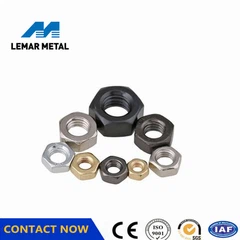
First off, let's talk about what weld nuts are. Weld nuts are nuts that are designed to be welded onto a metal surface. They come in different shapes and sizes, like the Hex Weld Nut, Square Spot Welding Nut, and Square Weld Nut. These nuts are used in a wide range of industries, from automotive to construction, because they provide a strong and reliable way to attach bolts or screws to a metal part.
Now, let's dive into the frictional properties of weld nuts. Friction is a force that resists the relative motion between two surfaces in contact. In the case of weld nuts, friction plays a crucial role in ensuring that the nut stays in place and that the connection between the nut and the bolt or screw is secure.
One of the key factors that affect the frictional properties of weld nuts is the surface finish. A smooth surface finish can reduce friction, which might seem like a good thing at first. However, in some applications, too little friction can cause the nut to loosen over time, especially under vibration or dynamic loads. On the other hand, a rough surface finish can increase friction, which helps to keep the nut in place. But if the surface is too rough, it can also make it difficult to install the bolt or screw, and it might even damage the threads.
The material of the weld nut also has a big impact on its frictional properties. Different metals have different coefficients of friction. For example, steel weld nuts generally have a higher coefficient of friction compared to aluminum weld nuts. This means that steel nuts are more likely to stay in place without loosening. However, the choice of material also depends on other factors such as the weight, corrosion resistance, and cost requirements of the application.
Another important factor is the torque applied when tightening the bolt or screw. Torque is a measure of the force used to rotate an object. When you tighten a bolt or screw into a weld nut, the torque creates a clamping force that holds the two parts together. The higher the torque, the greater the clamping force, and the more friction is generated between the threads of the nut and the bolt. But it's important to apply the right amount of torque. If you apply too much torque, you might damage the nut or the threads, and if you apply too little, the connection might not be secure.


The design of the weld nut can also influence its frictional properties. Some weld nuts have special features such as serrations or knurls on the surface. These features are designed to increase friction and prevent the nut from rotating. For example, a serrated weld nut has small teeth on the surface that bite into the mating surface, creating a stronger grip.
In addition to these factors, the environment in which the weld nut is used can also affect its frictional properties. For instance, if the nut is exposed to high temperatures, the material might expand, which can change the fit between the nut and the bolt and reduce the friction. Similarly, if the nut is exposed to moisture or chemicals, it might corrode, which can also affect the frictional properties.
So, how do we ensure that the weld nuts we supply have the right frictional properties for our customers' applications? Well, we start by carefully selecting the materials and surface finishes. We work with high - quality metals and use advanced manufacturing processes to achieve the desired surface roughness. We also conduct extensive testing to measure the frictional properties of our weld nuts. We use specialized equipment to simulate different operating conditions, such as vibration, temperature changes, and dynamic loads, to make sure that our nuts can withstand these conditions and maintain a secure connection.
When it comes to torque, we provide our customers with detailed torque specifications based on the type of weld nut, the material, and the application. We also offer training and support to help our customers understand how to apply the right amount of torque.
If you're in the market for weld nuts, it's important to consider the frictional properties carefully. You need to choose the right type of weld nut, material, and surface finish based on your specific application requirements. Whether you need a Hex Weld Nut for a precision automotive application or a Square Weld Nut for a heavy - duty construction project, we've got you covered.
We're always happy to help you find the perfect weld nut for your needs. If you have any questions or if you'd like to discuss your requirements in more detail, don't hesitate to reach out. We can provide you with samples, technical data, and pricing information. Let's work together to ensure that your projects are a success with our high - quality weld nuts.
References
- Machinery's Handbook, 31st Edition
- ASME Standards on Fasteners
- Research papers on friction and fastening technology from industry journals
Send Inquiry