





How do spring washers interact with different surface materials?
Jun 11, 2026
Leave a message
Spring washers are crucial components in various industries, known for their ability to provide a controlled spring force and prevent loosening of fasteners. As a spring washer supplier, I have deep insights into how these washers interact with different surface materials. In this blog, we will explore the diverse ways spring washers perform on various surfaces and the factors that influence their effectiveness.
Understanding Spring Washers
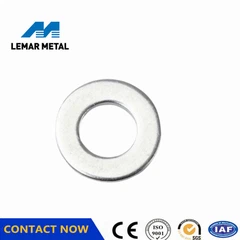
Spring washers are designed to work under compression. When tightened, they store elastic energy, which is then released to maintain a constant preload on the fastener. This preload helps in preventing the fastener from loosening due to vibrations, thermal expansion, or other external forces. There are different types of spring washers, such as the Spring Washer DIN127, Stainless Steel Spring Washers, and Stainless Steel Spring Lock Washer, each with its own unique characteristics and applications.
Interaction with Metal Surfaces
Steel Surfaces
Steel is one of the most common materials used in industrial applications. When a spring washer is used on a steel surface, it provides excellent grip and anti - loosening properties. The surface roughness of steel can vary, and a spring washer can conform to the surface irregularities. High - carbon steel spring washers are often used with steel surfaces as they have high strength and can withstand significant loads. The interaction between the spring washer and the steel surface creates a frictional force that helps in keeping the fastener in place. However, over time, corrosion can be an issue, especially in harsh environments. Using Stainless Steel Spring Washers can mitigate this problem as stainless steel is more resistant to corrosion.
Aluminum Surfaces
Aluminum is a lightweight metal widely used in aerospace and automotive industries. Spring washers on aluminum surfaces need to be carefully selected. Aluminum is a softer metal compared to steel, and there is a risk of galling or scratching the surface. Using spring washers with a smooth finish or a low - friction coating can reduce the risk of damage to the aluminum surface. Additionally, the spring force of the washer should be adjusted to avoid over - stressing the aluminum, which could lead to deformation.
Copper Surfaces
Copper is a highly conductive metal used in electrical applications. Spring washers on copper surfaces need to be non - corrosive to prevent any electrical interference. Stainless Steel Spring Lock Washer can be a good choice as it provides both anti - loosening properties and corrosion resistance. The interaction between the spring washer and the copper surface should ensure a stable electrical connection while preventing the fastener from loosening.


Interaction with Non - Metal Surfaces
Plastic Surfaces
Plastic is widely used in consumer products and some industrial applications. When using spring washers on plastic surfaces, the main concern is not to damage the plastic. The spring force should be carefully controlled to avoid cracking or deforming the plastic. Soft - faced spring washers or washers with a large contact area can be used to distribute the load evenly. Additionally, the type of plastic matters. For example, thermoplastics may have different properties compared to thermosetting plastics, and the spring washer should be selected accordingly.
Wood Surfaces
Wood is a natural material used in construction and furniture. Spring washers on wood surfaces can help in preventing the fastener from pulling out. However, wood is a porous material, and the spring washer may need to be designed to penetrate slightly into the wood to provide better grip. The surface finish of the spring washer can also affect its performance on wood. A rough - textured washer may provide better grip, but it should not cause excessive damage to the wood surface.
Factors Affecting the Interaction
Surface Finish
The surface finish of both the spring washer and the mating surface plays a crucial role. A smooth surface finish on the spring washer can reduce friction, which may be beneficial in some applications where a low - torque tightening is required. On the other hand, a rough surface finish can increase friction and improve the anti - loosening properties. The surface finish of the mating surface also affects the interaction. A rough mating surface can provide better grip for the spring washer, but it may also cause wear on the washer over time.
Coating
Coatings on spring washers can enhance their performance on different surfaces. For example, a zinc coating can provide corrosion resistance on metal surfaces. A Teflon coating can reduce friction, which is useful in applications where the fastener needs to be easily adjustable. Coatings can also protect the spring washer from environmental factors such as moisture and chemicals.
Temperature
Temperature can have a significant impact on the interaction between spring washers and different surfaces. At high temperatures, the material properties of both the spring washer and the surface material can change. For example, some metals may expand at high temperatures, which can affect the preload of the spring washer. Similarly, plastics may become softer at high temperatures, and the spring washer may need to be adjusted to maintain its effectiveness.
Applications and Considerations
Automotive Industry
In the automotive industry, spring washers are used in various components such as engines, transmissions, and suspension systems. The interaction between spring washers and different surface materials is critical for the safety and performance of the vehicle. For example, in engine components, spring washers need to withstand high temperatures and vibrations. Stainless Steel Spring Washers are often used in these applications due to their high strength and corrosion resistance.
Construction Industry
In the construction industry, spring washers are used in structural connections, electrical installations, and plumbing systems. The choice of spring washer depends on the surface material and the load requirements. For example, in steel structures, high - strength spring washers are used to ensure the stability of the connections. In electrical installations, spring washers need to provide a good electrical contact while preventing loosening.
Conclusion
The interaction between spring washers and different surface materials is a complex process that depends on various factors such as surface finish, coating, temperature, and the properties of the surface material itself. As a spring washer supplier, we understand the importance of providing the right type of spring washer for different applications. Whether it is a Spring Washer DIN127 for a specific industrial standard or Stainless Steel Spring Lock Washer for corrosion - resistant applications, we can offer a wide range of products to meet your needs.
If you are in need of high - quality spring washers for your projects, we invite you to contact us for a detailed discussion. Our team of experts can help you select the most suitable spring washer for your specific requirements.
Send Inquiry