

What is the maximum load a bolt can carry?
Aug 26, 2025
Leave a message
What is the maximum load a bolt can carry?
As a seasoned bolts supplier, I've encountered numerous inquiries regarding the maximum load a bolt can carry. This is a crucial question, especially for engineers, construction workers, and anyone involved in projects where bolts play a vital role. Understanding the maximum load capacity of bolts is essential for ensuring the safety and integrity of structures and machinery.
Factors Affecting Bolt Load Capacity
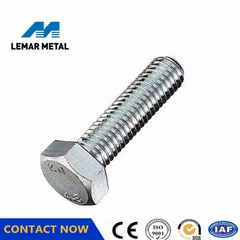
The maximum load a bolt can carry is influenced by several factors. One of the primary factors is the material of the bolt. Different materials have varying strengths and properties. For instance, high - strength alloy steel bolts are capable of withstanding much higher loads compared to standard carbon steel bolts. Alloy steel bolts are often used in heavy - duty applications such as bridges, high - rise buildings, and large - scale machinery.
The diameter of the bolt also plays a significant role. Generally, a larger diameter bolt can carry a higher load. This is because a larger cross - sectional area provides more material to resist the applied forces. However, it's not just about the diameter; the thread pitch and the length of the threaded portion also matter. A finer thread pitch can sometimes increase the load - carrying capacity as it provides more contact area between the bolt and the nut or the threaded hole.
The type of loading is another critical factor. Bolts can be subjected to different types of loads, including tensile, shear, and combined loads. Tensile loads pull the bolt axially, trying to stretch it. Shear loads act perpendicular to the axis of the bolt, attempting to cut it. In many real - world applications, bolts experience a combination of these loads. For example, in a joint where two members are being held together, there may be both a tensile force trying to separate the members and a shear force due to lateral movement.


The quality of the installation is equally important. A bolt that is not tightened properly may not be able to carry its full rated load. Under - tightening can lead to loosening over time, which can cause vibrations and eventually result in failure. On the other hand, over - tightening can damage the bolt, reducing its load - carrying capacity and potentially causing it to break.
Calculating the Maximum Load Capacity
Calculating the maximum load a bolt can carry is a complex process that typically involves engineering calculations and reference to standards. For tensile loads, the ultimate tensile strength of the bolt material is a key parameter. The ultimate tensile strength is the maximum stress a material can withstand before it breaks. However, in practical applications, a safety factor is applied to ensure that the bolt operates well below its ultimate strength.
The formula for calculating the tensile load capacity of a bolt is (F = A_{t}\times S_{t}), where (F) is the tensile load, (A_{t}) is the tensile stress area of the bolt, and (S_{t}) is the allowable tensile stress. The tensile stress area takes into account the reduction in cross - sectional area due to the threads. The allowable tensile stress is usually a fraction of the ultimate tensile strength, determined by the safety factor.
For shear loads, the shear strength of the bolt material is considered. The formula for shear load capacity is (F_{s}=A_{s}\times S_{s}), where (F_{s}) is the shear load, (A_{s}) is the shear area, and (S_{s}) is the allowable shear stress.
In cases where there are combined loads, more complex calculations are required. The von Mises stress criterion is often used to assess the combined effect of tensile and shear stresses. This criterion helps determine if the combined stress on the bolt exceeds the allowable stress.
Importance of Choosing the Right Bolt
Choosing the right bolt for a specific application is crucial. Using a bolt with a lower load - carrying capacity than required can lead to catastrophic failures. For example, in an automotive engine, if the bolts holding the cylinder head are not strong enough, they can fail under the high - pressure and high - temperature conditions, resulting in engine damage.
On the other hand, using an overly large or high - strength bolt when it's not necessary can be wasteful. It can increase the cost of the project and may also add unnecessary weight. For instance, in a small - scale DIY project, using a heavy - duty industrial bolt is not only overkill but also more expensive.
As a bolts supplier, I always recommend working closely with engineers or experts to determine the appropriate bolt for a given application. They can take into account all the relevant factors such as the type of load, the environment, and the safety requirements.
Our Product Range and the Antiluce Drop Lock
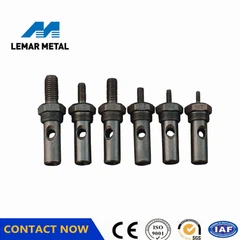
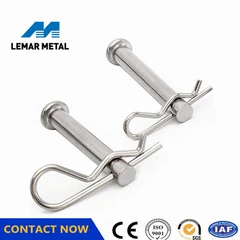
At our company, we offer a wide range of bolts to meet different load - carrying requirements. One of our popular products is the Antiluce Drop Lock. This bolt is designed with unique features that enhance its load - carrying capacity and reliability.
The Antiluce Drop Lock is made from high - quality alloy steel, which gives it excellent strength and durability. It has a precision - engineered thread design that provides a high level of contact area, allowing it to better distribute the applied loads. This makes it suitable for applications where high tensile and shear loads are expected.
In addition, the Antiluce Drop Lock has a special locking mechanism that prevents it from loosening under vibration. This is particularly important in applications such as machinery and vehicles, where vibrations can cause bolts to come loose over time. By maintaining its tightness, the bolt can continue to carry its rated load safely.
Contact Us for Your Bolt Needs
If you're involved in a project and need to determine the right bolts for your specific load - carrying requirements, we're here to help. Our team of experts has extensive knowledge and experience in the field of bolts. We can assist you in selecting the appropriate bolts, calculating the load - carrying capacity, and ensuring proper installation.
Whether you're working on a small DIY project or a large - scale industrial construction, we have the right bolts for you. Contact us today to start a discussion about your bolt needs. We're committed to providing high - quality products and excellent customer service.
References
- "Mechanical Engineering Design" by Joseph E. Shigley, Charles R. Mischke, and Richard G. Budynas.
- "Bolts and Fasteners Handbook" by various industry experts.
- Engineering standards and codes related to bolts and fasteners, such as ASTM standards.
Send Inquiry