




What is the maximum temperature a flat washer can withstand?
Aug 26, 2025
Leave a message
Hey there! As a flat washer supplier, I often get asked about the maximum temperature these little guys can withstand. It's a crucial question, especially for industries where high temperatures are the norm. So, let's dive right in and explore this topic.
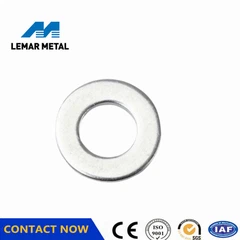
First off, what exactly are flat washers? Well, they're simple yet incredibly useful components. They're thin, flat disks with a hole in the middle, and they're used in a wide range of applications. You can find them in everything from small household appliances to heavy - duty industrial machinery.
Now, let's talk about temperature resistance. The maximum temperature a flat washer can handle depends on several factors, and the material it's made of is the most important one.
Different Materials and Their Temperature Limits
Steel Flat Washers
Steel is one of the most commonly used materials for flat washers. Mild steel washers are pretty affordable and widely available. They can usually withstand temperatures up to around 400 - 500°F (204 - 260°C). But here's the catch: at higher temperatures, steel starts to lose its strength. The heat causes the metal to expand, and if it expands too much, it can lead to the washer deforming. This deformation can then cause problems in the machinery where it's used, like loosening bolts or causing uneven pressure distribution.
Stainless steel washers, on the other hand, are a bit more heat - resistant. Depending on the grade of stainless steel, they can handle temperatures up to 800 - 1000°F (427 - 538°C). For example, grade 304 stainless steel is commonly used in many applications and has a decent heat - resistance capacity. But if you need even higher temperature resistance, you might want to look into grade 316 stainless steel, which can withstand even more extreme conditions. You can check out our Heavy Duty Flat Washer section, where we offer a variety of stainless steel washers suitable for different temperature requirements.
Brass Flat Washers
Brass is another popular material. It has good corrosion resistance and is relatively soft, which makes it easy to work with. Brass flat washers can typically withstand temperatures up to around 400 - 600°F (204 - 316°C). However, like steel, brass also expands when heated. At high temperatures, it can start to lose its shape and become brittle. So, if you're using brass washers in a high - temperature environment, you need to be careful about how close you get to their maximum temperature limit. Our Black Flat Washer collection includes some brass options that are great for applications where moderate temperatures are involved.
Copper Flat Washers
Copper is known for its excellent electrical conductivity, but it also has some heat - resistant properties. Copper flat washers can handle temperatures up to around 600 - 800°F (316 - 427°C). Copper is a very malleable metal, and at high temperatures, it can deform more easily than some other materials. But in applications where electrical conductivity is important along with some heat resistance, copper washers can be a great choice.
Ceramic Flat Washers
When it comes to extremely high - temperature applications, ceramic flat washers are the way to go. Ceramics can withstand temperatures well over 1000°F (538°C), sometimes even up to 2000°F (1093°C) or more. They're non - conductive, which makes them suitable for electrical applications where you need to insulate components from heat. However, ceramics are brittle, so they need to be handled carefully. If you're in an industry that requires washers for extremely high - temperature environments, our Square Taper Washers might include some ceramic options that could fit your needs.


Other Factors Affecting Temperature Resistance
It's not just the material that matters. The design and thickness of the flat washer also play a role. Thicker washers generally have better heat - dissipation properties. They can absorb more heat without reaching their maximum temperature as quickly as thinner washers.
The environment in which the washer is used is also crucial. If the washer is in an area with good air circulation, it can cool down more easily, which means it can potentially withstand higher temperatures. On the other hand, if it's in a confined space with poor ventilation, the heat can build up, and the washer might reach its maximum temperature limit more quickly.
Real - World Applications
Let's take a look at some real - world applications to see how temperature resistance matters. In the automotive industry, flat washers are used in engines. The engine generates a lot of heat, and the washers need to be able to withstand these high temperatures without deforming. Steel and stainless steel washers are commonly used here because they can handle the heat and also provide the necessary strength.
In the aerospace industry, where extreme conditions are the norm, high - temperature - resistant materials like ceramics are often used. The components in airplanes and spacecraft are exposed to very high temperatures during takeoff, flight, and re - entry, so the washers need to be able to perform under these harsh conditions.
In the electrical industry, copper and ceramic washers are popular. Copper washers are used for their electrical conductivity, and ceramic washers are used for insulation and high - temperature resistance.
Why Choose Our Flat Washers?
As a flat washer supplier, we understand the importance of temperature resistance. We offer a wide range of flat washers made from different materials to suit various temperature requirements. Our quality control process ensures that each washer meets the highest standards. Whether you need a washer for a low - temperature application or an extremely high - temperature one, we've got you covered.
If you're in the market for flat washers and have specific temperature requirements, don't hesitate to reach out. We can help you choose the right washer for your needs. Our team of experts is always ready to answer your questions and provide you with the best solutions.
So, if you're looking for reliable flat washers that can withstand the temperatures your application demands, get in touch with us for a procurement discussion. We're here to make sure you get the perfect washers for your projects.
References
- ASM Handbook, Volume 1: Properties and Selection: Irons, Steels, and High - Performance Alloys
- Metals Handbook Desk Edition, 3rd Edition
Send Inquiry