


Are there international standards for flange nuts?
Oct 29, 2025
Leave a message
Hey there! I'm a supplier of flange nuts, and I often get asked if there are international standards for these little but mighty fasteners. So, I thought I'd dive into this topic and share what I've learned over the years in the business.
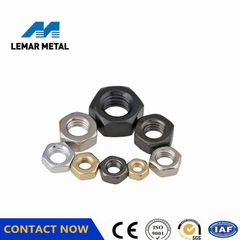
First off, let's talk about what flange nuts are. Flange nuts are nuts with a wide flange at one end that acts as an integrated washer. This flange distributes the pressure of the nut over a larger area, reducing the risk of the nut loosening and providing a more secure hold. They're used in a variety of industries, from automotive to construction, and they come in different shapes, sizes, and materials.
Now, to answer the big question: yes, there are international standards for flange nuts. These standards are crucial as they ensure that the nuts are of consistent quality, fit properly, and perform as expected. They also make it easier for manufacturers, suppliers, and users to communicate and specify the right type of nut for their needs.
One of the most well - known international standards organizations is the International Organization for Standardization (ISO). The ISO has developed a series of standards for fasteners, including flange nuts. ISO standards cover aspects such as dimensions, mechanical properties, and marking requirements. For example, ISO 4161 specifies the dimensions and mechanical properties of hexagon flange nuts with coarse pitch threads. These standards ensure that nuts from different manufacturers around the world can be used interchangeably in various applications.
In Europe, the Deutsches Institut für Normung (DIN) also plays a significant role in setting standards for flange nuts. The DIN6923 Flange Nut is a popular type of flange nut that conforms to DIN standards. DIN 6923 defines the shape, dimensions, and mechanical properties of these nuts, making them a reliable choice for European and international markets. The nuts meeting DIN standards are known for their high quality and precision manufacturing, which is why they're widely used in industries that require strict adherence to specifications.
In the United States, the American National Standards Institute (ANSI) and the Society of Automotive Engineers (SAE) have their own standards for flange nuts. ANSI standards focus on general industrial applications, while SAE standards are more commonly used in the automotive industry. These standards ensure that the nuts used in American - made products meet certain quality and performance criteria.


When it comes to the types of flange nuts, there are several variations that are subject to different standards. For instance, the Hex Serrated Flange Nut is designed with serrations on the flange. These serrations help to prevent the nut from loosening due to vibration. The dimensions and performance of these nuts are also regulated by international and national standards to ensure their effectiveness.
Another type is the Steel Serrated Hex Flange Nut. Made from steel, these nuts offer high strength and durability. The standards for steel flange nuts cover not only their physical dimensions but also their chemical composition and heat - treatment processes. This ensures that the nuts can withstand the stresses and strains of their intended applications.
As a supplier, I've seen firsthand the importance of these standards. They give our customers confidence in the products they're buying. When a customer comes to us and asks for a flange nut that meets a specific standard, we know exactly what they need, and we can provide them with a product that will perform as expected.
For example, if a customer is working on an automotive project, they might need a flange nut that meets SAE standards. We can quickly identify the right nut from our inventory and ensure that it has the correct dimensions, mechanical properties, and markings. This saves time and reduces the risk of errors in the assembly process.
However, it's not always straightforward. Sometimes, customers might have unique requirements that go beyond the standard specifications. In such cases, we work closely with them to develop custom - made flange nuts. We use our expertise in manufacturing and knowledge of the standards to ensure that these custom nuts still meet the necessary quality and performance criteria.
When dealing with international customers, we also need to be aware of the different standards in different regions. For instance, a customer from Asia might prefer nuts that meet ISO standards, while a European customer might look for DIN - compliant products. We make sure to clearly label our products with the relevant standards they meet, so our customers can easily identify the right nuts for their projects.
In addition to the standards for dimensions and mechanical properties, there are also standards for packaging and shipping. These standards ensure that the flange nuts are protected during transit and arrive at the customer's location in good condition. We follow these packaging standards to prevent damage to the nuts and to maintain their quality until they're ready to be used.
To sum it up, international standards for flange nuts are essential for the global fastener industry. They ensure quality, consistency, and interchangeability of products. Whether you're a manufacturer, an engineer, or a DIY enthusiast, knowing about these standards can help you make informed decisions when choosing flange nuts for your projects.
If you're in the market for flange nuts, whether you need standard or custom - made ones, I'd love to hear from you. We've got a wide range of flange nuts that meet various international and national standards. Just reach out to us, and we'll work with you to find the perfect solution for your needs. Let's start a conversation about your flange nut requirements and see how we can help you with your next project.
References
- International Organization for Standardization (ISO) standards on fasteners
- Deutsches Institut für Normung (DIN) standards for flange nuts
- American National Standards Institute (ANSI) and Society of Automotive Engineers (SAE) standards for fasteners
Send Inquiry