

Can a 3D adjustable welding workbench be used for aluminum welding?
Oct 22, 2026
Leave a message
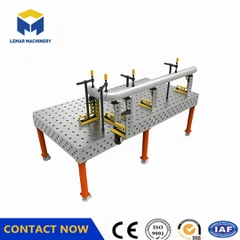
If you've ever spent time aluminum welding, you know the dance between precision, heat management, and material distortion that defines every good weld. For years, many welders stuck to traditional steel welding tables or makeshift setups when working with aluminum, assuming the two materials (the table and the workpiece) would clash in ways that ruin results. That's a question I hear all the time as a supplier of 3D adjustable welding workbenches: Can a 3D adjustable welding workbench be used for aluminum welding? The short answer is yes-but to get it right, you have to understand how aluminum interacts with these workstations, which features matter most, and how to adapt your process to avoid common pitfalls. Let's break this down, based on what we've learned supporting welders across automotive, aerospace, and general fabrication.
First, let's address the core of the confusion: Aluminum is a soft, highly conductive metal that expands and contracts far more than steel when exposed to welding heat. Traditional steel tables can sometimes work, but they're not designed for the flexibility aluminum projects demand, and they risk more distortion. 3D adjustable welding workbenches, by contrast, are modular, grid-based systems that let you adjust fixtures, clamps, and supports in three axes (X, Y, Z) to hold workpieces securely without creating hard points that warp aluminum. But not all 3D workbenches are created equal for aluminum, so let's dive into the specific factors that make this possible.
The single most critical feature for aluminum welding is the table's surface material and finish. Many standard 3D workbenches are made of carbon steel, which is durable for heavy-duty steel welding, but uncoated or plain steel surfaces can react badly with aluminum. When you weld aluminum, you're creating tiny splatters of molten aluminum that can stick to steel surfaces, and over time, that adhesion can transfer impurities to your aluminum workpiece during future welds. Worse, the extreme temperature swings that aluminum undergoes can cause steel tables to warp slightly, throwing off precise adjustments needed for tight tolerance aluminum parts. That's why a nitrided surface is non-negotiable for aluminum-focused 3D workbenches. Nitriding is a process that infuses nitrogen into the steel's surface to create a hard, corrosion-resistant layer that prevents aluminum splatter from sticking and resists heat-related warping. We've seen this solve so many headaches for welders switching to aluminum from steel, and our top option for this is the Nitrided Welding Fixture Table, which is purpose-built to handle aluminum's unique demands without the cross-contamination or distortion that plain steel tables cause. It's not just the surface material, either- the grid hole size matters. Most 3D tables use 16mm or 28mm grid holes; for aluminum, we recommend a 16mm pitch because it lets you place small, precise clamps and fixtures closer to the weld line, minimizing the unsupported span of thin aluminum sheets that often warp mid-weld. That's a detail many welders miss when they grab any 3D table off the shelf, but it's the difference between a perfectly welded aluminum bracket and a distorted mess.
Next, the adjustability of the workbench directly translates to better aluminum weld quality. Aluminum's high thermal expansion means you need to hold parts securely without clamping them so tight that you introduce internal stress that causes cracks when the metal cools. 3D adjustable workbenches shine here because they let you fine-tune clamp positions, spacing, and angle in real time as you fit pieces together. For example, if you're welding a thin aluminum panel for a custom automotive frame, you can position a horizontal support bar at the exact Z-height to hold the panel flat, then use vertical clamps on the X and Y axes to pull edges into alignment-something impossible with a fixed traditional table. We've also found that modularity is a huge plus here. If a job calls for a small aluminum fixture versus a large boat component, you can rearrange the grid, add or remove crossbars, and swap fixtures in minutes, no drilling or permanent setup required. This flexibility is why the Portable Welding Workbench, our compact 3D adjustable model, is a favorite for mobile aluminum welders or small fabrication shops that handle a mix of small and medium aluminum projects. It's light enough to move between job sites, but still rigid enough to hold aluminum parts steady during TIG or MIG welding.
But here's a caveat: You can't just set up a 3D steel welding table and expect it to work for aluminum. Wait-3D steel welding tables are designed for steel, right? Let's clarify that. A standard 3D steel table without a nitrided surface will have two main issues with aluminum: first, as I mentioned, aluminum splatter will bond to the steel surface, and when you try to remove that splatter, you'll scratch the table, creating more areas where future splatter sticks. Second, the steel surface can conduct heat away from the weld too quickly, making it harder to create a clean, strong aluminum weld. For that reason, we always recommend looking for a 3D workbench with a heat-resistant, non-stick coating when welding aluminum, rather than a plain steel surface. That said, if you already own a 3D steel welding table and only occasionally work with aluminum, you can take steps to adapt it: Place a sacrificial aluminum plate on the table surface during welding, and clean the table after each use to remove any splatter. But for regular aluminum work, a purpose-built nitrided 3D table is well worth the investment.
Another key benefit of 3D adjustable workbenches for aluminum is their ability to minimize distortion. Aluminum expands at about twice the rate of steel, so when you weld a joint, the heat causes the area around the weld to swell, and when it cools, it pulls inward, often leading to warping. A good 3D setup lets you use a technique called "clamp pre-stressing" for aluminum: you can position clamps to apply light, controlled pressure to counteract that cooling shrinkage. For example, if you're welding a rectangular aluminum box, you can adjust the side clamps to pull the edges slightly outward before welding, so when the weld cools and pulls inward, the box stays perfectly square. Traditional tables don't offer that level of precise adjustability across multiple axes, making it much harder to control distortion. That's where the Universal Welding Table comes in-our most popular mid-range model that balances adjustability, surface durability, and price, perfect for shops that handle a mix of aluminum and steel projects. It works just as well for a small aluminum TIG weld as it does for a heavy steel MIG job, so you don't need separate tables for different materials.
We've worked with a lot of welders who were skeptical at first. A few years back, a customer who ran a small aerospace fabrication shop came to us complaining that their fixed steel table was ruining 2024 aluminum parts. They were getting weld contamination and 1-2mm of warping on thin aluminum sheets that made the parts unfit for use. We suggested they try our Three Dimensional Flexible Platform, a heavy-duty 3D workbench with a nitrided surface and 16mm grid pattern tailored for precision aluminum work. Within a month, they came back saying their scrap rate for aluminum parts dropped by 40%, and their weld quality improved enough to land a new contract for small aerospace components. That kind of real-world result is why we're confident 3D adjustable workbenches work for aluminum-when configured correctly.
Now, let's walk through a quick setup tip to make sure your 3D workbench works for aluminum. First, start with a nitrided surface-this is non-negotiable for consistent results. Next, use the right grid pattern: 16mm is ideal for small to medium aluminum parts, while 28mm works for larger, thicker aluminum sections. When placing clamps, keep them at least 1 inch away from the weld line to avoid heat sink, which can cause porosity in aluminum welds (a common flaw where tiny holes form in the weld metal). For thin aluminum sheets (under 1/8 inch), add a backing bar of the same aluminum material under the weld joint to prevent burn-through and reduce distortion. And don't over-tighten clamps-aluminum softens at high temperatures, and excessive clamping pressure will cause the part to deform, not hold it steady.
Of course, like any tool, 3D adjustable workbenches aren't perfect for every aluminum job. If you're welding very large, thick aluminum parts (like a 10-foot aluminum I-beam), you might need to combine a 3D table with additional support stands, since even the most rigid 3D workbench can't span 10 feet without sagging. For that kind of job, modular add-on extensions for our 3D tables can be combined with fixed stands to create a stable, custom setup. But for the vast majority of aluminum welding jobs-from custom metal art to automotive body panels to small aerospace components-a 3D adjustable workbench is not only usable, it's often better than traditional setups.
What about cost? I know that's a big concern for welders and shop owners. A 3D adjustable workbench might seem like a larger investment than a cheap steel table, but when you factor in lower scrap rates, faster setup times, and less rework for aluminum parts, it pays for itself quickly. For a small shop that does 50% steel and 50% aluminum work, our Universal Welding Table is a great value-it handles both materials well and doesn't require buying separate tables. For mobile welders, the Portable Welding Workbench is compact enough to fit in a pickup truck, so you can bring high-quality aluminum welding setup to every job site.


At the end of the day, the biggest myth we hear is that aluminum can only be welded on specialty aluminum tables. That's not true. Aluminum can be welded on a 3D adjustable workbench-you just need to pick the right model for the job, prioritize nitrided surfaces, and adjust your setup technique to work with aluminum's unique properties. We've designed our entire line of 3D welding tables with this in mind, because we've seen how much this tool can improve aluminum weld quality, reduce waste, and make welders' jobs easier.
If you're ready to upgrade your aluminum welding setup, or you want to learn more about which 3D adjustable workbench is right for your specific projects, we're here to help. Our team works with welders of all skill levels, from hobbyists to large fabrication facilities, to find the perfect solution for their aluminum and steel welding needs.
Send Inquiry