

Can anchor bolts be galvanized?
Jul 31, 2026
Leave a message
As a dedicated supplier of anchor bolts, I often encounter a common question from our customers: Can anchor bolts be galvanized? In this blog post, I'll explore this topic in detail, delving into the process, benefits, and considerations of galvanizing anchor bolts.
Understanding Galvanization
Galvanization is a process of applying a protective zinc coating to steel or iron to prevent rusting. There are primarily two methods of galvanizing: hot-dip galvanizing and electro-galvanizing.
Hot-dip galvanizing involves immersing the anchor bolts in a bath of molten zinc at a temperature of around 450°C (842°F). This results in a thick, durable zinc coating that provides long-term protection against corrosion. The zinc reacts with the steel to form a series of zinc-iron alloy layers, which are firmly bonded to the surface of the bolt.
Electro-galvanizing, on the other hand, uses an electric current to deposit a thin layer of zinc onto the surface of the anchor bolt. This method is typically used for smaller bolts or when a more aesthetically pleasing finish is required. However, the zinc coating is thinner compared to hot-dip galvanizing, and it may not provide the same level of long-term corrosion protection.
Benefits of Galvanizing Anchor Bolts
Corrosion Resistance
One of the primary benefits of galvanizing anchor bolts is its excellent corrosion resistance. Zinc acts as a sacrificial anode, meaning it corrodes preferentially to the steel beneath it. This protects the anchor bolt from rust and extends its lifespan, especially in harsh environments such as coastal areas or industrial settings where exposure to moisture, chemicals, and salt is common.
Durability
Galvanized anchor bolts are more durable compared to non-galvanized bolts. The zinc coating provides a hard, protective layer that resists abrasion, impact, and wear. This makes galvanized anchor bolts suitable for a wide range of applications, including construction, infrastructure, and machinery.
Cost-Effectiveness
While the initial cost of galvanizing anchor bolts may be higher than non-galvanized bolts, it can be a cost-effective solution in the long run. The extended lifespan of galvanized bolts reduces the need for frequent replacements, saving both time and money. Additionally, the low maintenance requirements of galvanized bolts make them a practical choice for many applications.
Aesthetic Appeal
Galvanized anchor bolts have a distinctive silver-gray finish that can enhance the appearance of a structure. This makes them a popular choice for architectural applications where both functionality and aesthetics are important.
Considerations When Galvanizing Anchor Bolts
Coating Thickness
The thickness of the zinc coating is an important consideration when galvanizing anchor bolts. The thickness of the coating affects the corrosion resistance and durability of the bolt. Hot-dip galvanized bolts typically have a thicker coating compared to electro-galvanized bolts, providing better long-term protection.
Thread Integrity
Galvanizing can affect the thread integrity of anchor bolts. The zinc coating can add thickness to the threads, which may cause problems with fit and installation. It's important to ensure that the bolts are properly threaded and that the coating thickness is within the acceptable range to maintain the thread integrity.
Compatibility with Other Materials
Galvanized anchor bolts may not be compatible with certain materials, such as aluminum or stainless steel. When using galvanized bolts in conjunction with other materials, it's important to consider the potential for galvanic corrosion. Galvanic corrosion occurs when two different metals are in contact with each other in the presence of an electrolyte, such as water or moisture. To prevent galvanic corrosion, it's recommended to use insulating materials or coatings to separate the different metals.
Types of Anchor Bolts That Can Be Galvanized
9 Shaped Foundation Bolt
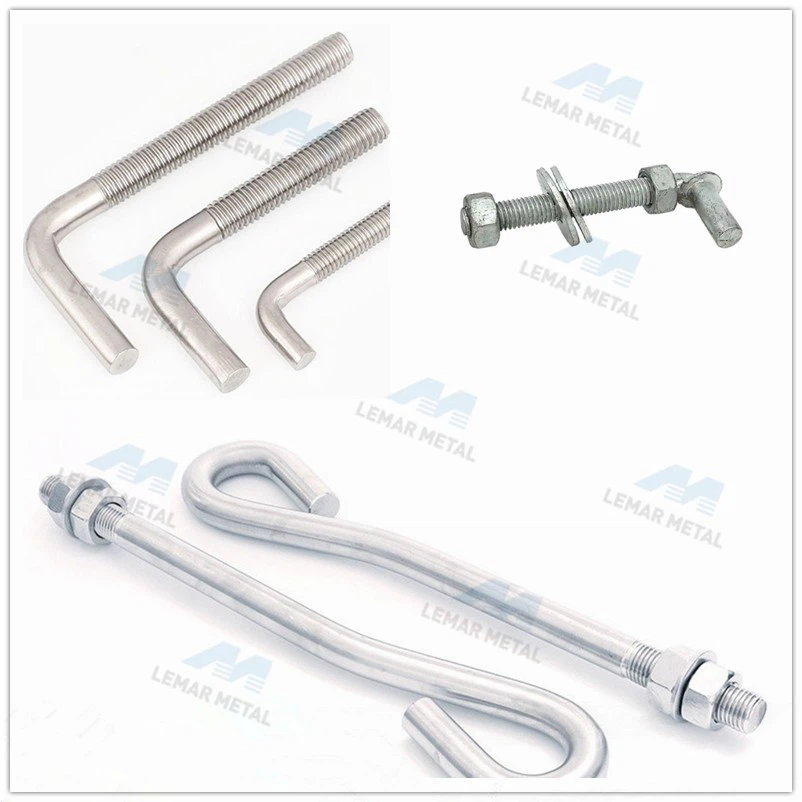
9 Shaped Foundation Bolt is a type of anchor bolt that is commonly used in construction to secure structures to concrete foundations. These bolts can be galvanized to provide corrosion resistance and enhance their durability. The 9-shaped design of the bolt provides a secure anchorage in the concrete, making it suitable for a variety of applications.
Embedded Anchor Bolt
Embedded Anchor Bolt is another type of anchor bolt that can be galvanized. These bolts are embedded in concrete during the construction process and are used to secure structural elements such as columns, beams, and equipment. Galvanizing the embedded anchor bolts helps to protect them from corrosion, ensuring the long-term stability of the structure.
Stainless Steel Anchor Bolt
Stainless Steel Anchor Bolt is a high-quality anchor bolt that offers excellent corrosion resistance. While stainless steel is naturally resistant to corrosion, galvanizing can provide an additional layer of protection, especially in harsh environments. Galvanized stainless steel anchor bolts are commonly used in applications where durability and corrosion resistance are critical, such as in marine and coastal structures.

Conclusion
In conclusion, anchor bolts can be galvanized to provide corrosion resistance, durability, and aesthetic appeal. Galvanization is a cost-effective solution that can extend the lifespan of anchor bolts and reduce the need for frequent replacements. When choosing to galvanize anchor bolts, it's important to consider the coating thickness, thread integrity, and compatibility with other materials. As a supplier of anchor bolts, we offer a wide range of galvanized anchor bolts to meet the needs of our customers. If you're interested in purchasing galvanized anchor bolts or have any questions about our products, please feel free to contact us for a consultation. We look forward to working with you to find the best solution for your project.
Send Inquiry