


Do flat washers increase the load - bearing capacity?
Jul 30, 2026
Leave a message
Do flat washers increase the load - bearing capacity?
In the world of mechanical engineering and construction, flat washers are humble yet crucial components. As a trusted flat washer supplier, I've encountered numerous inquiries about the role of flat washers, especially regarding their impact on load - bearing capacity. In this blog, I'll delve into the scientific aspects of flat washers and explore whether they truly enhance load - bearing capabilities.
Understanding Flat Washers
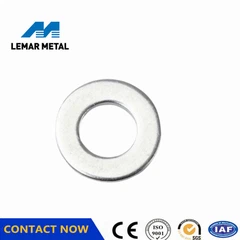
Flat washers are thin, circular discs with a hole in the center. They are typically placed between a nut or bolt head and the surface of the object being fastened. The primary purpose of a flat washer is to distribute the load of a fastener over a larger area. This simple design has far - reaching implications in various applications, from automotive engines to large - scale construction projects.
There are different types of flat washers available in the market. For instance, Carbon Steel Square Washer and Flat Square Washer offer unique geometric properties compared to the traditional circular flat washers. The square shape can provide different load - distribution characteristics, which we'll explore further.
The Science Behind Load - Bearing Capacity
Load - bearing capacity refers to the maximum amount of load that a structure or component can support without failure. In the context of fasteners, it is the ability of a bolt - nut - washer assembly to withstand forces without deforming or breaking.
When a bolt is tightened, it creates a clamping force. This force holds the connected parts together. However, if the force is concentrated on a small area, it can lead to several problems. For example, it may cause the surface of the connected material to deform, or in extreme cases, it can even punch through the material.
How Flat Washers Affect Load - Bearing Capacity
1. Load Distribution
One of the key ways flat washers impact load - bearing capacity is through load distribution. By increasing the contact area between the fastener and the surface of the connected material, flat washers spread the clamping force over a larger region. This reduces the stress concentration at the point of contact.
Let's consider a simple example. Suppose we have a bolt tightened against a thin metal plate without a washer. The force exerted by the bolt head is concentrated on a small circular area directly beneath it. This high stress can cause the plate to dent or deform. However, when a flat washer is added, the force is distributed over the entire surface area of the washer. As a result, the stress on the plate is significantly reduced, and the plate is less likely to deform.
2. Preventing Surface Damage
Flat washers also protect the surface of the connected material from damage. When a fastener is tightened, the direct contact between the hard bolt head or nut and the surface can cause scratches, abrasions, or galling. These surface damages can weaken the material and reduce its overall load - bearing capacity.
A flat washer acts as a buffer between the fastener and the material. It absorbs some of the energy during tightening and prevents the fastener from directly damaging the surface. This helps to maintain the integrity of the connected material and ensures that it can continue to support the load effectively.
3. Compensating for Surface Irregularities
In real - world applications, the surfaces of the connected materials may not be perfectly flat or smooth. There could be small bumps, ridges, or unevenness. Flat washers can compensate for these surface irregularities.
When a flat washer is placed between the fastener and the material, it can conform to the uneven surface to some extent. This ensures that the clamping force is evenly distributed across the contact area. Without a washer, the uneven surface could cause the clamping force to be concentrated in certain areas, leading to premature failure.
Factors Affecting the Effectiveness of Flat Washers
While flat washers can increase the load - bearing capacity, their effectiveness depends on several factors.
1. Material of the Washer
The material of the flat washer plays a crucial role. Different materials have different mechanical properties such as hardness, strength, and ductility. For example, Carbon Steel Square Washers are known for their high strength and durability. They can withstand high loads and are suitable for heavy - duty applications.
On the other hand, softer materials like aluminum washers may be more suitable for applications where corrosion resistance is a priority, but they may not be able to handle as high loads as carbon steel washers.
2. Size and Thickness of the Washer
The size and thickness of the flat washer also affect its load - distribution capabilities. A larger - diameter washer provides a larger contact area, which can distribute the load more effectively. Similarly, a thicker washer can be more rigid and better able to transfer the load.
However, increasing the size and thickness of the washer also has limitations. It may increase the weight and cost of the assembly, and in some cases, it may not be practical due to space constraints.
3. Quality of Installation
Proper installation of the flat washer is essential for its optimal performance. The washer should be placed correctly between the fastener and the material, and the fastener should be tightened to the appropriate torque. If the washer is misaligned or the fastener is over - or under - tightened, it can reduce the load - distribution effectiveness and ultimately affect the load - bearing capacity.
Practical Applications
The benefits of using flat washers to increase load - bearing capacity can be seen in a wide range of applications.
In the automotive industry, flat washers are used in engine components, suspension systems, and wheel assemblies. They help to ensure that the bolts and nuts can withstand the high vibrations and loads experienced during vehicle operation.
In construction, flat washers are used in steel structures, bridges, and buildings. They play a vital role in distributing the load of the fasteners, which helps to maintain the structural integrity of the entire building.
Conclusion
So, do flat washers increase the load - bearing capacity? The answer is yes. Through load distribution, preventing surface damage, and compensating for surface irregularities, flat washers can significantly enhance the load - bearing capabilities of a fastener assembly.
However, it is important to choose the right type of flat washer based on the application requirements. Factors such as material, size, thickness, and installation quality all play a role in determining the effectiveness of the washer.


As a flat washer supplier, I am committed to providing high - quality flat washers that meet the diverse needs of our customers. Whether you are in the automotive, construction, or any other industry, we have the right flat washer solution for you. If you are interested in purchasing flat washers or have any questions about their load - bearing capabilities, please don't hesitate to contact us for further discussion and procurement negotiation.
Send Inquiry