


How to test the quality of a flat washer?
Jul 29, 2026
Leave a message
As a flat washer supplier, ensuring the quality of our products is of utmost importance. Flat washers are essential components used in various industries, from automotive to construction, and their quality can significantly impact the performance and safety of the end products. In this blog, I will share some key methods and considerations for testing the quality of flat washers.
Visual Inspection
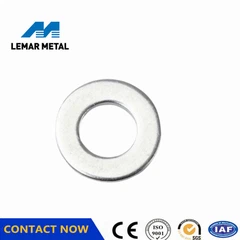
The first step in testing flat washers is a thorough visual inspection. This simple yet effective method can reveal many potential issues. When examining a flat washer, look for any visible defects such as cracks, chips, or surface irregularities. Cracks can weaken the washer and lead to premature failure, while chips can cause uneven distribution of pressure.
Surface finish is also crucial. A smooth surface ensures proper seating and reduces the risk of corrosion. Any rough spots or burrs can be a sign of poor manufacturing processes. Additionally, check the dimensions of the washer. Measure the outer diameter, inner diameter, and thickness to ensure they meet the specified tolerances. Deviations from the standard dimensions can affect the washer's fit and performance.
Material Analysis
The material of a flat washer plays a vital role in its quality and performance. Different materials have different properties, such as strength, corrosion resistance, and hardness. For example, Stainless Steel Square Gasket is known for its excellent corrosion resistance, making it suitable for applications in harsh environments.
To test the material of a flat washer, various methods can be used. One common method is chemical analysis, which can determine the composition of the material. This helps to ensure that the washer is made of the correct alloy and meets the required standards. Another method is hardness testing. A hardness test can provide information about the material's strength and resistance to deformation.
Dimensional Accuracy
Dimensional accuracy is critical for flat washers. The washer must fit properly with the fastener and the mating surface to function effectively. To test the dimensional accuracy, precision measuring tools such as calipers and micrometers can be used. These tools can measure the outer diameter, inner diameter, and thickness of the washer with high accuracy.
In addition to the basic dimensions, other factors such as flatness and parallelism also need to be considered. A flat washer should be flat within a certain tolerance to ensure even distribution of pressure. Parallelism between the two surfaces of the washer is also important to prevent uneven loading.
Mechanical Testing
Mechanical testing is used to evaluate the strength and performance of flat washers under different conditions. One of the most common mechanical tests is the compression test. In a compression test, a washer is subjected to a gradually increasing load until it fails. This test can determine the maximum load the washer can withstand and its deformation characteristics.
Another important mechanical test is the shear test. The shear test measures the washer's ability to resist shear forces. This is particularly important in applications where the washer is subjected to lateral forces. By performing mechanical tests, we can ensure that the flat washers meet the required strength and performance standards.
Coating and Surface Treatment
Coating and surface treatment can enhance the performance and durability of flat washers. For example, a zinc coating can provide corrosion resistance, while a phosphate coating can improve the adhesion of paint. When testing flat washers, it is important to evaluate the quality of the coating or surface treatment.
One way to test the coating is to perform a salt spray test. In a salt spray test, the washer is exposed to a saltwater mist for a certain period of time. After the test, the washer is examined for signs of corrosion. A good coating should provide adequate protection against corrosion.
Fatigue Testing
Fatigue testing is used to evaluate the washer's ability to withstand repeated loading. In many applications, flat washers are subjected to cyclic loads, which can cause fatigue failure over time. Fatigue testing involves applying a cyclic load to the washer and measuring the number of cycles it can withstand before failure.
By performing fatigue testing, we can ensure that the flat washers are suitable for applications where they will be subjected to repeated loading. This helps to prevent premature failure and improve the reliability of the end products.


Environmental Testing
Flat washers may be exposed to various environmental conditions in different applications. Environmental testing is used to evaluate the washer's performance under these conditions. For example, a washer used in a marine environment may be exposed to saltwater, which can cause corrosion. To test the washer's resistance to saltwater, a salt spray test can be performed.
In addition to salt spray testing, other environmental tests such as humidity testing and temperature cycling testing can also be used. These tests can simulate different environmental conditions and evaluate the washer's performance under these conditions.
Supplier Quality Assurance
As a flat washer supplier, we have a responsibility to ensure the quality of our products. We implement a comprehensive quality assurance system that includes raw material inspection, in-process inspection, and final product inspection. By conducting regular inspections and tests, we can identify and address any quality issues before the products are shipped to our customers.
We also work closely with our suppliers to ensure the quality of the raw materials used in the production of flat washers. By selecting high-quality raw materials and working with reliable suppliers, we can ensure the consistency and quality of our products.
Conclusion
Testing the quality of flat washers is a complex process that involves multiple methods and considerations. By performing visual inspection, material analysis, dimensional accuracy testing, mechanical testing, coating and surface treatment evaluation, fatigue testing, and environmental testing, we can ensure that our flat washers meet the highest quality standards.
If you are interested in purchasing high-quality flat washers, such as Square Taper Washers or Copper Flat Washer, please feel free to contact us for further details and to discuss your specific requirements. We are committed to providing our customers with the best products and services.
Send Inquiry