





How do flat washers distribute load?
May 29, 2025
Leave a message
Flat washers are simple yet crucial components in various mechanical and structural applications. As a leading flat washer supplier, I've witnessed firsthand the importance of understanding how these small parts distribute load. In this blog, I'll delve into the science behind load distribution by flat washers, their significance in different scenarios, and how our products at [Supplier] excel in this regard.
The Basics of Flat Washers and Load Distribution
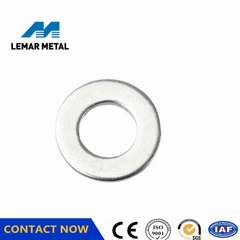
Before we dive into the details of load distribution, let's first understand what flat washers are. A flat washer is a thin, flat disk with a hole in the center. It is typically placed between a nut or bolt head and the surface of the material being fastened. The primary function of a flat washer is to distribute the load of a fastener over a larger area, preventing damage to the surface and ensuring a more secure connection.
When a bolt or nut is tightened, it applies a force to the surface beneath it. Without a flat washer, this force is concentrated at the contact points between the fastener and the surface, which can lead to several problems. For example, the high stress at these points can cause the surface to deform, crack, or even break. In addition, the concentrated load can make the fastener more likely to loosen over time, leading to a potentially dangerous situation.
By using a flat washer, the load is spread out over a larger area, reducing the stress on the surface and the fastener. This not only protects the surface from damage but also helps to maintain the integrity of the connection. The flat washer acts as a buffer, absorbing some of the energy from the tightening force and preventing it from being transferred directly to the surface.
How Flat Washers Distribute Load
The process of load distribution by flat washers can be explained through the principles of mechanics. When a fastener is tightened, it creates a compressive force that is transmitted through the washer to the surface. The washer distributes this force evenly over its contact area with the surface, reducing the stress at any one point.
The effectiveness of load distribution depends on several factors, including the size, material, and shape of the washer. Larger washers generally distribute load more effectively than smaller ones because they have a larger contact area. The material of the washer also plays a role, as different materials have different stiffness and strength properties. For example, a steel washer is typically stiffer and stronger than a plastic washer, which means it can distribute load more effectively.
The shape of the washer can also affect load distribution. Flat washers are the most common type, but there are also other shapes available, such as beveled washers and spring washers. Beveled washers are designed to provide a more even distribution of load on uneven surfaces, while spring washers are used to maintain tension in the fastener and prevent it from loosening.
Applications of Flat Washers in Load Distribution
Flat washers are used in a wide range of applications where load distribution is important. Some of the most common applications include:
- Automotive Industry: In the automotive industry, flat washers are used in various parts of the vehicle, such as engines, transmissions, and suspension systems. They help to distribute the load of bolts and nuts, preventing damage to the components and ensuring a reliable connection.
- Construction Industry: In the construction industry, flat washers are used in building structures, bridges, and other infrastructure projects. They are used to distribute the load of fasteners in steel beams, columns, and other structural elements, ensuring the stability and safety of the structure.
- Electrical Industry: In the electrical industry, flat washers are used in electrical panels, switchgear, and other equipment. They help to distribute the load of bolts and nuts, preventing damage to the electrical components and ensuring a reliable electrical connection.
- Manufacturing Industry: In the manufacturing industry, flat washers are used in a variety of manufacturing processes, such as machining, assembly, and packaging. They are used to distribute the load of fasteners in machinery, equipment, and tools, ensuring the accuracy and reliability of the manufacturing process.
Our Flat Washer Products for Load Distribution
As a flat washer supplier, we offer a wide range of products that are designed to distribute load effectively in various applications. Our products include Carbon Steel Square Washer, Carbon Steel Flat Washer, and Stainless Steel 304 Flat Washer.
Our carbon steel square washers are made from high-quality carbon steel, which provides excellent strength and durability. They are available in a variety of sizes and thicknesses to meet the specific needs of our customers. Our carbon steel flat washers are also made from high-quality carbon steel and are designed to provide a more even distribution of load. They are available in a variety of sizes and shapes to suit different applications.
Our stainless steel 304 flat washers are made from high-quality stainless steel, which provides excellent corrosion resistance and durability. They are ideal for use in applications where the washer will be exposed to harsh environments or chemicals. Our stainless steel 304 flat washers are available in a variety of sizes and thicknesses to meet the specific needs of our customers.
Conclusion
In conclusion, flat washers play a crucial role in load distribution in various mechanical and structural applications. By understanding how flat washers distribute load and the factors that affect their effectiveness, you can choose the right washer for your specific application. As a flat washer supplier, we are committed to providing high-quality products that meet the needs of our customers. If you have any questions or need help choosing the right washer for your application, please don't hesitate to contact us. We look forward to working with you and helping you find the perfect solution for your load distribution needs.


References
- Budynas, R. G., & Nisbett, J. K. (2011). Shigley's Mechanical Engineering Design. McGraw-Hill.
- Juvinall, R. C., & Marshek, K. M. (2011). Fundamentals of Machine Component Design. Wiley.
- Shigley, J. E., Mischke, C. R., & Budynas, R. G. (2004). Mechanical Engineering Design. McGraw-Hill.
Send Inquiry