




How do I test the locking performance of a lock nut?
Aug 01, 2025
Leave a message
As a lock nut supplier, ensuring the high - quality locking performance of our products is of utmost importance. In this blog, I will share how I test the locking performance of a lock nut, which is a crucial process to guarantee that our customers receive reliable and effective products.
Understanding the Basics of Lock Nuts
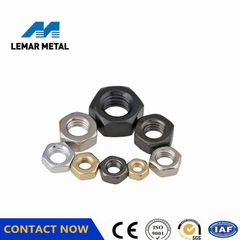
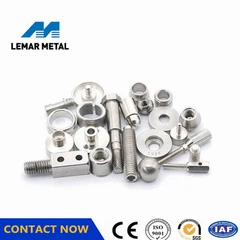
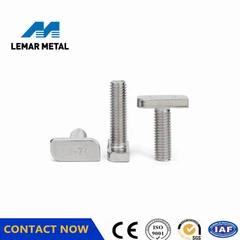
Before diving into the testing methods, it's essential to understand what lock nuts are and how they work. Lock nuts are designed to resist loosening under the influence of vibration, rotation, or other external forces. They achieve this through various mechanisms such as friction, deformation, or the use of special materials. Different types of lock nuts, like Flanged Threaded Inserts For Wood, T Slot Nut, and Stainless Steel Kep Lock Nut, have unique features and applications, but all share the common goal of maintaining a secure connection.
Selecting Appropriate Testing Equipment
The first step in testing the locking performance of a lock nut is to select the right equipment. A torque wrench is a fundamental tool. It allows us to apply a specific amount of torque to the nut during installation and removal. A high - precision torque wrench ensures accurate and repeatable results. Additionally, we use a vibration testing machine. This machine can simulate the real - world vibrations that a lock nut may encounter in its application. It helps us evaluate how well the nut maintains its locking ability under dynamic conditions.
Static Torque Testing
Static torque testing is one of the most basic yet important tests. In this test, we first clean the threads of the bolt and the lock nut to remove any debris or contaminants that could affect the test results. Then, we install the lock nut on the bolt using the torque wrench. We gradually increase the torque until the nut starts to turn. The torque value at this point is recorded as the installation torque.
After installation, we let the assembly sit for a certain period, usually 24 hours, to allow any initial settling or relaxation of the materials. Then, we use the torque wrench again to measure the torque required to remove the nut. This is called the removal torque. A significant difference between the installation and removal torque indicates good locking performance. A high removal torque relative to the installation torque shows that the lock nut has effectively resisted loosening.
Vibration Testing
Vibration testing is a more realistic simulation of the actual working conditions of a lock nut. We mount the bolt - nut assembly on the vibration testing machine. The machine is set to a specific frequency and amplitude of vibration, which are based on the expected operating conditions of the lock nut.
During the vibration test, we continuously monitor the torque of the nut. If the torque decreases significantly over time, it indicates that the nut is loosening. We also visually inspect the assembly for any signs of movement or disengagement. After a set number of vibration cycles, we measure the final torque of the nut. A lock nut that maintains a relatively stable torque throughout the vibration test is considered to have good locking performance.
Fatigue Testing
Fatigue testing is crucial for lock nuts that will be subjected to repeated loading and unloading. We use a fatigue testing machine to apply cyclic loads to the bolt - nut assembly. The load is applied at a specific frequency and amplitude for a large number of cycles, typically in the range of thousands or even millions of cycles.
During the fatigue test, we monitor the locking performance of the nut. We check for any signs of cracking, deformation, or loosening. If the nut fails to maintain its locking ability after a certain number of cycles, it indicates that the nut may not be suitable for applications with high - cycle fatigue requirements.


Temperature Testing
Temperature can have a significant impact on the locking performance of a lock nut. We conduct temperature testing in a temperature - controlled chamber. We first install the lock nut on the bolt and measure the initial torque. Then, we place the assembly in the chamber and subject it to different temperature conditions, both high and low.
At high temperatures, materials may expand, which could potentially affect the friction between the nut and the bolt. At low temperatures, materials may contract, and the mechanical properties of the nut and bolt may change. After exposing the assembly to the extreme temperatures for a certain period, we measure the torque again. A lock nut that can maintain its locking performance across a wide range of temperatures is highly desirable.
Corrosion Resistance Testing
In many applications, lock nuts are exposed to corrosive environments. To test the corrosion resistance of our lock nuts, we use a salt - spray test. We place the lock nuts in a salt - spray chamber, where a fine mist of saltwater is continuously sprayed onto the samples. The chamber is maintained at a specific temperature and humidity.
We monitor the samples over a period of time, usually several hundred hours. After the test, we inspect the lock nuts for any signs of corrosion, such as rust or pitting. A lock nut with good corrosion resistance will show minimal or no signs of corrosion, which is essential for its long - term locking performance.
Interpreting the Test Results
Once we have completed all the tests, we need to interpret the results. For each test, we have a set of acceptance criteria based on industry standards and our own quality requirements. For example, in static torque testing, we expect the removal torque to be at least 80% of the installation torque. In vibration testing, the torque loss should be less than 10% after a specified number of cycles.
If a lock nut fails to meet the acceptance criteria in any of the tests, we further analyze the cause. It could be due to a manufacturing defect, improper material selection, or a design flaw. We then take corrective actions, such as adjusting the manufacturing process, changing the material, or modifying the design.
Conclusion
Testing the locking performance of a lock nut is a comprehensive process that involves multiple tests using various equipment. By conducting these tests, we can ensure that our lock nuts meet the high - quality standards required by our customers. Whether it's a Flanged Threaded Inserts For Wood, T Slot Nut, or Stainless Steel Kep Lock Nut, we are committed to providing products with excellent locking performance.
If you are in need of high - quality lock nuts for your application, we invite you to contact us for further discussions and procurement. We are ready to work with you to find the most suitable lock nut solutions for your specific needs.
References
- Machinery's Handbook, Industrial Press Inc.
- ASTM Standards on Fasteners, ASTM International.
- ISO Standards for Locking Nuts, International Organization for Standardization.
Send Inquiry