

How does a flat lock washer contribute to joint stability?
Jun 24, 2025
Leave a message
A flat lock washer is a simple yet crucial component in mechanical assemblies, playing a significant role in enhancing joint stability. As a lock washer supplier, I've witnessed firsthand the diverse applications and benefits of these washers across various industries. In this blog, I'll delve into how flat lock washers contribute to joint stability and explore their mechanisms and real - world significance.
Understanding the Basics of Flat Lock Washers
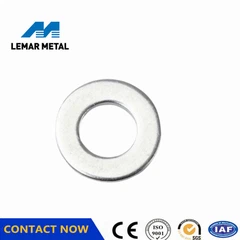
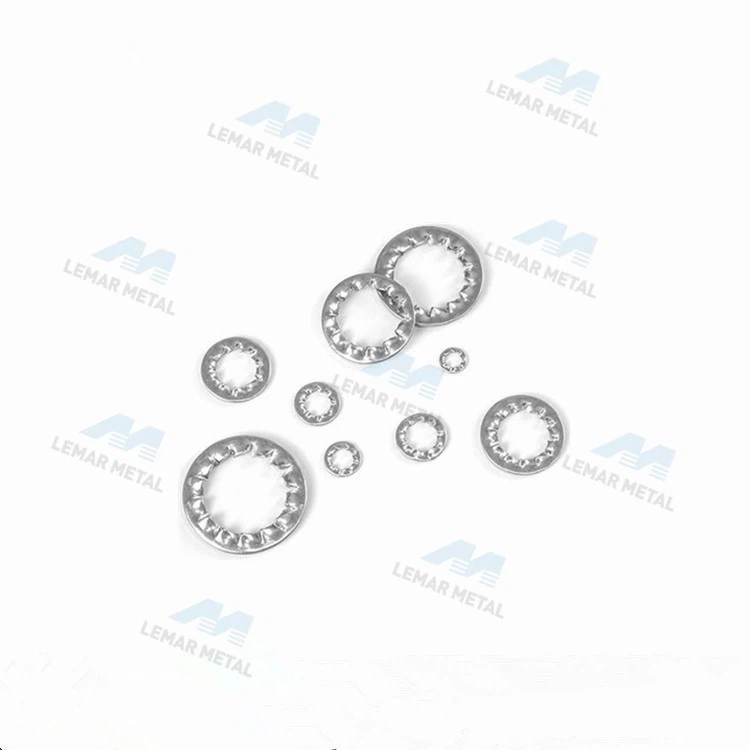
Flat lock washers are thin, flat metal discs with teeth or serrations on one or both sides. These serrations are designed to bite into the surfaces they come into contact with, typically the nut and the mating surface of the joint. The basic idea behind their design is to create friction and resist loosening due to vibration, shock, or dynamic loads.
Friction and Resistance to Loosening
One of the primary ways a flat lock washer contributes to joint stability is by increasing the friction between the nut and the joint surface. When a nut is tightened onto a bolt, the flat lock washer is placed between them. The serrations on the washer dig into the softer surfaces of the nut and the joint, effectively increasing the coefficient of friction.
According to the laws of physics, the frictional force (F_f=\mu N), where (\mu) is the coefficient of friction and (N) is the normal force. By increasing (\mu) through the serrated design of the flat lock washer, the frictional force that resists the rotation of the nut is significantly enhanced. This means that even under the influence of external forces such as vibration, the nut is less likely to loosen.
For example, in automotive engines, where components are subjected to high - frequency vibrations, flat lock washers are used in critical joints. The vibrations can cause nuts to gradually loosen over time if there is not enough frictional resistance. The flat lock washer ensures that the nuts stay in place, maintaining the integrity of the engine's mechanical connections.
Distribution of Load
Another important aspect of joint stability is the proper distribution of load. A flat lock washer helps in spreading the load evenly across the joint surface. When a nut is tightened, the force is concentrated at the points of contact between the nut and the joint. Without a washer, this concentrated load can cause local deformation of the joint surface, leading to uneven stress distribution and potential failure.
The flat lock washer acts as an interface between the nut and the joint, spreading the load over a larger area. This reduces the stress concentration and prevents damage to the joint surface. In heavy - machinery applications, such as construction equipment, where large forces are involved, proper load distribution is essential for the long - term stability of the joints.
Compensation for Material Creep
Materials can experience creep over time, especially under high - temperature or high - load conditions. Creep is the slow, permanent deformation of a material under a constant load. In a joint, creep can cause the nut to loosen as the material around the bolt and nut deforms.
A flat lock washer can help compensate for this material creep. The spring - like action of the washer, due to its serrated design, allows it to maintain a certain level of tension in the joint. As the material creeps and the joint begins to loosen slightly, the washer can exert additional pressure to keep the nut in place. This ensures that the joint remains tight and stable over an extended period.
Types of Flat Lock Washers and Their Applications
There are several types of flat lock washers available, each with its own unique features and applications.
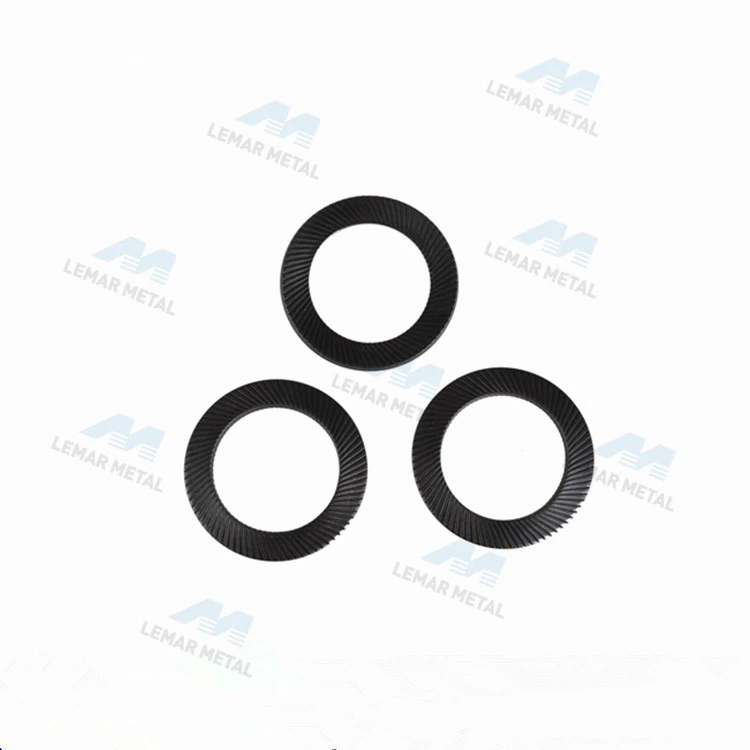
Disc Conical Spring Washers
Disc Conical Spring Washers are a type of flat lock washer with a conical shape. They offer high spring rates and can provide a large amount of axial force. These washers are commonly used in applications where there is a need to maintain a constant pre - load, such as in electrical connections and precision machinery. The conical shape allows them to compress and expand, adapting to changes in the joint due to thermal expansion or vibration.
DIN 6798 J Serrated Lock Washers
DIN 6798 J Serrated Lock Washers are standardized flat lock washers with specific serration patterns. They are designed to meet the requirements of various industrial standards. These washers are widely used in general mechanical assemblies, where reliable locking and joint stability are needed. The serrations on DIN 6798 J washers are optimized to provide maximum friction and resistance to loosening.
Double Fold Self - locking Washer
Double Fold Self - locking Washer is a unique type of flat lock washer with a double - fold design. This design provides enhanced locking performance by creating multiple contact points with the nut and the joint surface. These washers are often used in applications where there is a high risk of vibration - induced loosening, such as in aerospace and military equipment.
Real - World Examples of Flat Lock Washer Use
In the aerospace industry, flat lock washers are used in critical joints of aircraft structures. The joints need to be extremely stable to ensure the safety of the aircraft during flight. The high - altitude environment, combined with the vibrations from the engines and aerodynamic forces, puts a lot of stress on the joints. Flat lock washers help maintain the integrity of these joints by providing reliable locking and load - distribution capabilities.
In the electronics industry, flat lock washers are used in the assembly of printed circuit boards (PCBs). The small components on PCBs need to be securely fastened to prevent damage from vibration and shock. Flat lock washers ensure that the screws and nuts used in PCB assembly stay in place, protecting the delicate electronic components.
Conclusion
Flat lock washers are an indispensable part of mechanical assemblies, contributing significantly to joint stability. Through their ability to increase friction, distribute load, compensate for material creep, and come in various types for different applications, they ensure that joints remain tight and secure under a wide range of conditions.
As a lock washer supplier, I understand the importance of providing high - quality flat lock washers to meet the diverse needs of our customers. Whether you are in the automotive, aerospace, heavy - machinery, or electronics industry, we have the right flat lock washer for your application.
If you are interested in learning more about our flat lock washers or would like to discuss your specific requirements for joint stability, please don't hesitate to contact us. Our team of experts is ready to assist you in finding the best solutions for your projects.
References
- "Mechanical Design Handbook" by Robert C. Juvinall and Kurt M. Marshek
- "Fasteners and Joining" by Henry Petroski
- Various industry standards and technical documents related to lock washers
Send Inquiry