

What are the different grades of stainless - steel bolts?
Jan 05, 2026
Leave a message
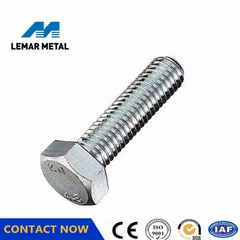
Stainless steel bolts are a crucial component in various industries, known for their durability, corrosion resistance, and strength. As a leading bolts supplier, we understand the importance of providing high - quality products that meet the diverse needs of our customers. In this blog, we will explore the different grades of stainless - steel bolts, their characteristics, and applications.
1. Overview of Stainless Steel Bolts
Stainless steel is an alloy primarily composed of iron, chromium, and other elements such as nickel, molybdenum, and manganese. The addition of these elements enhances the corrosion resistance and mechanical properties of the steel. Stainless - steel bolts are manufactured in different grades, each with its own unique set of properties suited for specific applications.
2. Common Grades of Stainless - Steel Bolts
2.1. Grade 304 Stainless - Steel Bolts
Grade 304 is one of the most widely used grades of stainless steel. It contains approximately 18% chromium and 8% nickel. This composition gives it excellent corrosion resistance in a variety of environments, including mild atmospheric conditions, food - processing applications, and general construction.
Characteristics:
- Good formability: It can be easily machined, cold - worked, and formed into various shapes, making it suitable for the manufacturing of different types of bolts.
- Moderate strength: Grade 304 bolts offer sufficient strength for many non - critical applications but may not be suitable for high - stress environments.
Applications:
- Architectural applications, such as handrails, door hardware, and window frames.
- Food and beverage industry, where hygiene and corrosion resistance are essential. For example, DIN912 Hex Socket Bolts made of grade 304 stainless steel can be used in food - processing equipment.
2.2. Grade 316 Stainless - Steel Bolts
Grade 316 stainless steel is an upgrade from grade 304, containing additional molybdenum (usually around 2 - 3%). This addition significantly improves its resistance to pitting and crevice corrosion, especially in chloride - rich environments.
Characteristics:
- Superior corrosion resistance: It can withstand exposure to seawater, salt spray, and chemicals better than grade 304.
- Higher price: Due to the additional molybdenum and its enhanced properties, grade 316 bolts are generally more expensive than grade 304.
Applications:
- Marine applications: Boats, shipbuilding, and offshore structures. Stainless Steel Hex Flange Bolt in grade 316 are highly suitable for marine use.
- Chemical processing plants, where exposure to corrosive chemicals is common.
2.3. Grade 410 Stainless - Steel Bolts
Grade 410 is a martensitic stainless steel. Unlike austenitic stainless steels (such as grades 304 and 316), it can be hardened through heat treatment.
Characteristics:
- High strength and hardness: After heat treatment, grade 410 bolts can achieve high levels of strength, making them suitable for applications where high mechanical properties are required.
- Lower corrosion resistance compared to austenitic grades: It is more prone to corrosion in harsh environments, although it still offers better corrosion resistance than plain carbon steel.
Applications:


- Automotive industry, for engine components and fasteners that require high strength.
- Machinery and equipment manufacturing, where parts need to withstand high loads.
2.4. Grade 201 Stainless - Steel Bolts
Grade 201 is a low - cost alternative to grade 304. It contains less nickel and more manganese, which reduces its cost but also slightly affects its corrosion resistance.
Characteristics:
- Cost - effective: Ideal for applications where budget is a concern and the corrosion environment is not extremely harsh.
- Good mechanical properties: It offers reasonable strength and formability.
Applications:
- General - purpose applications in construction, such as light - duty structural connections.
3. Factors Affecting the Choice of Stainless - Steel Bolt Grade
3.1. Corrosion Environment
The type of environment in which the bolts will be used is a crucial factor. For example, in coastal areas or marine applications, grade 316 bolts are preferred due to their superior resistance to seawater corrosion. In a clean, indoor environment, grade 304 may be sufficient.
3.2. Mechanical Requirements
The load - bearing capacity and stress levels that the bolts will experience determine the required strength. High - stress applications, such as in heavy machinery or structural steel connections, may require high - strength grades like grade 410 or High Strength T.C. Bolts.
3.3. Cost
Cost is always a consideration in any project. If the application does not require high - end corrosion resistance or extreme strength, a lower - cost grade like grade 201 may be a viable option.
4. Quality Assurance in Stainless - Steel Bolt Manufacturing
As a bolts supplier, we are committed to providing high - quality products. Our manufacturing process adheres to strict quality control standards. We source high - quality raw materials and use advanced manufacturing techniques to ensure the consistency and reliability of our bolts.
We conduct various tests on our stainless - steel bolts, including chemical composition analysis, mechanical property testing (such as tensile strength and hardness testing), and corrosion resistance testing. These tests help us to guarantee that our bolts meet or exceed industry standards.
5. Customization Options
We understand that different projects may have unique requirements. That's why we offer customization options for our stainless - steel bolts. We can produce bolts in different sizes, lengths, and head styles according to your specifications. Whether you need a special thread pitch or a specific surface finish, we have the capabilities to meet your needs.
6. Conclusion
In conclusion, choosing the right grade of stainless - steel bolts is essential for the success and longevity of your project. Each grade has its own advantages and is suitable for different applications. As a reliable bolts supplier, we have a wide range of stainless - steel bolts in various grades to meet your diverse needs.
If you are in the market for high - quality stainless - steel bolts or have any questions about the different grades, we encourage you to contact us for procurement and further discussion. Our team of experts is ready to assist you in selecting the most appropriate bolts for your project.
References
- ASM Handbook Committee. (2019). ASM Handbook, Volume 13A: Corrosion: Fundamentals, Testing, and Protection. ASM International.
- American Institute of Steel Construction (AISC). (2020). Specification for Structural Steel Buildings. AISC.
Send Inquiry