

What is the difference between expansion anchor bolts and chemical anchor bolts?
Jul 18, 2025
Leave a message
In the construction and engineering industries, anchor bolts play a crucial role in ensuring the stability and safety of structures. As a leading anchor bolts supplier, I often encounter customers who are confused about the differences between expansion anchor bolts and chemical anchor bolts. In this blog post, I will delve into the characteristics, applications, advantages, and disadvantages of these two types of anchor bolts to help you make an informed decision.
Expansion Anchor Bolts
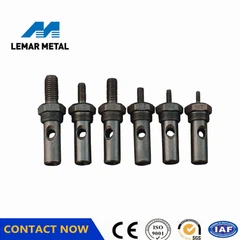
Expansion anchor bolts are mechanical fasteners that rely on the principle of expansion to create a secure hold within a base material, typically concrete, brick, or stone. The basic design consists of a threaded bolt, an expansion sleeve, and a nut. When the nut is tightened, the bolt is pulled through the expansion sleeve, causing it to expand and grip the walls of the pre-drilled hole in the base material.
Characteristics
- Simple Installation: Expansion anchor bolts are relatively easy to install. All you need is a drill to create a hole of the appropriate size, insert the anchor bolt, and tighten the nut.
- Immediate Load Capacity: Once installed, expansion anchor bolts can immediately support a load, making them suitable for applications where quick installation and immediate use are required.
- Mechanical Locking: The expansion mechanism provides a mechanical lock between the anchor bolt and the base material, ensuring a secure connection.
Applications
- Light to Medium Load Applications: Expansion anchor bolts are commonly used in applications such as mounting electrical fixtures, HVAC equipment, and signage on concrete or masonry walls.
- Temporary or Semi - Permanent Installations: They are suitable for installations that may need to be removed or adjusted in the future, as they can be easily uninstalled by loosening the nut.
Advantages
- Cost - Effective: Expansion anchor bolts are generally more affordable than chemical anchor bolts, making them a popular choice for budget - conscious projects.
- Versatile: They can be used in a variety of base materials, including concrete, brick, and stone.
Disadvantages
- Limited Load Capacity in Cracked Concrete: In cracked concrete, the expansion force may not be sufficient to create a secure hold, reducing the load - carrying capacity of the anchor bolt.
- Sensitivity to Installation Conditions: The performance of expansion anchor bolts can be affected by factors such as hole diameter, hole depth, and the quality of the base material.
Chemical Anchor Bolts
Chemical anchor bolts, on the other hand, use a chemical adhesive to bond the anchor bolt to the base material. The chemical adhesive is typically a two - component epoxy or polyester resin that is mixed and injected into the pre - drilled hole. The anchor bolt is then inserted into the hole, and the chemical adhesive cures to form a strong bond between the bolt and the base material.
Characteristics
- High Bond Strength: Chemical anchor bolts provide a high bond strength, which is especially useful in applications where high load capacity is required.
- Suitable for Cracked Concrete: Unlike expansion anchor bolts, chemical anchor bolts can perform well in cracked concrete, as the chemical adhesive fills the cracks and provides a continuous bond.
- Long - Term Durability: The chemical bond formed by the adhesive is resistant to environmental factors such as moisture, chemicals, and temperature changes, ensuring long - term durability.
Applications
- Heavy Load Applications: Chemical anchor bolts are commonly used in applications such as securing structural steel columns, bridge components, and large machinery to concrete foundations.
- Seismic - Resistant Structures: They are often used in seismic - resistant structures to provide a reliable connection between structural elements.
Advantages
- High Load Capacity: Chemical anchor bolts can support higher loads compared to expansion anchor bolts, making them suitable for heavy - duty applications.
- Excellent Performance in Challenging Conditions: They perform well in cracked concrete, wet environments, and high - temperature conditions.
Disadvantages
- Longer Installation Time: The installation of chemical anchor bolts requires more time compared to expansion anchor bolts, as the chemical adhesive needs to cure before the load can be applied.
- Higher Cost: Chemical anchor bolts are generally more expensive than expansion anchor bolts, due to the cost of the chemical adhesive and the additional installation steps.
Comparison of Expansion Anchor Bolts and Chemical Anchor Bolts
| Aspect | Expansion Anchor Bolts | Chemical Anchor Bolts |
|---|---|---|
| Installation | Simple and quick, immediate load capacity | Longer installation time, requires curing of chemical adhesive |
| Load Capacity | Suitable for light to medium loads | High load capacity, suitable for heavy - duty applications |
| Performance in Cracked Concrete | Limited performance | Good performance |
| Cost | More cost - effective | Higher cost |
| Durability | Prone to environmental factors | Resistant to environmental factors |
Our Product Offerings
As an anchor bolts supplier, we offer a wide range of expansion anchor bolts and chemical anchor bolts to meet the diverse needs of our customers. Our Low Carbon Steel U - Bolt is a type of expansion anchor bolt that is known for its strength and durability. It is suitable for a variety of applications, including securing pipes and cables.


Our Anchor Bolt Embedded in Concrete is available in both expansion and chemical types. The expansion version provides a quick and easy installation, while the chemical version offers high load capacity and excellent performance in challenging conditions.
We also offer the 9 Shaped Foundation Bolt, which is designed for use in foundation applications. It can be used with either expansion or chemical anchoring methods, depending on the specific requirements of the project.
Conclusion
In conclusion, the choice between expansion anchor bolts and chemical anchor bolts depends on several factors, including the load requirements, the condition of the base material, the installation time, and the budget. Expansion anchor bolts are a cost - effective and versatile option for light to medium load applications, while chemical anchor bolts are better suited for heavy - load applications and challenging conditions.
If you are in need of high - quality anchor bolts for your project, we invite you to contact us for a detailed consultation. Our team of experts can help you select the right type of anchor bolt based on your specific requirements. We are committed to providing our customers with the best products and services to ensure the success of their projects.
References
- "Design of Anchor Bolts in Concrete" by the American Concrete Institute (ACI).
- "Handbook of Fastening Technology" by Carl H. Gessner.
- Industry standards and guidelines from relevant engineering organizations.
Send Inquiry