

How to determine if a 3D welding table needs maintenance?
Apr 01, 2026
Leave a message
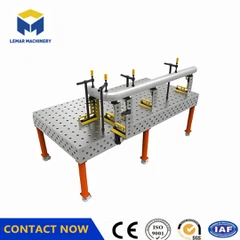
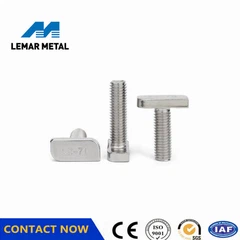
1. Inaccurate Positioning: When assembling modules or installing fixtures, misalignment of holes, difficulty in inserting pins, or gaps after connection may be caused by wear or deformation of positioning holes or residual welding slag in the T-slots.
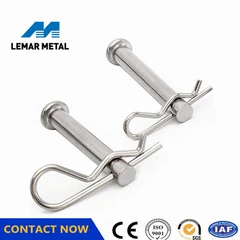
2. Loose Clamping: If the workpiece remains loose after the PC pins or fixtures are tightened, or even shifts during welding, it reflects wear or elastic failure of the connecting components.
3. Sliding Jam: If the movable module does not move smoothly along the guide rail, with obvious resistance or abnormal noise, it is usually caused by insufficient lubrication, contamination, or deformation of the guide rail.
4. Surface Damage: Pits, scratches, or protrusions on the working surface, especially in high-frequency use areas, will affect the fit and flatness of the workpiece.
5. Poor Cleanliness: Accumulation of large amounts of metal dust, welding slag, or sludge in the T-slots and positioning holes, if not cleaned in time, will directly affect positioning accuracy. 6. Flatness exceeding limits: A level indicates localized undulations exceeding 0.15 mm/m², suggesting uneven platform stress or lack of long-term calibration.
7. Pneumatic system malfunction (e.g., with automatic functions): Slow cylinder movement, air leaks, and pressure fluctuations affect the stability of automated welding.

Send Inquiry