

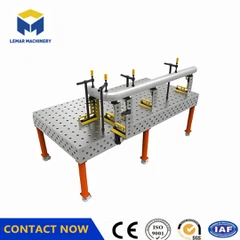




How to Prevent Heat Treatment Deformation in 3D Welding Tables
Jun 03, 2026
Leave a message
I. Optimize at the design stage to minimize deformation risk at the source
1. Optimize structural design: Ensure uniform wall thickness as much as possible to avoid excessive thickness variations, which can lead to uneven thermal expansion and contraction rates during heating and cooling; use radiused transitions in areas of stress concentration to reduce deformation caused by stress concentrations.
2. Allow for deformation margins: Incorporate allowances for heat treatment deformation during the design phase, or apply localized pre-deformation to specific areas; this ensures that dimensions meet design specifications after stress relief and the resulting shape "spring-back."
II. Properly control heating and cooling processes to balance stress relief
1. Employ stepped heating control: Avoid rapid temperature rises that create excessive temperature gradients; use a staged heating approach-preheating at a low temperature followed by a slow ramp-up to the target temperature-to ensure uniform heating of the welding platform and minimize thermal stress.
2. Control cooling rates: Use slow furnace cooling to prevent deformation caused by uneven shrinkage associated with rapid cooling; slow cooling allows for the uniform release of internal stresses.
3. Set process parameters appropriately: Strictly control heating temperatures and holding times based on material grade to ensure adequate residual stress relief while avoiding excessive temperatures that could cause grain coarsening and increased deformation.
III. Use tooling constraints to limit free deformation
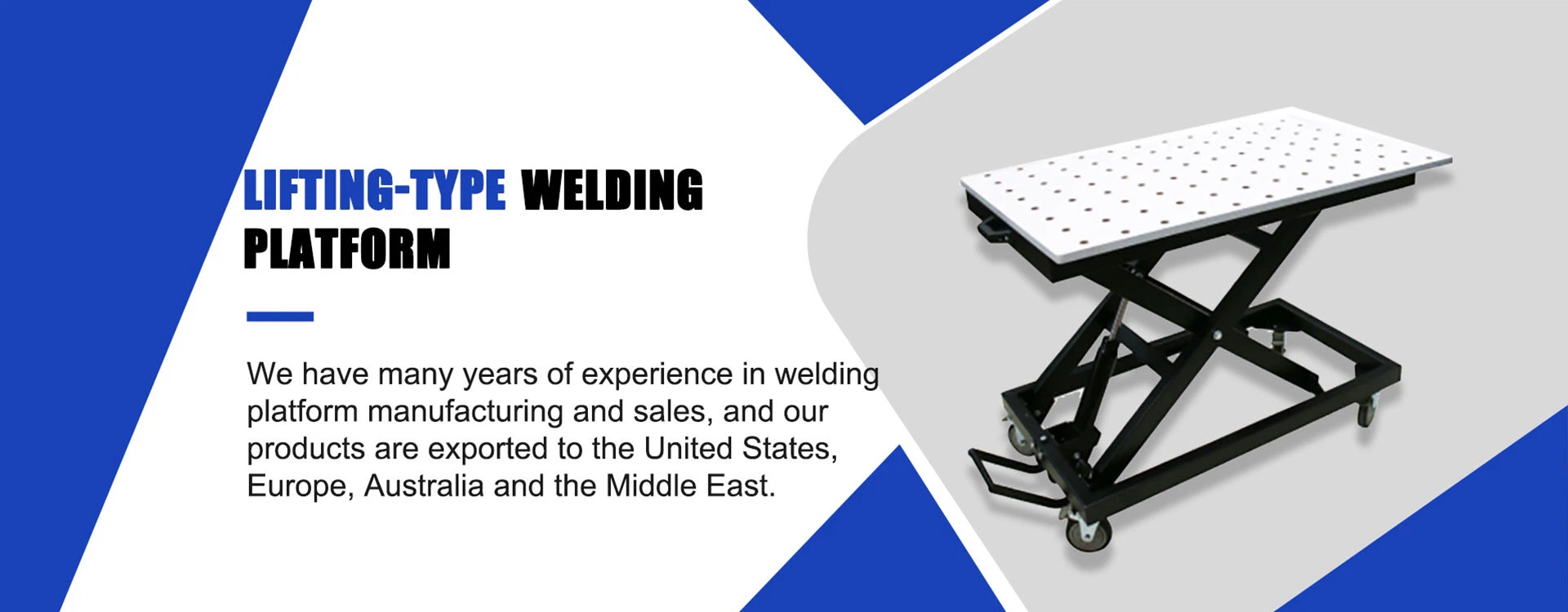
1. Use rigid fixtures or supports: Clamp and secure the welding platform with rigid fixtures before heat treatment to restrict free deformation during heating; for thin-walled structures, install internal rigid supports to enhance overall stiffness and reduce warping.
2. Apply counterweights or pressure: Apply pre-load pressure to areas at high risk of warping to counterbalance thermal stresses generated during heat treatment and counteract the tendency to deform.
IV. Optimize process sequence and subsequent treatments
1. Perform rough machining before heat treatment: Complete rough machining-while leaving sufficient machining allowance-to allow most deformation to occur during the machining stage; this results in better dimensional stability after finish machining.
2. Rationally arrange the welding sequence: Prioritize welding seams subject to high loads or significant shrinkage; employ symmetrical welding from the center outward to distribute heat input and minimize residual welding stress, thereby reducing deformation after heat treatment.
3. Perform post-weld stress-relief heat treatment promptly: Conduct tempering immediately after welding (typically holding at 300°C for at least 30 minutes, followed by natural cooling within the furnace) to fully relieve residual welding stress and prevent subsequent deformation caused by stress concentration.
4. Stabilize precision through natural aging: Allow the component to undergo natural aging for a period after heat treatment to ensure full stress relief before final machining; this significantly reduces deformation during subsequent service.

Send Inquiry