

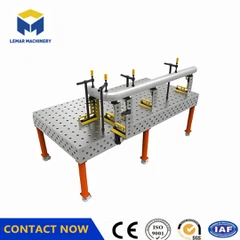


Will wear on a 3D welding table affect accuracy?
Jan 23, 2026
Leave a message
How does wear affect accuracy?
1. Decreased flatness: Wear on the working surface will cause the overall flatness of the platform to exceed tolerances, making it impossible to guarantee the workpiece's reference level.
2. Failure of positioning hole system: Wear on the positioning holes will increase the hole diameter tolerance, leading to unstable fixture positioning and weld position deviation.
3. Deterioration of surface roughness: Increased wear will raise the surface roughness value, affecting the contact stability between the workpiece and the platform.
4. Reduced structural rigidity: Severe wear may cause local deformation or loosening of the platform, reducing overall rigidity and generating vibration.
How to determine if accuracy is affected?
1. Regular measurement: Regularly check the platform's flatness and hole system position accuracy using tools such as laser interferometers and optical flats.
2. Observe usage effects: Pay attention to whether welding positioning is difficult, whether the weld position is unstable, and whether the workpiece clamping is loose.
3. Pay attention to warning signals: Abnormal noise, vibration, or jamming of moving parts on the platform may indicate that internal wear is affecting accuracy.
How to deal with it?
1. Repair when accuracy deteriorates: Restoring the platform's flatness and accuracy through scraping is the most effective repair method.
2. Preventive maintenance: Establish a regular inspection system and develop a maintenance plan based on usage intensity (e.g., average daily welding hours) to avoid repairs after accuracy exceeds tolerances.

Send Inquiry