






3D Welding Table: Complete Classification & Daily Maintenance Guide
Apr 11, 2026
Leave a message
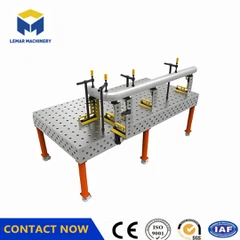
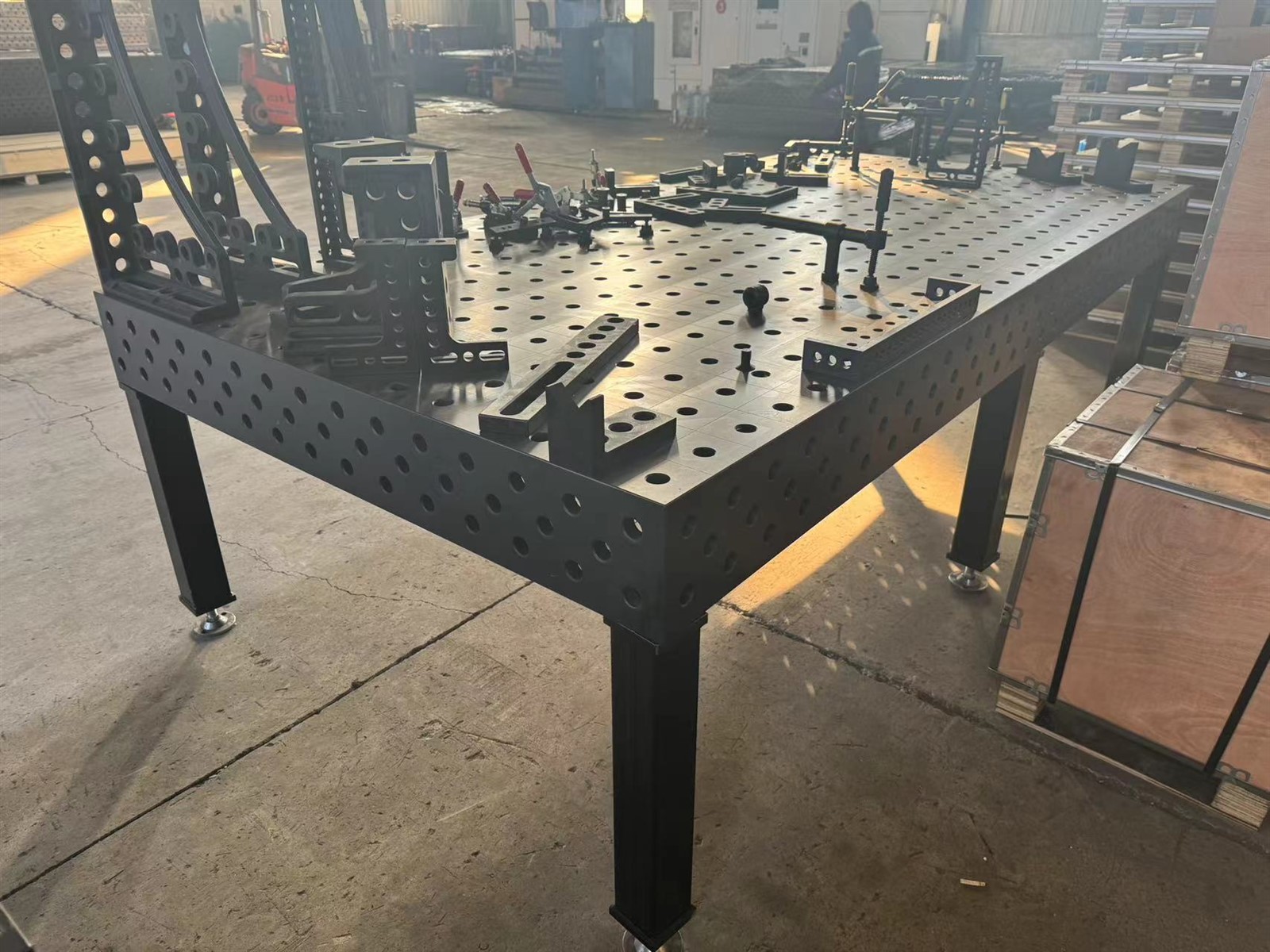
In modern welding and fabrication workshops, the 3D welding table has become an indispensable tool for achieving precision, repeatability, and efficiency. Unlike traditional flat tables, 3D welding tables feature a grid of precision-machined holes and slots, allowing flexible fixture positioning. This article breaks down the main types of 3D welding tables and provides essential daily maintenance tips to extend their service life.
1. Classification Of 3D Welding Tables
3D welding tables are generally categorized by material, hole pattern, and application.
A. By Material & Surface Treatment
Cast Iron 3D Welding Tables
High rigidity, excellent vibration damping, and wear resistance. Ideal for heavy-duty industrial welding. Usually oiled or painted to prevent rust.
Stainless Steel 3D Welding Tables
Corrosion-resistant, suitable for clean environments like food equipment, medical devices, or marine applications.
Mild Steel (with hardening treatment)
Cost-effective, often with induction-hardened surfaces for better flatness retention. Common in general fabrication shops.
B. By Hole Pattern & Size
16mm / 28mm Series (European standard)
The most widely used system. 16mm holes are common for light/medium duty, while 28mm suits heavy clamping forces.
D28 Grid System
Designed for large workpieces and robotic welding cells.
C. By Portability & Structure
Fixed/Stationary 3D Tables
Heavy base, best for high-precision repetitive tasks.
Portable/Folding 3D Tables
Lightweight, suitable for on-site welding or small workshops with limited space.
Modular 3D Systems
Multiple tables can be joined together to handle oversized components.
Choosing the right type depends on your workpiece weight, required accuracy, and workspace.
2. Daily Maintenance Of 3D Welding Tables
Proper maintenance ensures flatness accuracy (typically ±0.1mm/m) and prevents premature wear. Follow these daily practices:
✅ Cleaning After Each Shift
Remove spatter, dust, and grinding debris using a soft brush or compressed air.
Never use a steel hammer directly on the table surface – use brass or copper hammers if needed.
✅ Rust Prevention (Critical For Cast Iron/Mild Steel)
Wipe the surface with a light coat of anti-rust oil or water-displacing spray (e.g., WD-40) at the end of each day.
In humid environments, cover the table with a breathable tarp.
✅ Hole & Bushing Care
Clean debris from locating holes using a dedicated hole brush.
Check for burrs or damage around holes – remove gently with a fine file.
✅ Flatness Inspection (Weekly)
Use a straightedge or dial gauge to check for distortion. If deviation exceeds 0.2mm/m, contact a professional for re-machining.
✅ Storage Of Fixtures & Clamps
Store clamps, stops, and adapters on a separate rack. Do not throw them onto the table surface.
💡 Pro tip: Rotate the usage area of the table if you often weld on the same spot – this distributes thermal stress evenly.
3. Why Choose Our 3D Welding Tables?
We specialize in high-precision 3D welding tables and accessories, exported to over 30 countries. Every table is:
Cast or fabricated from premium-grade materials.
Machined to strict flatness tolerance (≤0.1mm/m).
Backed by a 12-month warranty and technical support.
📞 Contact Us
Sales Engineer:Eva summer
Email: evasummer@lemarmetal.com
WhatsApp / WeChat: [+86 15995269947]
Phone: [+86 15995269947]
Website: [www.lemarmachine.com]
🌐 Also Find Us On Made-In-China
We are an Audited Supplier on Made-in-China – one of the world's largest B2B platforms for industrial products.
Send Inquiry