

Can 3D flexible welding tables be customized?
Nov 27, 2026
Leave a message
If you've ever walked onto a welding shop floor, you know how chaotic it can get-torches hissing, metal shavings flying, and welders juggling a dozen different workpieces, fixtures, and clamps to get a single project done. That's where 3D flexible welding tables come in: they're the backbone of modern welding operations, designed to cut setup time, boost precision, and adapt to whatever you're throwing at them. But here's the question I get asked most as a supplier: Can these tables really be customized to fit a shop's unique needs? The short answer? Absolutely. And the way we design and build them proves it.
I've been working with modular 3D welding tables for over a decade now, and I've seen firsthand how a one-size-fits-all approach fails way too many shops. A custom table isn't just a luxury-it's a practical investment that saves time, reduces errors, and lets welders do their best work without fighting their equipment. Let's break down why customization works, what it entails, and how it's tailored to the people actually using these tables.
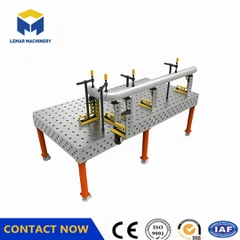
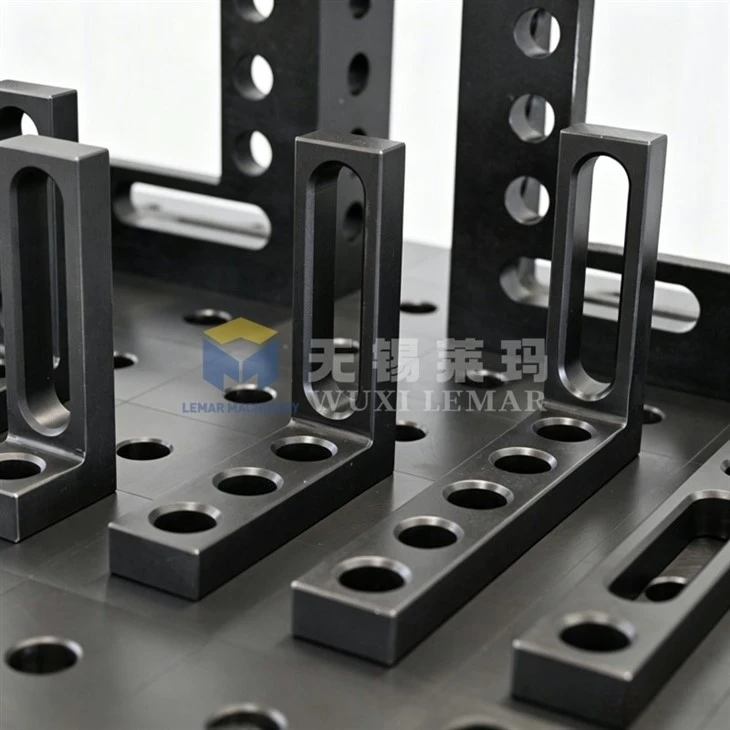
First, let's get clear on what a 3D flexible welding table is, for anyone new to the space. Unlike old-school welding tables that are solid, fixed, and only have a few holes for basic clamps, these tables have a grid of precision-drilled holes across their surface, usually spaced 100mm or 50mm apart. That grid lets you position fixtures, clamps, and workpieces at virtually any angle, holding everything securely without needing to fabricate new fixtures from scratch every time. But off-the-shelf models have limits-they're built for average workpieces, average shop floor layouts, and average welding processes. A custom table? It's built for you.
Let's talk about the reasons customization matters, starting with workpiece size and shape. I recently worked with a small structural welding shop that specialized in custom steel railings and metal stair frames. Their off-the-shelf table was 4x8 feet, which was fine for small brackets, but they were wasting 30 minutes every time they needed to weld a 12-foot railing because they had to balance it off the edge of the table to hold it straight. When we customized a 4x12 table for them, with extra-long side grids to extend clamping points along the length, their setup time for each railing dropped by nearly 40%. Another client, a custom fabrication shop that builds art installations, needed a table that could handle both thin aluminum sheets and thick steel plates-so we customized a table with a dual-grade surface: a hard, wear-resistant steel top for heavy plate work, and a smooth, non-marring coating for delicate metal art pieces. That's the kind of tailored solution you can't get with a standard 3D steel welding table you pick off a shelf.
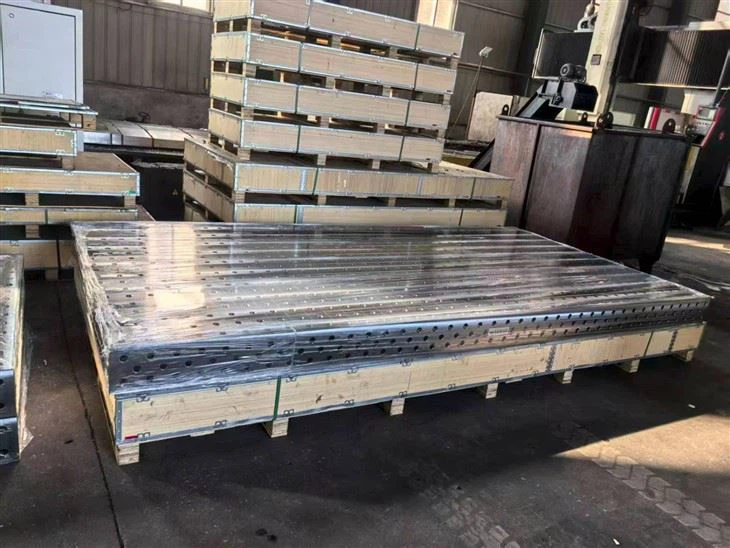
Next, there's the small, shop-specific details that make a big difference. A lot of shops have unique floor plans-some have low ceilings that limit how high a table can be, others have overhead cranes that need clearance for lifting large workpieces, and some even have pit installations where the table sits flush with the shop floor to make loading heavy parts easier. We once worked with a automotive repair shop that wanted to use their existing floor pits for a new custom welding station. Instead of building a standard table at the usual 36-inch height, we customized a table that sat 12 inches lower, perfectly aligned with the pit's edge, so they could roll in large truck frames without lifting them. That's the kind of flexibility only customization can deliver.
Another key area is process-specific needs. TIG welding, for example, requires a super clean surface to avoid contamination, so a welder might want a table with a removable top plate that's easy to polish. MIG welding generates a lot of sparks and spatter, so a table with a thicker, heat-resistant coating and easy-to-clean surfaces is a must. For shops that do both, we've customized dual-coating surfaces that separate the two areas. Even things like pre-drilled holes-some welders prefer the standard 100mm spacing, others swear by 50mm for smaller, more precise work. We can adjust that grid spacing, add extra rows of holes along the edges for clamping long parts, or even integrate slots for specialty tools like rotary jigs or pipe clamps if that's what your workflow needs.
Now, let's talk about the science behind how we make these customizations work. 3D flexible welding tables are precision-engineered, so every customization has to balance functionality, durability, and cost. The base material is almost always high-grade steel, because it's strong enough to handle heavy clamping forces and years of wear. When we adjust the size of a table, we use finite element analysis (FEA) to test for warping under load-no welder wants a table that bends when they clamp down a 500-pound steel beam. For surface coatings, we use thermal spray applications for heat resistance and anti-spatter properties, and we can add custom grooves or channels for draining coolant if a shop uses cold welding processes. Even the clamping components that come with the table can be customized: we can add specialized fixtures for welding pipes, angle iron, or round tubing, or leave space for shops to integrate their own existing tools to avoid buying new equipment.
I always get asked if custom tables are worth the extra cost. Let's be real: a custom table is going to cost a bit more upfront, but the savings over time are huge. For a shop that sets up 10 times a day, a 20% reduction in setup time adds up to days of labor saved every month. And a table built to fit your specific workflow lasts longer, too-off-the-shelf tables might not stand up to the unique stresses of your work, leading to damage and replacement costs sooner. We recently had a client who bought three standard tables and ended up replacing two in two years because they couldn't handle their heavy plate work. When they switched to a custom table, it's still going strong five years later. That's the ROI of customization.
Of course, not every shop needs a fully custom table-and that's where modular 3D welding tables come in as a middle ground. Modular tables are built with interchangeable components, so you can expand, adjust, or reconfigure them without buying a whole new table. A shop might start with a 4x4 table, then add a 4x2 extension a year later when their workload grows. Or they can swap out the surface top from a thin aluminum plate to a thick steel one as they move into heavier projects. It's a flexible option that bridges the gap between standard and fully custom, perfect for shops that want room to grow without a huge upfront investment. But even modular systems can be customized to a point-we can adjust the initial size, add unique modules, or tweak the grid layout to match your existing setup.
Let's also address a common myth: some people think custom 3D tables are only for large industrial shops. That's just not true. We work with everything from one-man weld shops to mid-sized fabrication facilities, and custom solutions can be scaled for any size. A 10x10 table for a big structural shop, a compact 2x3 table for a small hobbyist or a bike repair shop, even a table with a cutout to fit a specific machine tool-all of it's possible. For a small shop on a tight budget, we can also work with you to prioritize the customizations that will give you the biggest gain. If your main pain point is clamping long parts, we can add extendable edge grids instead of a full-length table. If contamination is a big issue, we can focus on the surface coating.
Now, let's walk through what the customization process actually looks like, to demystify it. When a shop reaches out to us about a custom table, the first step is a consultation. We ask about the work they do: what's the largest workpiece they weld, what's the heaviest, what processes do they use, how much space do they have on the shop floor, and what's their biggest pain point with their current setup. We might even visit the shop to take measurements, watch welders work, and get a feel for their workflow-small details like how often they move workpieces, if they use overhead cranes, or if storage is an issue can all inform the design.
From there, we draft a 3D model of the table, so the client can see exactly what it will look like, adjust dimensions, add components, and test for fit. Once the design is finalized, we manufacture the table using precision CNC machining for the holes and edges, apply the custom coatings, and test the table for load capacity and stability before it ships. We also provide installation support, and because we build all our tables with modular components, future adjustments are easy to make down the line.
I've seen so many shops transform their operations with the right custom 3D welding table. A client in the aerospace industry needed a table that could handle delicate aluminum components with zero warpage, so we customized a table with a low-profile, rigid base and a micro-drilled surface for ultra-precise clamping. Their weld defect rate dropped by 15% after the first month. Another client, a marine fabrication shop, needed a table that could resist saltwater corrosion, so we customized a stainless steel surface with a special anti-corrosive coating. That's the kind of specific solution that off-the-shelf tables just can't match.
Now, if you're thinking about whether a custom table is right for your shop, here are a few questions to ask yourself: Are you spending more than 10 minutes setting up most workpieces? Do you have workpieces too large or too small for your current table? Do you deal with unique materials or processes that standard tables don't handle well? Is your shop layout making it hard to position workpieces correctly? If you answered yes to any of these, a custom or semi-custom table is almost certainly going to improve your operations.
We also offer a range of modular options for shops that aren't ready for a full custom build. For example, our modular 3D welding workbench line gives you the flexibility to adjust size, add fixtures, and reconfigure as your needs change. Our 3D steel welding table line includes thick, durable options that can be customized with added holes, slots, or coatings. For shops that need a versatile option, our universal welding platform is designed to work with a wide range of fixtures and can be adjusted to fit most workpieces. Even our welding fixture platform can be customized with specific jigs and clamps to match your most common projects.
At the end of the day, the best welding setup is one that works for you, not the other way around. Welding is a craft that demands precision, speed, and adaptability, and your equipment should support that, not restrict it. A 3D flexible welding table can be customized to fit your workflow, your space, and your projects-and that's why it's such a game-changer for shops of all sizes.
If you're tired of fighting with a table that doesn't quite work for you, or you're ready to upgrade your welding setup to save time and improve quality, I encourage you to reach out to discuss your needs. We'll walk you through the options, from fully custom builds to modular adjustments, and help you find the solution that fits your budget and your shop's unique challenges.
Send Inquiry