

What is the production process of a 3D adjustable welding workbench?
Nov 26, 2026
Leave a message
Hey there, if you've ever spent hours wrestling with clunky, one-off welding jigs that slip, sag, or barely fit your latest project, you get why a 3D adjustable welding workbench is a total game-changer. As someone who's been selling these bad boys for years, I've walked my team and hundreds of customers through exactly how we build these things-from raw metal to a bench that can hold just about any weld, big or small. Today, I'm pulling back the curtain on our production process, no industry jargon overload, just real, behind-the-scenes stuff that makes our benches work better than the alternatives you'll find.
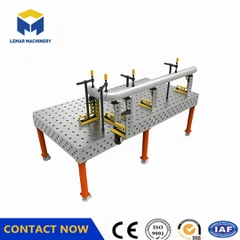
First off, let's cut to the core: this isn't your grandma's welding table. We're talking about a fully modular, adjustable rig that lets you tweak fixtures in 3 axes, so you don't have to waste time reworking jigs for every new job. The workhorse of this whole system is what we call a Three Dimensional Flexible Platform-you can check out all the specs on our site if you want, but for production, this is the base every part starts with. Before we even touch a welding torch or a drill, we're making sure that base is rock solid-because if the table flexes mid-weld, your whole project's toast.
Let's start with the first step: material selection. No cutting corners here. We use high-grade carbon steel, not the thin, flimsy stuff that bends after 10 uses. Why? Because welding puts a ton of heat and pressure on the table, so it needs to handle that without warping. We also pick steel that's rated for heavy loads, which is why our Heavy Duty 3D Welding Platforms can hold thousands of pounds without a hint of sag. Once we source the steel, we run it through a quick quality check to make sure there are no hidden cracks or inconsistencies-little things that blow up later on.
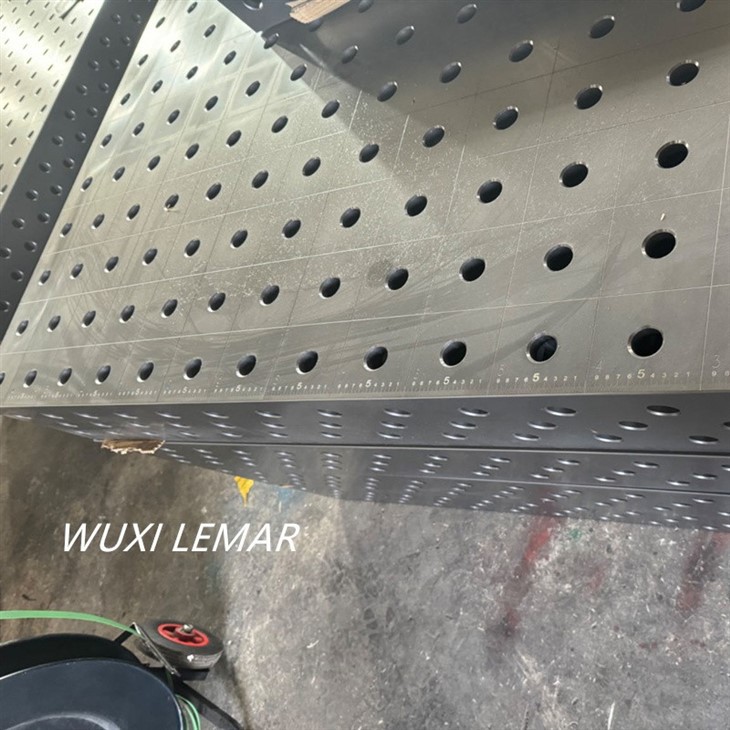
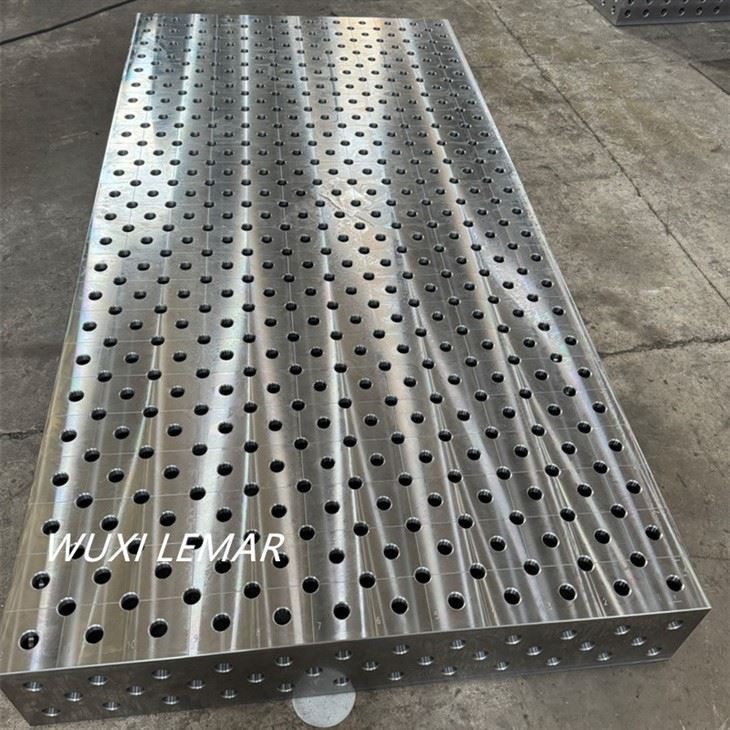
Next up: cutting the table top. This is where precision matters most. We don't use basic jigsaw cuts, we use CNC plasma cutters. Wait, hold up-CNC is just computer-controlled cutting, right? Basically, it draws the exact shape of your table top (most are 4x8 or 5x10 feet, but we can custom size them) and cuts it with zero human error. Now, remember those grid holes you see on all 3D welding tables? Yeah, those aren't drilled by hand either. They're spaced every 100mm on a grid that's accurate to within a fraction of a millimeter. That's why when you plug a clamp or fixture into the table, it lines up perfectly every single time-no guessing, no forcing a peg into a wrong hole. If you want to see the exact table top design we use, you can look at our Welding Table Top With Holes page; that shows the grid and hole size that's standard for all our benches.
Once the table top is cut, it's time for a step that most cheap manufacturers skip: deburring and beveling. After CNC cutting, the edges of the table have tiny, sharp metal burrs that can scratch your projects or even snag your gloves. We grind those down smooth, and we also bevel the edges a little so fixtures slide in and out easily. That might sound like a small thing, but trust me-if you've ever fumbled a clamp into a sharp-edged hole, you'll appreciate that extra 5 minutes we take here.
Now, the big one: welding the internal support structure. The table top might look like a flat slab, but under that, there's a frame of steel beams that holds everything up. This is where the heavy lifting happens, literally. We use MIG welding (that's the common wire feed welding most welders know and love) but we have our senior welders do the support frame work-no newbies here, because a bad weld on the frame is a disaster waiting to happen. We run a tension test on every frame too: we load it up with extra weight to make sure it doesn't twist or bend. If it fails, it gets sent back, no exceptions. That's why our 3D Welding Fixture Table is such a reliable workhorse-we don't cut corners on the frame that makes it stable.
After the table and frame are welded together, we move on to surface treatment. This is another step that separates our benches from the cheap imports. First, we blast the entire surface with media (it's like fine sand, but way more consistent) to strip off any mill scale, rust, or oil from the metal. Then, we apply a two-part epoxy coating that's not just paint-it's resistant to weld spatter, grease, and even minor scratches. Weld spatter is the little hot dots that fly off your torch and stick to everything, right? With a good coating, you can just tap the spatter off with a hammer, no grinding needed. Some competitors use basic spray paint that chips off after a few uses-we skipped that for a reason.
Now, the adjustable part-this is what makes these tables truly 3D. We don't just sell the table top; we make all the adjustable fixtures too. The clamps, fixtures, and alignment pins are all made from the same high-grade steel, with precision-machined grooves that fit perfectly into the table's grid holes. We machine each part with a CNC mill, so when you slide a clamp into a hole, it locks in tight and doesn't wiggle around. One common question we get: how do you adjust things vertically and horizontally? The fixtures have locking levers that you just tighten by hand-no wrenches needed, so you can tweak your setup mid-job in seconds. This modularity is why so many fabrication shops love our 3D Flexible Welding Table for everything from small metal brackets to large frames.
Here's a step most people never see: the full load test. Before any bench leaves our shop, we put it through a 24-hour load test. We stack weights on the table equivalent to 150% of its rated capacity and leave it there overnight. In the morning, we check for any bending, warping, or loose welds. If there's even a hint of an issue, we take it apart and fix it. I've seen so many shops get burned by tables that look good in the store but flex when you put real heavy stuff on them-we don't let that happen here.
Once the test passes, we do a final quality check. We walk every inch of the table, test every fixture to make sure the clamps lock tight, and double-check the hole grid for accuracy. We also add a quick note with the table's serial number so we can track it if you ever need replacement parts.
Wait, let's be real-production isn't all perfect. Sometimes a CNC cutter has a tiny glitch, or a weld has a small spot that needs redoing. We don't ship those; they get fixed. That's why our customers keep coming back-we stand behind every bench we make. At the end of the day, a 3D adjustable welding workbench isn't just a table. It's a tool that saves you hours of setup time, reduces rework on welds, and makes your shop run smoother. If you're tired of messing with outdated, flimsy welding tables and want something that works as hard as you do, we'd love to chat about what size and features make sense for your projects. Hit us up to talk specs, custom options, or bulk pricing-no pressure, just real advice from someone who builds these things every day.
Send Inquiry