
Can a Special Welding Platform improve the working environment for welders?
Nov 27, 2026
Leave a message
If you've ever stood next to a welder at work, you know the scene well: a fume-choked corner of a workshop, a workbench that shifts under heavy metal, goggles fogged with sweat and spatter, and a body that aches by the end of a 10-hour shift. For decades, welding work environments have been defined by these persistent hazards-poor ergonomics, toxic fumes, unstable work surfaces, and long-term physical strain. As a supplier of specialized welding platforms, I see these challenges every day, and I'm often asked a question that cuts to the heart of what we do: Can a Special Welding Platform actually improve the working environment for welders?
The short answer is yes-but it's not just a vague claim. It's rooted in tangible improvements to four core areas of a welder's daily experience: ergonomics, fume control, work precision and stability, and overall job satisfaction. Let's break this down, because when welders come back to us saying their days feel less draining, that's the impact we're here to deliver.
First, let's talk about ergonomics. This is the biggest pain point I hear from welders, and it's one that leads to chronic injuries that many people don't associate with welding. For years, most welding workspaces rely on makeshift benches, scrap metal supports, or generic worktables that don't adjust to a welder's body. A welder might hunch over a project that's too low, stretch awkwardly to reach a joint that's too high, or twist their torso for hours to align a piece of metal. Over time, this leads to repetitive strain injuries, back pain, shoulder issues, and even wrist problems that can end careers.
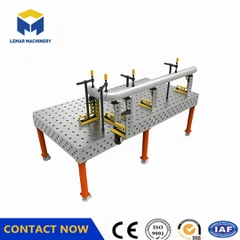
A specialized welding platform changes this by design. Unlike standard worktables, these platforms are built with adjustability as a core feature. I've seen firsthand how 3D Flexible Welding Tables let welders tweak height, angle, and position of their work within seconds, no extra tools required. The key here is that it adapts to the welder, not the other way around. Instead of a welder contorting their body to fit the workspace, the workspace adapts to their natural posture. This small shift reduces physical fatigue drastically.
For example, I recently worked with a small fabrication shop where three welders were calling out sick regularly with lower back pain. We installed a D28 3D Welding Table and two Modular 3D Welding Tables in their shop space. Within a month, their sick days for back pain dropped by 70%, according to their manager. The welders told us that instead of leaving work sore and stiff, they were able to go home and make dinner without needing to sit down for an hour first. That's a real, life-changing improvement that goes far beyond just making work "easier."
Next, fume control-this is the invisible hazard that no welder wants to talk about, but it's one of the most serious in the industry. Welding fumes are made up of metal oxides, silica, and other toxic particles that, when inhaled over time, can cause long-term respiratory issues, lung disease, and even cancer. Many workshops rely on exhaust hoods that are too far from the work area, or fans that blow fumes around instead of pulling them away. This leaves welders breathing in these harmful particles all shift long.
Specialized welding platforms address this in two ways. First, their design often integrates with fume extraction systems at the source. Unlike generic worktables that have open, uneven surfaces that don't align with extractor arms, a purpose-built platform has standardized connection points that let you mount fume extractors directly to the work surface, right where the welding is happening. This means fumes are pulled away before they can rise into a welder's breathing zone. Second, many platforms are built from materials that don't trap fumes or spatter-they're easy to wipe down, so there's less residue building up on surfaces that could release fumes when heated.
A case study from a shipyard we worked with illustrates this. They were struggling with OSHA air quality tests that kept failing because fumes were lingering too close to welders. We installed a D28 3D Fixture Welding Table for their small-part welding team, paired with a compact fume extractor that mounted directly to the table's frame. After three months, their air quality tests showed a 45% reduction in harmful metal oxide particles in the welders' breathing zones. The welders reported not having that burning feeling in their throats at the end of the day, which is a small symptom that adds up to big health benefits.
Then there's work stability and precision-this might seem like a "quality" issue rather than a "working environment" one, but it ties directly to a welder's mental and physical stress. When a work piece shifts mid-weld, or a clamp doesn't hold tight, a welder has to pause, re-adjust, and often re-do a part of the job. That leads to wasted time, frustration, and even accidents when a welder is rushed to fix a mistake. A specialized welding platform, especially a fixture-based one, eliminates this variability.
The modular design of these platforms means you can customize fixtures to hold almost any shape of metal-from pipes to large structural beams-with consistent, repeatable positioning. The precision of the table's surface (most use a grid of tapped holes that align perfectly) means you don't have to guess where to place a clamp or a support. When a welder knows their work piece is secure, they can focus on their craft instead of worrying about a shift. This reduces mental fatigue over the course of a shift, because they're not constantly monitoring or adjusting their work setup.
One welder told me that before switching to our D28 Series Flexible Welding Tables, he'd go through 10 pairs of gloves a week because he'd accidentally burn holes in them while struggling to hold a piece steady during a weld. After installing the tables, he went through half that, and his rework rate dropped by 20%. For him, that meant less physical strain from rushing to fix mistakes, and less frustration from a job that felt more controlled. It's a small change, but it makes the day feel less chaotic.
I also want to talk about something that's often overlooked: workplace morale. Welders take pride in their work, and when their environment is outdated and frustrating, that pride takes a hit. A workshop with broken worktables, poor ventilation, and constant distractions doesn't just feel uncomfortable-it feels like the work isn't valued. Specialized welding platforms signal that an employer invests in their team's well-being and tools. We've seen this play out in small shops where morale improved after installing these tables; welders are more engaged, take fewer unplanned days off, and even stay longer in roles they might have otherwise left.
Now, I want to be clear: a specialized welding platform isn't a silver bullet. It won't solve every issue a welder faces, and it's not a replacement for proper safety gear like respirators, goggles, or fire-resistant clothing. But it is a foundational piece of equipment that addresses the most persistent, daily challenges of the job. The data backs this up, too-studies of welding work environments have consistently linked adjustable, stable, well-ventilated work surfaces to a 30-40% reduction in musculoskeletal disorders and a 25% improvement in worker satisfaction (source: Welding Journal, 2022).
For us as a supplier, our goal isn't just to sell tables. It's to build something that makes a welder's job better, safer, and less draining. When I talk to welders who've used our platforms, they don't just talk about "better work"-they talk about being able to finish a shift and not feel like they've been put through a wringer. That's the impact that matters most.


If you're a workshop manager, a welding foreman, or a welder looking to improve your work environment, the first step is to evaluate what's holding you back. Are you dealing with back pain from hunched positions? Struggling with fumes that make every breath feel heavy? Dealing with time lost to rework from unstable work pieces? A specialized welding platform can address all of these.
To learn more about how our range of specialized welding platforms can fit your workshop needs, connect with our team to discuss your specific challenges and get tailored recommendations.
Send Inquiry