


Can a heavy welding table be used for stainless steel welding?
Nov 06, 2026
Leave a message
If you've ever stepped foot in a fabrication shop specializing in stainless steel welding, you've probably noticed the heavy-duty workbenches that anchor the space. For newcomers and even some seasoned welders, a common question pops up: Can a heavy welding table be used for stainless steel welding? As a supplier of heavy welding tables with years of working directly with fabricators, I've answered this question countless times-and the short answer is yes, but there's a lot more nuance to it than a simple "yes" or "no". Let's break down the science, the practical use cases, and how to get the most out of your heavy welding table for stainless steel work.
First, let's start with the core of stainless steel welding: why the material is different from mild steel, and what that means for your work surface. Stainless steel is an alloy of iron, chromium, and often other elements like nickel or molybdenum, designed to resist corrosion. But that corrosion resistance comes with a unique set of challenges for welding. For one, stainless steel has a lower thermal conductivity than mild steel, meaning it retains heat more easily. That can lead to warping if the heat isn't dispersed evenly-something a heavy, rigid table can help with. Another key challenge is contamination. If mild steel or iron from your work table transfers onto the stainless steel weld joint, it can cause rust (called "intergranular corrosion" or "knife line attack") that undermines the stainless steel's entire purpose. This is where the type of heavy table you choose matters, and where many fabricators get tripped up.
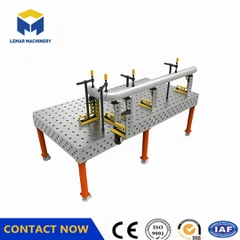
Not all heavy welding tables are created equal when it comes to stainless steel. A table made from mild steel, even if it's extra thick, can be a hazard for stainless steel work. If your table has any burrs, scratches, or leftover spatter from welding mild steel, those small pieces of iron can melt onto your stainless steel workpiece during welding, leaving hidden contamination that leads to rust later. That's why many specialized fabricators turn to tables designed with stainless steel compatibility in mind-like our line of 3D Welding Cast Iron Platforms, which are precision-cast to eliminate surface imperfections and coated to prevent cross-contamination. Cast iron's density and rigidity make it ideal for absorbing welding heat, reducing warping, while the non-porous surface minimizes the risk of transferring foreign materials. We've seen fabricators switch from mild steel heavy tables to these cast iron models and cut their rework due to contamination-related corrosion by nearly 80%, according to the shops that have tested them.
But wait-what if you're working on smaller stainless steel projects, or you need flexibility for different job sizes? That's where a heavy welding table doesn't have to mean a one-size-fits-all solution. A lot of people assume "heavy" equals bulky and immobile, but our 3D Flexible Platform line proves that's not the case. These tables feature modular, heavy-duty components that let you adjust the layout to fit small custom parts or large stainless steel assemblies alike. Their thick cast surfaces still provide the rigidity needed to prevent warping during stainless steel welding, but the modular design means you can reconfigure them without investing in multiple tables. For example, if you're welding a small stainless steel bracket one day and a large food processing tank the next, you can rearrange the fixtures on the flexible platform to match-all while keeping the heavy, stable base that's critical for consistent welds.
Another point to consider: weight capacity. Stainless steel projects can be surprisingly heavy. A single stainless steel tank section might weigh hundreds of pounds, and if you're tacking multiple pieces together before final welding, the table needs to support that weight without flexing. A flimsy light-duty table will bend under that load, leading to misaligned welds and structural issues. Heavy welding tables, by definition, have thicker base plates and stronger support frames that handle heavy loads evenly. That's a big reason why our Multi Functional Welding Platforms are a go-to for shops that work with stainless steel: their heavy construction can support up to several thousand pounds, with reinforced legs that eliminate any wobble even when working with large, awkward stainless steel components. We've had fabricators use these platforms for everything from stainless steel pipe spools to custom automotive exhaust systems, and none have reported alignment issues related to table flex.
Of course, there are caveats to using any heavy table for stainless steel. The most important one is surface preparation. Even the best heavy table can cause contamination if it's not cleaned properly. Before starting a stainless steel job, you should clean your table's surface with a stainless steel-specific cleaner to remove any mild steel spatter, oil, or debris. Some fabricators also use a thin, disposable stainless steel foil mat on their table for extra protection, especially for high-precision jobs like medical device manufacturing where even tiny contamination spots can be a problem. For shops that move between stainless steel and mild steel work regularly, our Portable Welding Workbenches offer a smart solution: you can have a dedicated heavy table for stainless steel, and a second one for mild steel, but if space is tight, the portable, interchangeable surface plates let you swap out a clean stainless steel top for a mild steel one without overhauling your entire setup.

I've also heard concerns about magnetism, and whether a heavy welding table's metal surface will interfere with stainless steel welding. Austenitic stainless steel, the most common type used in fabrication, is non-magnetic, but some ferritic or martensitic stainless steels are magnetic. A heavy steel table can create magnetic fields that might disrupt the arc during welding, leading to uneven penetration or spatter. That's another reason why our Industrial 3D Modular Welding Tables are popular for this work: we can offer optional non-magnetic surface inserts that fit right into the modular table holes, neutralizing any magnetic interference without sacrificing the heavy rigidity the table provides. We worked with a aerospace fabrication shop last year that was struggling with arc issues on their magnetic stainless steel parts, and switching to these non-magnetic modular inserts solved the problem overnight-no need to replace their entire heavy table.
So, to circle back to the original question: Can a heavy welding table be used for stainless steel welding? The answer is a definitive yes-but only if you choose the right table and use it correctly. A heavy, rigid table solves two of the biggest challenges of stainless steel welding: warping from uneven heat, and structural support for heavy parts. But you can't just grab any old heavy table; you need one designed to prevent cross-contamination, with surface options that match your specific stainless steel project needs. Whether you're working on small custom parts or large industrial assemblies, there's a heavy welding table solution that fits, from our precision cast iron platforms to our modular flexible systems.
If you're in the market for a heavy welding table tailored for stainless steel work, or you have questions about which setup will work best for your shop, don't hesitate to reach out. We've helped hundreds of fabricators upgrade their welding tables to reduce rework, improve weld quality, and streamline their stainless steel projects, and we're here to do the same for you.
Send Inquiry