


How do I test the integrity of a slotted nut?
Dec 26, 2025
Leave a message
As a slotted nut supplier, ensuring the integrity of our products is of utmost importance. Slotted nuts are widely used in various industries, from automotive to aerospace, where the reliability of fasteners can mean the difference between smooth operation and catastrophic failure. In this blog post, I'll share the methods I use to test the integrity of slotted nuts, and why these tests are crucial for maintaining high - quality standards.
Visual Inspection
The first step in testing the integrity of a slotted nut is a thorough visual inspection. This is a simple yet effective way to identify any obvious defects. When I receive a batch of slotted nuts from the manufacturing process, I start by looking for surface irregularities. Cracks on the surface of the nut can significantly weaken its structure. Even small hair - line cracks can propagate under stress, leading to failure.
I also check for proper threading. The threads should be clean, well - defined, and free from any burrs or deformities. Incorrect threading can prevent the nut from properly engaging with the bolt, which can cause loosening over time. Additionally, I examine the slots in the nut. The slots should be evenly spaced and of the correct width. Uneven slots can affect the ability to use a cotter pin or other locking mechanisms, which are essential for securing the nut in place.
Dimensional Measurement
Accurate dimensional measurement is another key aspect of testing slotted nut integrity. I use precision measuring tools such as calipers and micrometers to ensure that the nuts meet the specified dimensions. The outer diameter, inner diameter, and height of the nut must be within the tolerance range defined by the industry standards or customer requirements.
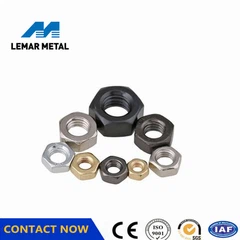
For example, if the outer diameter of a Steel Hex Castle Nut is too large, it may not fit properly in the assembly, while an undersized outer diameter can lead to a loose fit. Similarly, the pitch of the threads must be measured accurately. Any deviation from the standard pitch can result in improper mating with the bolt, reducing the clamping force and potentially causing the joint to fail.
Material Testing
The quality of the material used in the slotted nut directly impacts its integrity. To determine the material properties, I conduct several tests. One of the most common tests is hardness testing. A hardness tester is used to measure the resistance of the nut to indentation. Different applications may require nuts of specific hardness levels. For instance, in high - stress applications, a harder nut is often preferred to withstand the forces without deforming.
I also perform chemical composition analysis. This can be done using techniques such as spectroscopy. By determining the chemical composition of the nut, I can ensure that it is made from the correct alloy. For example, a slotted nut made for a corrosive environment should contain the appropriate amount of alloying elements that provide corrosion resistance. If the chemical composition is incorrect, the nut may corrode quickly, compromising its integrity.
Torque Testing
Torque testing is a critical method for evaluating the integrity of slotted nuts. When a nut is tightened onto a bolt, a specific amount of torque is required to achieve the proper clamping force. I use a torque wrench to apply a known amount of torque to the slotted nut and measure the resulting clamping force.
If the nut does not reach the expected clamping force at the specified torque, it may indicate a problem with the nut's design, material, or manufacturing process. For example, a nut with poor - quality threads may require more torque to achieve the same clamping force, which can lead to over - tightening and potential damage to the assembly. On the other hand, if the nut reaches the clamping force at a much lower torque than expected, it may be too loose and could come undone during operation.
Fatigue Testing
In many applications, slotted nuts are subjected to cyclic loading. Fatigue testing is used to simulate these cyclic loads and determine how well the nut can withstand them. I use specialized testing equipment to apply repeated loads to the slotted nut over a specified number of cycles.
During fatigue testing, I monitor the nut for signs of cracking or deformation. If a nut fails during fatigue testing, it means that it may not be suitable for long - term use in applications with cyclic loading. This type of testing is particularly important for Slotted Round Nuts used in rotating machinery, where they are constantly exposed to varying loads.
Corrosion Resistance Testing
For slotted nuts used in outdoor or corrosive environments, corrosion resistance testing is essential. I expose the nuts to a controlled corrosive environment, such as a salt - spray chamber. In this chamber, a fine mist of saltwater is sprayed onto the nuts for a specified period.
After the exposure time, I examine the nuts for signs of corrosion, such as rust or pitting. Nuts with good corrosion resistance will show minimal signs of damage, while those with poor resistance will have significant corrosion. Corrosion can weaken the nut over time, reducing its ability to provide a secure connection. For example, Hex Slotted Castle Nut used in marine applications need to have high - level corrosion resistance.
Importance of Testing for Suppliers
As a slotted nut supplier, testing the integrity of our products is not just about meeting industry standards; it's about building trust with our customers. By ensuring that our slotted nuts are of the highest quality, we can prevent product failures, reduce the risk of accidents, and save our customers from costly repairs and downtime.


Our customers rely on us to provide them with reliable fasteners that will perform well in their applications. Whether it's an automotive manufacturer assembling engines or an aerospace company building aircraft, the quality of our slotted nuts is a critical factor in their success. By conducting comprehensive tests, we can identify and address any issues before the nuts reach our customers.
Contact for Purchase and洽谈
If you are in the market for high - quality slotted nuts, I invite you to contact us. Our team of experts is ready to assist you in finding the right slotted nuts for your specific needs. We offer a wide range of slotted nuts, including Steel Hex Castle Nut, Slotted Round Nuts, and Hex Slotted Castle Nut.
We take pride in our commitment to quality and customer satisfaction. Let's have a discussion about your requirements and how we can meet them with our top - notch products.
References
- ASME Standards for Fasteners
- ASTM International Standards for Metal Testing
- Machinery's Handbook for information on nuts and bolts
Send Inquiry