

How do you identify the grade of a bolt?
Jul 16, 2026
Leave a message
Identifying the grade of a bolt is super important, both for us as a bolts supplier and for our customers. You see, the grade of a bolt tells you a lot about its strength, quality, and where it's best used. I'm gonna share with you how we figure out a bolt's grade and why it matters.
First off, let's talk about why bolt grades are a big deal. Different applications need different levels of strength. For example, if you're building a small piece of furniture, you don't need the same high - strength bolts as you would for a big industrial structure. Using the wrong grade of bolt can lead to all sorts of problems, like the bolt breaking under stress, which could cause the whole thing to fall apart.
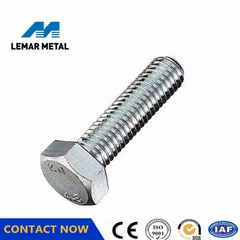
One of the easiest ways to identify a bolt's grade is by looking at the markings on the head. These markings are like little clues that tell you what the bolt is made of and how strong it is. For instance, in the metric system, bolts are often marked with numbers like 8.8, 10.9, or 12.9. The first number times 100 gives you the minimum tensile strength in megapascals (MPa), and the second number divided by 10 gives you the ratio of the yield strength to the tensile strength. So, a Class 10.9 bolt Class 10.9 Hex Flange Bolt has a minimum tensile strength of 1000 MPa and a yield strength that's 90% of the tensile strength.
In the imperial system, things are a bit different. Bolts are often marked with lines, dots, or other symbols. For example, a Grade 5 bolt usually has three radial lines on the head, while a Grade 8 bolt has six radial lines. These markings are standardized, and if you know what to look for, you can quickly tell the difference between different grades.


Another important factor is the material the bolt is made of. Bolts can be made from a variety of materials, such as carbon steel, stainless steel, and alloy steel. Carbon steel bolts are the most common and are usually used in general - purpose applications. They can be heat - treated to increase their strength. Stainless steel bolts are great for applications where corrosion resistance is important, like in outdoor structures or in the food and beverage industry. Alloy steel bolts are used when you need even higher strength, and they're often used in heavy - duty machinery and automotive applications.
We can also use some simple tests to get an idea of a bolt's grade. One of these is the hardness test. A harder bolt is usually stronger. We can use a hardness tester to check the hardness of the bolt. If the bolt is too soft, it might not be able to handle the load it's supposed to. Another test is the torque test. By applying a specific amount of torque to the bolt, we can see how it responds. A high - grade bolt should be able to withstand a certain amount of torque without breaking or deforming.
Now, let's talk about some of the bolts we offer as a supplier. We have a great selection of J Bolt with Washers and Nuts. These are often used in construction to anchor structures to concrete. They come in different grades, and it's important to choose the right one depending on the load and the environment.
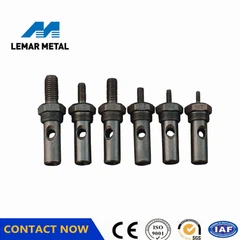
We also have Hex Head Shoulder Bolt. These bolts are commonly used in machinery and equipment. They have a smooth shoulder that allows for a precise fit and movement. Again, the grade of these bolts is crucial for ensuring the proper functioning of the machinery.
As a bolts supplier, we make sure to provide our customers with accurate information about the grade of each bolt we sell. We know that using the right grade of bolt is essential for the safety and reliability of any project. Whether you're a DIY enthusiast working on a small home project or a professional contractor building a large - scale structure, we've got the right bolts for you.
If you're in the market for bolts and need help identifying the right grade for your specific application, don't hesitate to reach out to us. We're here to offer our expertise and make sure you get the best bolts for your needs. We can answer all your questions and guide you through the selection process.
In conclusion, identifying the grade of a bolt is a combination of looking at the markings, considering the material, and sometimes performing simple tests. It's a crucial step in ensuring the success of any project that involves bolts. So, if you're planning a project, take the time to figure out the right grade of bolt, and if you need any help, we're just a message away.
Send Inquiry