

How does a lock nut work?
Jul 15, 2025
Leave a message
A lock nut, also known as a prevailing torque nut or a self - locking nut, is a crucial component in various mechanical and industrial applications. As a lock supplier, I've witnessed firsthand the importance and functionality of lock nuts in ensuring the safety and reliability of countless assemblies. In this blog, I'll delve into how a lock nut works, its different types, and its applications.
The Basic Principle of a Lock Nut
At its core, the primary function of a lock nut is to prevent loosening due to vibration, rotation, or other dynamic forces. Traditional nuts rely on the friction between the nut and the bolt threads to stay in place. However, under constant vibration or movement, this friction can decrease over time, leading to the nut gradually backing off.
Lock nuts address this problem by introducing an additional locking mechanism. This mechanism creates a higher level of resistance to rotation, ensuring that the nut remains securely fastened to the bolt. There are several ways lock nuts achieve this, and different types of lock nuts use different methods.
Types of Lock Nuts and Their Working Mechanisms
Nylon Insert Lock Nuts
Nylon insert lock nuts are one of the most common types. These nuts have a nylon collar inserted into the top portion of the nut. When the nut is tightened onto the bolt, the nylon collar is compressed against the threads of the bolt. The nylon material deforms around the threads, creating a high - friction interface.
The nylon insert provides a prevailing torque, which means that there is a consistent resistance to rotation even after the nut is fully tightened. This resistance is independent of the tightening torque applied to the nut. As a result, the nylon insert lock nut can withstand vibrations and prevent loosening effectively. For example, in automotive engines, where there are high levels of vibration, nylon insert lock nuts are often used to secure components such as engine mounts and intake manifolds. You can find a wide range of high - quality nylon insert lock nuts in our product catalog.
Metal Lock Nuts
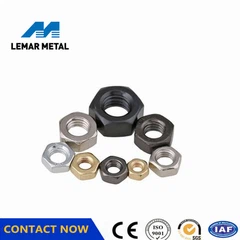
Metal lock nuts use various metal - based locking mechanisms. One common type is the prevailing torque metal lock nut, which has a deformed section at the top of the nut. When the nut is tightened onto the bolt, the deformed section is forced back into its original shape, creating a tight fit against the bolt threads.
Another type is the split - lock nut. A split - lock nut has a slot cut through one side and a small gap at the top. When the nut is tightened, the slot allows the nut to be compressed slightly, increasing the friction between the nut and the bolt threads. The split - lock nut is often used in applications where a high level of security is required, such as in aircraft and heavy machinery.


Serrated Lock Nuts
Serrated lock nuts have serrations on one or both of their faces. When the nut is tightened, the serrations bite into the surface of the mating part, creating a locking effect. The serrations increase the friction between the nut and the surface, preventing the nut from rotating. Serrated lock nuts are commonly used in applications where there is a risk of the nut loosening due to relative movement between the components, such as in electronic enclosures and furniture assembly.
Applications of Lock Nuts
Lock nuts are used in a wide variety of industries and applications. In the automotive industry, they are used to secure critical components such as wheels, brakes, and suspension systems. The vibrations and forces generated during vehicle operation can cause traditional nuts to loosen, which could lead to serious safety issues. Lock nuts ensure that these components remain securely fastened at all times.
In the aerospace industry, where reliability is of utmost importance, lock nuts are used in aircraft engines, landing gear, and other critical systems. The high - performance requirements of aerospace applications demand lock nuts that can withstand extreme conditions, including high temperatures, pressures, and vibrations.
In the construction industry, lock nuts are used in steel structures, bridges, and other large - scale projects. They help to ensure the stability and integrity of the structures by preventing the loosening of bolts due to wind, seismic activity, or other external forces.
Our Lock Products
As a lock supplier, we offer a wide range of lock products to meet the diverse needs of our customers. In addition to lock nuts, we also have other high - quality locks such as the Polished Brass Padlock. This padlock is made of polished brass, which not only provides excellent corrosion resistance but also has an attractive appearance. It is suitable for both indoor and outdoor use, such as securing gates, cabinets, and storage units.
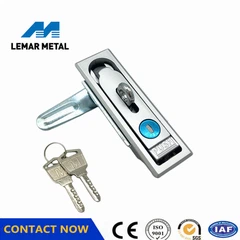
We also have the MS828 Connecting Rod Lock. This lock is designed for use in connecting rod assemblies, providing a reliable locking solution to prevent the disconnection of rods due to vibration or movement. It is widely used in machinery and equipment where connecting rods are critical components.
Another product in our portfolio is the Truck Bolt Latch. This latch is specifically designed for trucks and other heavy - duty vehicles. It ensures that the cargo compartments and other parts of the truck remain securely closed during transportation, preventing any accidental opening that could lead to safety hazards.
Why Choose Our Locks
Our locks are manufactured using high - quality materials and advanced production techniques. We have a strict quality control system in place to ensure that every lock we produce meets the highest standards of quality and performance. Our team of experts has extensive experience in the lock industry, and we are committed to providing our customers with the best products and services.
Whether you are an automotive manufacturer, an aerospace engineer, or a construction contractor, we have the right lock products for your needs. Our lock nuts are designed to provide reliable locking solutions, and our other lock products are also carefully crafted to meet the specific requirements of different applications.
Contact Us for Procurement
If you are interested in our lock products, including lock nuts, padlocks, connecting rod locks, and truck bolt latches, we invite you to contact us for procurement. Our sales team is ready to assist you with any questions you may have and to provide you with detailed product information and pricing. We look forward to establishing a long - term business relationship with you and helping you find the perfect locking solutions for your projects.
References
- "Mechanical Design Handbook" by Joseph E. Shigley, Charles R. Mischke, and Richard G. Budynas.
- "Fasteners and Joining" by John H. Bickford.
- Industry standards and specifications related to lock nuts and other locking devices.
Send Inquiry