

How to avoid over - welding of weld nuts?
Dec 25, 2025
Leave a message
As a weld nut supplier, I've witnessed firsthand the challenges that manufacturers face when it comes to welding processes, especially the issue of over - welding. Over - welding of weld nuts can lead to a range of problems, including material distortion, reduced joint strength, and increased production costs. In this blog, I'll share some effective strategies to avoid over - welding of weld nuts.
Understanding the Problem of Over - Welding
Before we delve into the solutions, it's essential to understand what over - welding is. Over - welding occurs when too much heat is applied during the welding process. This excessive heat can cause the base material and the weld nut to melt more than necessary, leading to a larger and weaker weld bead. The high heat can also result in thermal stress, which may cause the welded parts to warp or crack over time.
One of the most common signs of over - welding is a large, irregularly shaped weld bead. Instead of a smooth, well - defined bead, an over - welded joint may have a rough, spattered appearance. Additionally, over - welding can reduce the strength of the joint. The excessive heat can change the microstructure of the materials, making them more brittle and less able to withstand stress.
Selecting the Right Weld Nut
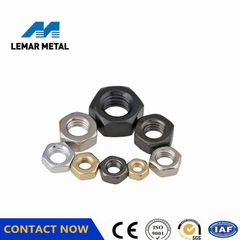
The first step in avoiding over - welding is to select the appropriate weld nut for the application. Different types of weld nuts are designed for specific welding processes and materials. For example, Square Spot Welding Nut is suitable for spot welding applications, where a concentrated heat source is used to create a weld at specific points. These nuts are designed to have a specific geometry that allows for efficient heat transfer and a strong weld.
Similarly, Square Weld Nut is another option that provides a larger contact area, which can help distribute the heat more evenly during welding. This can reduce the risk of over - welding by preventing the heat from concentrating in one area. Hexagon Spot Welding Nut is also a popular choice, especially for applications where a high - strength joint is required.


When selecting a weld nut, it's important to consider the material of the base metal. The weld nut should be made of a material that is compatible with the base metal to ensure a strong and reliable weld. For example, if the base metal is steel, a steel weld nut would be a suitable choice.
Controlling Welding Parameters
Another crucial factor in avoiding over - welding is controlling the welding parameters. The three main parameters that need to be carefully adjusted are current, voltage, and time.
- Current: The welding current determines the amount of heat generated during the welding process. A higher current will produce more heat, which can lead to over - welding if not properly controlled. It's important to select the appropriate current based on the size and type of the weld nut, as well as the thickness of the base metal. A general rule of thumb is to start with a lower current and gradually increase it until the desired weld quality is achieved.
- Voltage: The voltage affects the arc length and the stability of the welding process. A too - high voltage can cause the arc to become unstable, leading to uneven heat distribution and over - welding. On the other hand, a too - low voltage may result in insufficient heat for a proper weld. It's important to find the optimal voltage for the specific welding application.
- Time: The welding time is also a critical parameter. A longer welding time will result in more heat being applied to the joint, increasing the risk of over - welding. It's important to determine the appropriate welding time based on the size and type of the weld nut, as well as the welding current and voltage.
Using Welding Fixtures
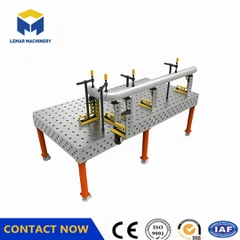
Welding fixtures can play a significant role in avoiding over - welding. A welding fixture is a device that holds the weld nut and the base metal in place during the welding process. It ensures that the parts are properly aligned and that the welding is done at the correct location.
A well - designed welding fixture can also help control the heat transfer during welding. For example, it can provide a heat sink to absorb excess heat, preventing it from causing over - welding. Additionally, a welding fixture can help maintain a consistent distance between the weld nut and the base metal, which is essential for achieving a uniform weld.
Employee Training
Proper employee training is essential for avoiding over - welding. Welders should be trained on the correct welding techniques, including how to select the right weld nut, adjust the welding parameters, and use welding fixtures. They should also be educated on the signs of over - welding and how to troubleshoot problems.
Training programs should include both theoretical and practical components. Theoretical training can cover topics such as welding principles, material properties, and safety procedures. Practical training should allow welders to practice their skills on actual welding equipment under the supervision of experienced trainers.
Quality Control
Implementing a comprehensive quality control program is crucial for ensuring that over - welding does not occur. Quality control measures can include visual inspection, non - destructive testing, and mechanical testing.
Visual inspection is the simplest and most common method of quality control. Welders should visually inspect the welded joints for signs of over - welding, such as large, irregular weld beads or signs of material distortion. Non - destructive testing methods, such as ultrasonic testing or X - ray testing, can be used to detect internal defects in the weld, such as cracks or porosity. Mechanical testing, such as tensile testing or shear testing, can be used to determine the strength of the welded joint.
Conclusion
Avoiding over - welding of weld nuts is a critical aspect of the welding process. By selecting the right weld nut, controlling the welding parameters, using welding fixtures, providing employee training, and implementing a quality control program, manufacturers can significantly reduce the risk of over - welding.
If you're in the market for high - quality weld nuts and need expert advice on avoiding over - welding, I encourage you to reach out to us. Our team of experts can help you select the right weld nut for your application and provide you with the support you need to ensure a successful welding process.
References
- Welding Handbook, American Welding Society
- Fundamentals of Welding Technology, Lincoln Electric
- Material Science and Engineering: An Introduction, William D. Callister Jr. and David G. Rethwisch
Send Inquiry