




How to determine the appropriate load - bearing capacity of a 3D precision welding table for my work?
Sep 11, 2026
Leave a message
Determining the appropriate load - bearing capacity of a 3D precision welding table is crucial for ensuring the safety, efficiency, and quality of your welding work. As a supplier of 3D precision welding tables, I understand the importance of this decision and am here to guide you through the process.
Understanding the Basics of Load - Bearing Capacity
The load - bearing capacity of a 3D precision welding table refers to the maximum amount of weight that the table can safely support without experiencing significant deformation or damage. This capacity is determined by several factors, including the table's material, design, and construction.
Material
The material of the welding table plays a vital role in its load - bearing capacity. Common materials for 3D precision welding tables include high - strength steel and cast iron. High - strength steel is known for its excellent strength - to - weight ratio, which means it can support heavy loads while remaining relatively lightweight. Cast iron, on the other hand, is extremely rigid and can withstand high pressures. For example, our Metal Welding Table is made of high - quality steel, which provides a good balance between strength and durability.
Design and Construction
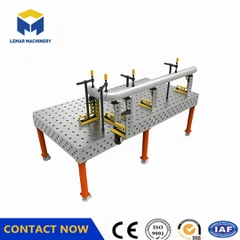
The design of the welding table also affects its load - bearing capacity. A well - designed table will have a sturdy frame and a uniform surface distribution to ensure that the weight is evenly distributed. Reinforced corners and edges can also increase the table's stability. Our 3D Welding Table D28 Series features a unique design that maximizes the load - bearing capacity while maintaining precision. The construction process, including welding and assembly techniques, also impacts the table's overall strength.
Assessing Your Work Requirements
Before determining the appropriate load - bearing capacity, you need to assess your specific work requirements. Consider the following factors:
Type of Welding
Different types of welding processes may require different load - bearing capacities. For instance, Automatic Laser Welding Platform may involve lighter workpieces and less force compared to Arc Welding Platform, which may require a more robust table to handle the heavier equipment and the force generated during the welding process.
Size and Weight of Workpieces
The size and weight of the workpieces you will be welding on the table are significant factors. If you frequently work with large and heavy components, you will need a table with a higher load - bearing capacity. For example, if you are working on large metal structures, a table with a load - bearing capacity of several tons may be necessary. On the other hand, if you are working on smaller, more delicate parts, a table with a lower load - bearing capacity may suffice.
Additional Equipment
In addition to the workpieces, you also need to consider any additional equipment that will be placed on the table, such as clamps, fixtures, and welding torches. These items add to the overall weight on the table and should be factored into your load - bearing capacity calculation. Our 3D Welding Fixture Table is designed to accommodate various fixtures and equipment, but you still need to ensure that the total weight does not exceed the table's capacity.
Calculating the Required Load - Bearing Capacity
Once you have assessed your work requirements, you can calculate the required load - bearing capacity. Here is a simple step - by - step guide:
- Determine the weight of the workpiece: Weigh the heaviest workpiece you expect to weld on the table. If you don't have a scale, you can estimate the weight based on the material and dimensions of the workpiece.
- Add the weight of additional equipment: Calculate the total weight of all the additional equipment, such as clamps, fixtures, and welding torches, that will be placed on the table during the welding process.
- Consider dynamic loads: In addition to the static weight of the workpiece and equipment, you also need to consider dynamic loads. Dynamic loads occur when there is movement or vibration during the welding process, such as when using a welding robot. A general rule of thumb is to add an extra 20 - 30% to the total static weight to account for dynamic loads.
For example, if the weight of the heaviest workpiece is 500 kg, and the weight of the additional equipment is 100 kg, the total static weight is 600 kg. Adding 30% for dynamic loads, the required load - bearing capacity would be 600 kg+(600 kg * 0.3)= 780 kg.
Safety Margins
It is always advisable to leave a safety margin when selecting the load - bearing capacity of a 3D precision welding table. A safety margin provides an extra buffer to account for any unexpected loads or variations in the welding process. A common safety margin is around 10 - 20%. So, if your calculated required load - bearing capacity is 780 kg, you may want to choose a table with a load - bearing capacity of at least 858 - 936 kg.
Testing and Certification
When purchasing a 3D precision welding table, it is important to ensure that the table has been tested and certified for its load - bearing capacity. Reputable suppliers, like us, conduct rigorous testing on their tables to ensure that they meet or exceed industry standards. Look for tables that have been tested by independent third - party organizations and come with a certification of compliance.
Choosing the Right Table
Based on your calculated load - bearing capacity and safety margin, you can now choose the right 3D precision welding table for your work. Our company offers a wide range of welding tables with different load - bearing capacities to meet the diverse needs of our customers. Whether you need a table for light - duty welding or heavy - duty industrial applications, we have the perfect solution for you.
Conclusion
Determining the appropriate load - bearing capacity of a 3D precision welding table is a critical step in ensuring the success of your welding work. By understanding the factors that affect load - bearing capacity, assessing your work requirements, calculating the required capacity, and leaving a safety margin, you can choose a table that will provide a stable and reliable platform for your welding operations.
If you are in the market for a high - quality 3D precision welding table, we invite you to contact us to discuss your specific needs. Our team of experts is ready to help you find the perfect table for your work.


Send Inquiry