

How to improve the durability of a modular flexible welding table?
Nov 23, 2026
Leave a message
If you've ever worked in a welding shop, you know how much a modular flexible welding table is more than just a flat work surface. It's the backbone of every job-holding pieces steady, letting you adjust to different projects, and keeping your team safe while you shape metal. But as a supplier who's spent years talking to welders, fabricators, and shop managers, I've heard the same frustration again and again: tables that wear out fast, bend under heavy loads, or rust after a few months of use. The good news is, improving your table's durability isn't just about buying a pricier model-it's about smart choices in materials, maintenance, and how you use it day to day.


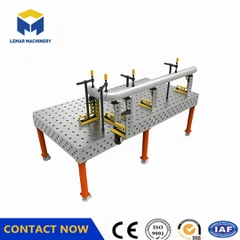
Let's start with the foundation: the table's core construction. When I first got into this line of work, I thought all 3D welding tables were the same, but that's far from true. The material and build quality make all the difference in how long it lasts. For example, our D28 Steel 3D Welding Table is made from thick, high-tensile steel that's rated for heavy loads-up to several thousand pounds, depending on the size. I've seen cheaper tables bend just from holding a medium-sized steel frame, but a solid steel core holds up year after year. Even better, look for tables that use a precision-machined grid of holes, not drilled holes. Drilling leaves rough edges that can crack under pressure or let fixtures shift unexpectedly. Machined holes are uniform, so your clamps and fit-up gear sit tight, and the table's surface stays smooth for longer.
Speaking of fit-up gear, that's another area where durability starts. If you're using low-quality clamps, supports, or pins with your table, even a great table will wear out fast. That's why I always recommend pairing your table with high-grade components, like you'll find on a Welding Table With Welding Fit Up Kit. Our fit-up kits are made from the same heat-treated steel as the table itself, so they resist bending and stripping even when you're tightening clamps with a heavy-duty torque wrench. I once visited a shop that used generic clamps on their modular table; after six months, half the clamps' threads were worn down, and they had to replace the whole kit. Since switching to our fit-up kits, they haven't had to replace a single clamp in two years. That's not just a cost saver-it's a sign of parts that are built to last.
Next up: surface treatment, which is key to fighting the two biggest enemies of welding tables: rust and heat damage. Welding is a hot process-sparks, slag, and intense heat can eat away at a table's surface if it's not protected. A lot of cheap tables use a basic paint or powder coat that chips off after a few welds, leaving bare steel to rust. That's why we offer Nitrided Welding Fixture Tables, where the surface goes through a nitriding process. Nitriding infuses nitrogen into the top layer of the steel, creating a hard, corrosion-resistant shell that can handle heat, slag, and even exposure to moisture far better than standard coatings. I've seen nitrided tables in shops that run 12-hour shifts, five days a week, still look like new after three years. If nitriding isn't an option, choose a table with a dual-layer powder coat-look for one that's at least 80 microns thick, not the thin 30-micron coats you'll find on budget tables. And no matter what coating you have, it's important to touch up chips as soon as they happen to stop rust from spreading.
Adjustability is what makes modular tables flexible, but it can also be a weak point if not built right. That's why our 3D Adjustable Welding Table is designed with heavy-duty adjustment mechanisms, not flimsy screws or weak hydraulics. We've seen competitors' adjustable tables where the legs shift or the surface wobbles after a few months of use, because they use lightweight components. Our adjustable tables use gear-driven lifting systems and thick steel legs that lock into place with precision pins, so you can raise or lower the table for different projects-from small auto parts to large structural steel beams-without worrying about it failing. One fabricator we work with does custom agricultural equipment, which means moving from small brackets to 10-foot long frames on a single table. He's had our adjustable table for four years, and he says the adjustment system still works as smoothly as the day he installed it. The key here is to avoid forcing adjustments-always make sure the table is unloaded before raising or lowering it, that's a small habit that goes a long way in keeping the mechanisms working.
Maintenance might not sound exciting, but it's the single biggest thing you can do to extend your table's life. I talk to shop managers all the time who skip basic upkeep, and their tables show it. Let's break down the routine maintenance that takes 10 minutes a week, not hours:
First, clean slag and debris after every use. Welding slag is abrasive, and if it sits in the table's holes or on the surface, it can scratch the coating, cause rust, or even jam fixtures. I've seen tables where slag builds up in the holes so much that you can't insert a clamp pin-someone had to use a punch to clear it, and ended up damaging the hole. A wire brush or a small air gun to blow out holes after each job will prevent that. Some of our customers even use a silicone seal on their table's surface when they're not using it, to keep moisture out if their shop is in a humid area.
Second, inspect fixtures and clamps regularly. Even high-quality parts can wear out if you're using them on a daily basis. Check clamp threads for stripping, pins for bending, and any welds on fixtures for cracks. If you notice a small crack, don't ignore it-grind it out and re-weld it, or replace the part. A small damaged part can put extra strain on the table, leading to bigger problems down the line.
Third, protect your table from heavy impacts. Welding tables aren't meant to be used as anvils, and dropping heavy parts from waist height can dent the surface or bend the grid. I once had a customer who would drop 50-pound steel plates onto his table to move them around; within a year, the surface had a dozen deep dents, and the surrounding steel was stretched. Even if it's not a structural weld table, treating it gently goes a long way. If you need to move heavy parts, use a hoist or a dolly, not just your hands dropping them onto the work surface.
Another often-overlooked factor is how you store and transport your table, if you need to move it for jobs. Modular tables are designed to be taken apart and reassembled, but if you're not careful during disassembly, you can damage parts. When taking the table apart, label each section of the grid and each set of fixtures so you don't mix up parts from different tables. Store screws, pins, and small parts in a labeled bin, so you don't lose them or bend them. If you're transporting the table, make sure each section is wrapped in a soft material, like a moving blanket, to prevent scratches during shipping. I've seen customers try to transport a table without wrapping it, only to arrive at the job site and find the surface covered in road grime and small dents that would have been avoidable.
Wait, let's also talk about load management, because even the sturdiest table will wear out fast if you overload it. Every modular table has a weight capacity, and it's there for a reason. If you're regularly holding parts that are heavier than the table's rating, the surface will bend, the grid will stretch, and the holes will lose their alignment. Our D28 Steel 3D Welding Table, for example, has a load capacity of 6,600 pounds for the standard size, but if you try to put 8,000 pounds on it, you're asking for damage. I recommend distributing the weight evenly, too-don't put all the weight on one corner of the table. If you're working with large, heavy assemblies, use additional support fixtures, like our fit-up kit's cross supports, to spread the load across the table's surface. That way, you're not putting unnecessary strain on any one part.
I've seen too many shops buy a cheap modular table, only to have to replace it every two years, when investing a little more in a high-quality table and following these tips would have made it last 10 years or more. The cost difference is small compared to the downtime and replacement costs. For example, one small fabricator I work with was using a budget table that cost him $1,500 every 2 years. He decided to invest in our Nitrided Welding Fixture Table, which cost $5,000, and he's had it for 7 years now-still going strong. That's a $5,500 savings over 14 years, not to mention the time he doesn't have to spend replacing tables or fixing damage.
If you're looking to upgrade your current welding table or invest in a new one, take the time to compare materials, surface treatments, and build quality. A table is an investment in your shop, and its durability will directly impact your productivity and bottom line. Whether you're working on small hobby projects or large industrial fabrication, choosing the right table and caring for it properly will ensure it works for you for years.
If you're ready to explore modular flexible welding tables that are built for long-term durability, or have questions about which table is right for your shop, don't hesitate to reach out for procurement and consultation. We can help you find the perfect table that fits your workflow and needs.
Send Inquiry