

What is the price - to - performance ratio of the D28 Welding Table?
Nov 24, 2026
Leave a message
Hey folks, if you're in the welding fabrication game-whether you're a small shop owner, a seasoned line welder, or a production manager at a mid-sized metal shop-you've probably heard the hype about modular welding tables, especially the D28 variety. But here's the big question everyone's dancing around: what's the actual price-to-performance ratio of a D28 welding table? As someone who's been supplying these tables for years, I don't just throw numbers at you- I break this down like I would with a regular at my shop, no jargon, no fluff. Let's dive in.
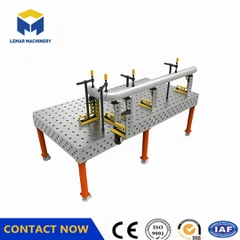
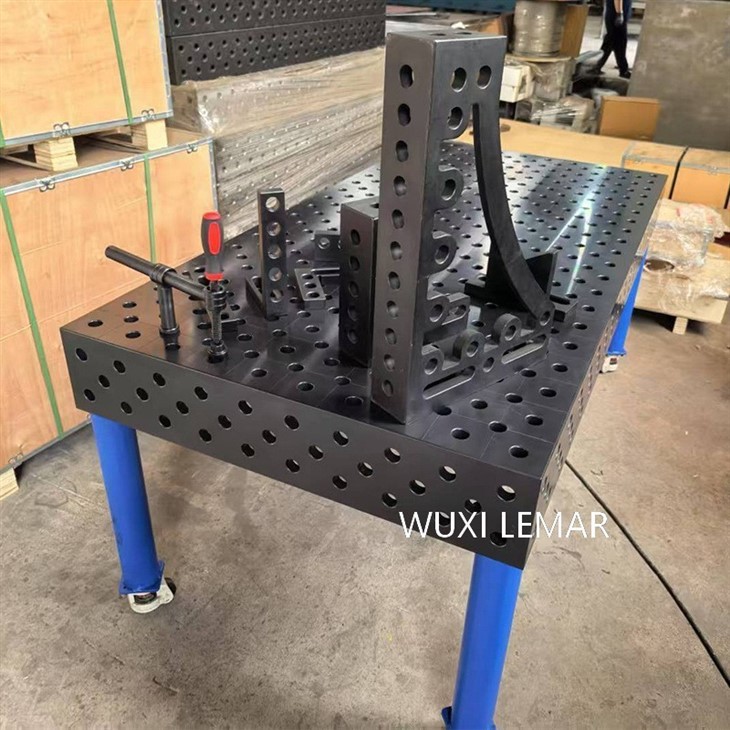
First, let's get on the same page about what a D28 table even is. Those numbers aren't just random-they refer to the 28mm holes drilled across the table surface, right? Standardized for D28 fixturing, which is the sweet spot for most MIG, TIG, and arc welding jobs. It's modular, so you can swap out clamps, stops, and fixtures in seconds instead of wrestling with custom jigs every time. Now, price-to-performance ratio isn't just "how much does it cost vs. how well does it work." It's about value over time, not just the upfront tag. Let's start with the price side, then layer in performance to see how they stack up.
Upfront, a D28 welding table isn't the cheapest table on the block. You can find cheap steel tables at big box hardware stores for $200, but those are flimsy, unthreaded, and won't hold up to repeated clamping or high-heat welding. A basic D28 table from a reliable supplier (yep, that's us) starts around $1,200 for a 4x4 foot table, and goes up to $2,500+ for a 6x3 or larger with extra accessories. Wait, that's a big jump- but let's not stop there. Let's talk performance, because that's where the ratio makes sense.
Performance for a welding table boils down to three things: precision, durability, and versatility. Precision matters because if your table's holes are misaligned, your welds will be off, leading to rework. We've tested our D28 tables-each hole is CNC-drilled to within 0.1mm tolerance, so your clamps line up every single time. No guessing, no adjusting, just consistent welds. Then durability: our tables are made from heavy-duty 15mm steel plate, coated with a rust-preventive finish. I can't tell you how many customers come back and say their old tables rusted after 6 months in a shop with humidity- that's a waste of money. Our Rust Prevention 3D Welding Table System is a big part of that; it's not just a paint job, it's a multi-step process that holds up to spatter, weld heat, and daily cleaning.
Versatility is another big win for D28. Unlike a dedicated jig table for one specific part, our D28 tables work for everything from small MIG welds on bicycle frames to large fabrication projects like custom steel racks. You can add a Jig Table For Welding insert if you need a tighter fit, or swap out fixtures on the fly. A lot of welders love that one table can replace 2 or 3 custom jigs- that's less clutter in the shop, less time spent switching setups, and more welds per day. Let's do a quick math check here: if a custom jig costs $500 each, and you need 2 jigs to handle different jobs, that's $1,000 right there, plus the labor to build each one. The D28 table might cost $1,200 upfront, but you're not paying for multiple jigs- you're getting one table that does the work of several. That's where the performance starts to balance the price.
Wait, let's not ignore the hidden costs of a cheaper table. If you buy a $300 non-D28 table, you'll soon realize the holes are too small or too big for standard clamps, so you have to buy specialized tools that cost another $300. The flimsy steel bends after a few months, so you have to replace it, and the rust will eat through the surface, making it impossible to clamp tight. Suddenly, that $300 table ends up costing you $1,000 in replacements and tools within a year. The D28 table? It lasts 10+ years with minimal upkeep, and the accessories (clamps, stops) are interchangeable with other D28 systems, so you don't have to buy new stuff when you expand.
Another angle: time is money for welders. How long does it take to set up a weld on a D28 table vs. a regular table? I've had customers time it- setting up a bracket on a D28 takes 2 minutes with quick-clamps, vs. 15 minutes on a regular table because you're measuring, marking, and using makeshift clamps. If a welder makes $25 an hour, that's a 13-minute difference per setup. Over a week, that's 2.5 extra hours of welding time- that's $62.50 in revenue they're making instead of wasting time. Multiply that over a year, and it's thousands of dollars in extra work, not to mention less frustration for your team.
Let's talk about specific use cases to make this real. A MIG welding table is another big category- our MIG Welding Table is a D28 table optimized for the higher spatter that comes with MIG welding. The surface has a textured finish that makes spatter easy to scrape off, so you don't have to spend hours grinding rust and spatter off every week. Compare that to a cheap table where spatter welds itself to the surface, pitting the steel and making it hard to clamp. For someone doing mostly MIG welds, that extra time saved alone is worth the price difference.
Then there's fabrication work. If you're a small fabrication shop building custom metal parts, a Fabrication Welding Fixture Table is a D28 table that acts like a custom jig but without the custom price tag. You can build fixtures on the table as you go, adjusting as needed, instead of paying a welder to build a custom jig that only works for one part. That's huge for small shops that do batch jobs- you can switch from a batch of 10 bike racks to a batch of 5 steel tables in an hour, no new tools required.
Now, let's get back to the core question: price-to-performance ratio. Let's split it into two parts: upfront ratio and long-term ratio. Upfront, the D28 table is 3-4x more expensive than a basic non-modular table, but here's the thing: it doesn't need to be replaced, it works for every job, and it cuts setup time drastically. Long-term, the ratio flips hard. A cheap table has a ratio that drops fast because you're paying for replacements, rework, and lost time. The D28 table's ratio stays consistent for years because you're getting consistent performance, no hidden costs, and more output.
Wait, I should mention a common misconception: some people think "modular" means cheap, but no- the precision of D28 holes, the heavy steel, and the rust prevention are what drive the price. Those aren't extra features; they're the foundation that makes the table perform. If a supplier cuts corners on CNC drilling, the holes are off, and your welds will be inconsistent. Cut corners on steel thickness, and the table bends under heavy welding loads. Cut corners on rust prevention, and you're back to replacing it in a year. That's why our D28 tables are built to last- we've got customers who've had their tables for 12 years, still use them every day, and only replace a clamp here and there.
Let's do a quick example for a 10-person welding shop. Each welder sets up 5 jobs a day. If each setup takes 10 minutes less with a D28 table, that's 50 minutes per welder, 10 welders = 500 minutes (8.3 hours) of extra welding time a day. At $25 an hour, that's $207.50 per day, $1,037.50 a week, $53,950 a year. That's more than the cost of a D28 table setup (one 6x3 table + accessories is around $2,500, plus maybe 2 smaller tables for $1,500 total) and that's just the labor savings. You also cut down on rework because the table's precision means less misaligned welds, which is another big cost saver- rework can be 20-30% of a shop's total labor, so even a 10% reduction from better precision adds up.
Is there a case where a D28 table isn't worth it? If you're a hobbyist welding 1-2 times a month, maybe a basic table works. But for anyone making money welding- even a small one-man shop- the time savings, versatility, and durability make the D28's price-to-performance ratio unbeatable. You're not buying a table; you're buying a tool that makes you money, not just costs you money.
Let's wrap this up with a quick recap. The D28 welding table's price is higher upfront, but its performance- precision, durability, versatility, time savings- eliminates the hidden costs of cheaper tables. Whether you're looking for a rust-preventive system, a jig table, a modular fixture, a MIG-specific table, or a fabrication fixture table, the D28 line is built to fit your needs without the hassle of custom jigs or frequent replacements.
If you're ready to see how a D28 table would work for your shop, or you want a custom quote based on your job types, reach out to us. We're here to talk through your specific needs, not just push a product. We've helped everything from small hobby shops to large production lines find the right D28 setup, so don't hesitate to connect with us to start your conversation.

Send Inquiry