

How to use a Fabrication Welding Fixture Table for multi - pass welding?
Sep 06, 2026
Leave a message
Hey there, welding enthusiasts! As a supplier of Fabrication Welding Fixture Tables, I'm super stoked to share some tips on how to use these bad boys for multi - pass welding. Whether you're a seasoned pro or just starting out in the welding game, this guide is gonna be your go - to resource.
Understanding the Basics of a Fabrication Welding Fixture Table
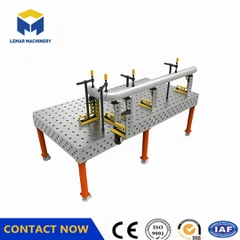
First things first, let's get a clear idea of what a Fabrication Welding Fixture Table is. It's a specialized table designed to hold your workpiece securely during the welding process. This stability is crucial, especially when you're doing multi - pass welding. With a good fixture table, you can ensure that your welds are consistent and precise.
We offer a variety of tables, like the 16series 3D Welding Table Standard. This bad boy is a game - changer. It has a modular design, which means you can customize it according to your specific welding needs. You can add or remove different fixtures and tools, making it super versatile for multi - pass welding.
Preparing the Table for Multi - Pass Welding
Before you start welding, you need to prep your Fabrication Welding Fixture Table. The first step is cleaning. Make sure the table surface is free from any dirt, grease, or debris. This will ensure good contact between the table and your workpiece, which is essential for a solid weld.
Next, you'll want to set up your fixtures. Depending on the shape and size of your workpiece, you can use different types of clamps, v - blocks, and other fixtures to hold it in place. Our Welding Fixture Table With Legs comes with a sturdy base, and you can easily attach the fixtures to the table surface.
Once your workpiece is secured, double - check its alignment. This is really important for multi - pass welding because any misalignment can lead to uneven welds. Use a straightedge or a level to make sure your workpiece is perfectly aligned.
Setting Up for the First Pass
Now that your table is ready, it's time to set up for the first pass. Start by adjusting your welding machine settings. The settings will depend on the type of metal you're welding, the thickness of the workpiece, and the welding process you're using. For example, if you're using TIG welding, you'll need to set the correct amperage, voltage, and gas flow rate.


Our Tig Welding Table Top is specifically designed for TIG welding. It has a smooth surface that helps in achieving a clean and precise weld.
When you're ready to start welding, make sure you have a good grip on your welding torch. Start the arc at one end of the joint and slowly move the torch along the joint. Keep a consistent speed and angle to ensure a uniform weld bead.
Making Subsequent Passes
After the first pass, you'll need to make subsequent passes to build up the weld. Before you start the next pass, it's important to clean the weld bead from the previous pass. Use a wire brush to remove any slag or spatter. This will ensure good fusion between the new and old weld beads.
As you make subsequent passes, you may need to adjust your welding settings slightly. For example, you might need to increase the amperage a bit to ensure proper penetration. Pay close attention to the appearance of the weld bead. If it looks too wide or too narrow, you may need to adjust your speed or the angle of the torch.
Our High - Quality Modular 3D Welding Platform provides a stable base for making multiple passes. You can easily re - position your workpiece if needed, without losing its alignment.
Cooling and Inspection
Once you've completed all the passes, it's important to let the weld cool down slowly. Rapid cooling can cause the weld to crack, so give it some time to cool naturally.
After the weld has cooled, inspect it carefully. Look for any signs of cracks, porosity, or incomplete fusion. If you find any defects, you can use a grinder to remove the defective area and then re - weld it.
Maintenance of the Fabrication Welding Fixture Table
To keep your Fabrication Welding Fixture Table in top condition, regular maintenance is a must. After each use, clean the table surface to remove any welding spatter or debris. You can use a mild detergent and water to clean the table, and then dry it thoroughly.
Our Anti - Rust 3D Welding Table System is designed to resist rust, but it's still a good idea to apply a light coat of oil to the table surface periodically. This will help protect it from corrosion.
Why Choose Our Fabrication Welding Fixture Tables
We take pride in offering high - quality Fabrication Welding Fixture Tables. Our tables are made from durable materials and are designed to withstand the rigors of multi - pass welding. They're also highly customizable, so you can tailor them to your specific needs.
Whether you're working on small projects in your home workshop or large - scale industrial jobs, our tables are up to the task. We've got a wide range of options to choose from, and our customer service team is always ready to help you find the right table for your needs.
Let's Connect
If you're interested in purchasing a Fabrication Welding Fixture Table for your multi - pass welding projects, don't hesitate to reach out. We're here to answer any questions you might have and help you make the best choice for your welding needs. Contact us today to start the conversation and take your welding to the next level!
Send Inquiry