


What are the markings on a square nut?
Jul 16, 2025
Leave a message
Hey there! As a supplier of square nuts, I often get asked about the markings on these little but crucial fasteners. In this blog, I'm gonna break down what those markings mean and why they matter.
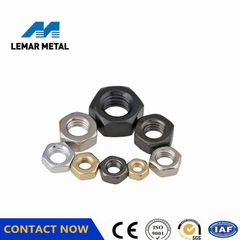
First off, let's understand what a square nut is. It's a type of nut with a square shape, which provides a larger surface area for a wrench to grip compared to a hexagonal nut. This makes it ideal for applications where high torque is required or where the nut needs to be tightened in a confined space. We offer a variety of square nuts, including Steel Captive Nut, Carbon Steel Square Nut, and Square Thin Nut.
Now, let's dive into the markings. The markings on a square nut can tell you a lot about its properties and specifications. Here are some of the most common markings you'll find:
Size Markings
One of the most important markings on a square nut is its size. This is usually indicated by a number that represents the diameter of the bolt that the nut is designed to fit. For example, a "1/2" marking means that the nut is designed to fit a 1/2-inch diameter bolt. The size marking is crucial because using the wrong size nut can lead to a loose or unstable connection, which can be dangerous in many applications.
Thread Markings
Another important marking is the thread type. There are two main types of threads: coarse and fine. Coarse threads are typically used in applications where speed of assembly is important, while fine threads are used in applications where a more precise fit is required. The thread marking is usually indicated by a number and a letter, such as "UNC" for Unified National Coarse or "UNF" for Unified National Fine.
Material Markings
The material of the nut is also an important factor, and it's often indicated by a marking. For example, "C" might stand for carbon steel, which is a common and cost-effective material for square nuts. Stainless steel nuts might be marked with "SS" to indicate their corrosion-resistant properties. Different materials have different strengths, corrosion resistances, and other properties, so it's important to choose the right material for your specific application.
Grade Markings
Grade markings indicate the strength of the nut. Higher grade nuts are stronger and can withstand more stress without breaking. The grade marking is usually a number or a series of numbers and letters. For example, a grade 8 nut is stronger than a grade 5 nut. Understanding the grade of the nut is crucial, especially in applications where safety and reliability are paramount, such as in automotive or aerospace industries.
Manufacturer Markings
Many square nuts also have markings that identify the manufacturer. This can be a logo, a brand name, or a code. Manufacturer markings are useful for quality control and for tracing the origin of the nut in case of any issues. It also gives you an idea of the reputation and quality standards of the company that produced the nut.


Why Do These Markings Matter?
You might be wondering why all these markings are so important. Well, for starters, they help you choose the right nut for your application. If you're working on a project that requires a high-strength nut, you can look for the appropriate grade marking. If you're dealing with a corrosive environment, you can choose a nut with the right material marking.
These markings also ensure safety. Using the wrong nut can lead to mechanical failures, which can cause accidents and injuries. By paying attention to the markings, you can make sure that you're using the correct nut for the job, which helps prevent these types of issues.
In addition, markings are important for compliance. In many industries, there are strict regulations regarding the use of fasteners. The markings on the nuts help ensure that you're using compliant products, which is essential for meeting industry standards and avoiding legal issues.
How to Read the Markings
Reading the markings on a square nut might seem a bit confusing at first, but it's actually quite simple once you know what to look for. Start by looking for the size marking, as this will give you the basic information about the nut's compatibility with a bolt. Then, look for the thread, material, grade, and manufacturer markings. If you're still unsure, you can always refer to the manufacturer's documentation or contact us for help.
Our Square Nut Offerings
As a supplier, we take pride in offering a wide range of high-quality square nuts. Our Steel Captive Nut is a great option for applications where a secure and captive connection is required. It's designed to stay in place during assembly, which can save time and reduce the risk of losing the nut.
Our Carbon Steel Square Nut is a popular choice for many general-purpose applications. It offers a good balance of strength and cost, making it a cost-effective solution for a wide range of projects.
If you need a thinner nut for applications where space is limited, our Square Thin Nut is the way to go. It provides a similar function to a regular square nut but with a reduced profile.
Conclusion
In conclusion, the markings on a square nut are not just random symbols. They provide valuable information about the nut's size, thread type, material, grade, and manufacturer. By understanding these markings, you can choose the right nut for your application, ensure safety, and meet compliance requirements.
If you're in the market for square nuts, we'd love to help you find the perfect ones for your needs. Whether you're a DIY enthusiast working on a home project or a professional in a large-scale industry, we have the expertise and the products to meet your requirements. Don't hesitate to reach out to us for more information or to start a procurement discussion. We're here to make sure you get the best square nuts for your projects.
References
- Machinery's Handbook, 31st Edition
- Fastener Standards Handbook
Send Inquiry