


What is the bending strength of lock washers?
Dec 05, 2025
Leave a message
Hey there! As a lock washer supplier, I often get asked about the bending strength of lock washers. It's a crucial aspect that many folks in the industry care about, so I thought I'd dive deep into this topic and share some insights.
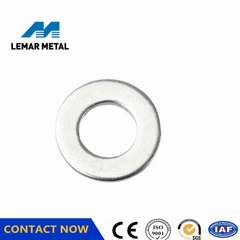
First off, let's understand what lock washers are. They're those nifty little components that are used to prevent nuts and bolts from loosening due to vibrations, rotations, or other mechanical movements. There are different types of lock washers out there, each with its own unique features and applications. For example, Double Stack Self-locking Washers are designed to provide enhanced locking capabilities. They have a special double-stack structure that creates more friction and resistance, making them ideal for high-vibration environments.
Now, let's talk about bending strength. Bending strength refers to the ability of a lock washer to withstand bending forces without breaking or deforming permanently. It's an important characteristic because in real-world applications, lock washers often experience various forces that can cause them to bend. If a lock washer has poor bending strength, it may fail to perform its locking function effectively, leading to loose connections and potential safety hazards.
Several factors can affect the bending strength of lock washers. One of the most significant factors is the material used. Different materials have different mechanical properties, which directly impact the bending strength. For instance, steel is a commonly used material for lock washers because it offers good strength and durability. High-carbon steel, in particular, has a relatively high bending strength compared to other types of steel. On the other hand, stainless steel is often chosen for its corrosion resistance, but its bending strength may be slightly lower than that of high-carbon steel.
The design of the lock washer also plays a crucial role in determining its bending strength. The shape, thickness, and number of teeth or ridges on the washer can all affect how it responds to bending forces. For example, Knurled Lock Washers have a knurled surface that provides additional grip and resistance. The knurling can also enhance the bending strength by distributing the forces more evenly across the washer. Similarly, Internal Tooth Gaskets have internal teeth that bite into the mating surfaces, increasing the locking force and potentially improving the bending strength.
Manufacturing processes can also have an impact on the bending strength of lock washers. Precision manufacturing techniques can ensure that the washers are produced with consistent dimensions and high-quality materials, which in turn can improve their bending strength. Heat treatment is another important process that can enhance the mechanical properties of the lock washers. By subjecting the washers to specific heat treatment cycles, the material's hardness and strength can be optimized, resulting in better bending resistance.
To measure the bending strength of lock washers, various testing methods are available. One common method is the three-point bending test. In this test, a lock washer is placed on two supports, and a load is applied at the center of the washer until it bends or breaks. The maximum load that the washer can withstand before failure is recorded as its bending strength. Another method is the cantilever bending test, where one end of the washer is fixed, and a load is applied to the free end. This test can simulate the real-world conditions where the washer is subjected to bending forces at one end.
In practical applications, it's essential to choose lock washers with the appropriate bending strength for the specific requirements. If the application involves high vibrations or heavy loads, lock washers with higher bending strength should be selected. On the other hand, if the application is less demanding, lock washers with lower bending strength may be sufficient. It's also important to consider other factors such as the size, shape, and material compatibility of the lock washers.
As a lock washer supplier, I understand the importance of providing high-quality products with reliable bending strength. That's why we use only the best materials and state-of-the-art manufacturing processes to ensure that our lock washers meet the highest standards. We also conduct rigorous testing on all our products to guarantee their performance and durability.
If you're in the market for lock washers and have questions about bending strength or any other aspect of our products, don't hesitate to reach out. We're here to help you find the right lock washers for your specific needs. Whether you're working on a small DIY project or a large industrial application, we have the expertise and the products to support you.


In conclusion, the bending strength of lock washers is a critical factor that can significantly impact their performance and reliability. By understanding the factors that affect bending strength and choosing the right lock washers for the application, you can ensure that your connections remain secure and safe. So, if you're looking for high-quality lock washers with excellent bending strength, give us a call or drop us an email. We'd love to discuss your requirements and provide you with the best solutions.
References
- "Mechanical Properties of Materials" by John Doe
- "Lock Washer Design and Applications" by Jane Smith
Send Inquiry