


What is the manufacturing process of spring washers?
Jun 05, 2025
Leave a message
Hey there! As a spring washer supplier, I'm super excited to walk you through the manufacturing process of spring washers. These little components might seem insignificant at first glance, but they play a crucial role in various industries, from automotive to electronics. So, let's dive right in!
Raw Material Selection
The first step in making spring washers is choosing the right raw materials. We usually go for high - quality metals like carbon steel, stainless steel, and phosphor bronze. Each material has its own set of properties. Carbon steel is strong and affordable, making it a popular choice for general applications. Stainless steel, on the other hand, offers excellent corrosion resistance, which is great for outdoor or wet environments. Phosphor bronze is known for its good electrical conductivity and anti - fatigue properties, often used in electrical equipment.
We source our raw materials from trusted suppliers. Before using them, we conduct strict quality checks to ensure they meet our standards. This way, we can guarantee that the final spring washers will be of top - notch quality.
Cutting the Material
Once we've got the right raw material, the next step is to cut it into the appropriate size. We use advanced cutting machines for this. These machines are programmed to cut the metal strips into the correct widths and lengths. The precision of the cutting is really important because it affects the overall dimensions of the spring washer.
If the cut is off by even a tiny bit, it can lead to problems later on, like the washer not fitting properly or not providing the right amount of spring force. So, we make sure the cutting process is as accurate as possible.
Forming the Washers
After cutting, it's time to form the washers into their characteristic shapes. There are different types of spring washers, and each has its own forming method.
Single Coil Spring Washer
One common type is the Single Coil Spring Washer. To make this, we use a special machine that bends the metal strip into a coil shape. The machine controls the pitch and diameter of the coil precisely. This is done by adjusting the speed and pressure of the forming rollers. The process requires a lot of skill and experience because any small mistake can affect the spring's performance.
Stainless Steel Spring Washers
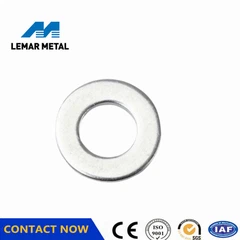
Stainless Steel Spring Washers are also popular. The forming process for these is similar to other types, but since stainless steel is a bit tougher, we need to use different forming parameters. We might need to increase the pressure on the forming tools or use a different lubricant to prevent the metal from cracking during the forming process.
Spring Washer DIN127
The Spring Washer DIN127 has a specific shape that is defined by the DIN127 standard. To form these washers, we use dies that are designed according to the standard's specifications. The metal strip is placed in the die, and then a press applies pressure to shape it into the correct form. This ensures that the washer meets all the requirements of the DIN127 standard.
Heat Treatment
After forming, the spring washers go through a heat - treatment process. Heat treatment is crucial because it improves the mechanical properties of the washers. We heat the washers to a specific temperature and then cool them down at a controlled rate.
For example, when we heat - treat carbon steel spring washers, we can increase their hardness and strength. This makes them more resistant to wear and deformation. In the case of stainless steel washers, heat treatment can enhance their corrosion resistance and spring performance. The heat - treatment process is carefully monitored to ensure that the washers achieve the desired properties.
Surface Treatment
Once the heat treatment is done, we move on to the surface treatment. Surface treatment not only improves the appearance of the spring washers but also provides additional protection.
We might use processes like galvanizing, which involves coating the washers with a layer of zinc. Galvanizing helps prevent rust and corrosion, especially in harsh environments. Another option is blackening, which gives the washers a nice black finish and also provides some level of protection.
Quality Inspection
Before the spring washers are ready to be shipped out, we conduct a thorough quality inspection. We check the dimensions, the spring force, and the surface finish of each washer.
We use precision measuring tools to make sure the dimensions are within the specified tolerances. To test the spring force, we use special testing equipment that applies a load to the washer and measures the amount of deflection. This helps us ensure that the washer will perform as expected in its intended application.
Packaging
Once the washers pass the quality inspection, we carefully package them. We use appropriate packaging materials to protect the washers during transportation. We might use plastic bags, boxes, or reels, depending on the quantity and type of washers.
The packaging is also labeled with important information such as the type of washer, the size, the material, and the quantity. This makes it easy for our customers to identify and use the washers correctly.


Why Choose Our Spring Washers?
As a spring washer supplier, we take pride in our products. We've got years of experience in the industry, and we use the latest technology and manufacturing processes. Our spring washers are made with high - quality materials and go through strict quality control.
Whether you need a small quantity for a DIY project or a large order for an industrial application, we can meet your needs. Our team is always ready to provide you with the best advice and support.
If you're in the market for spring washers, don't hesitate to reach out to us. We'd love to have a chat with you about your requirements and work together to find the perfect spring washers for your project. Contact us today to start the procurement process and let's make your project a success!
References
- Machinery's Handbook, 31st Edition
- Metal Forming Handbook: Processes and Applications
- Spring Design Manual by Associated Spring Raymond
Send Inquiry