

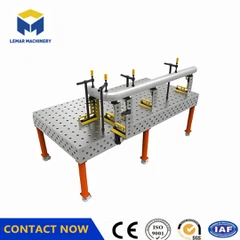
How to determine if a 3D welding table needs pre-tightening?
Feb 16, 2026
Leave a message
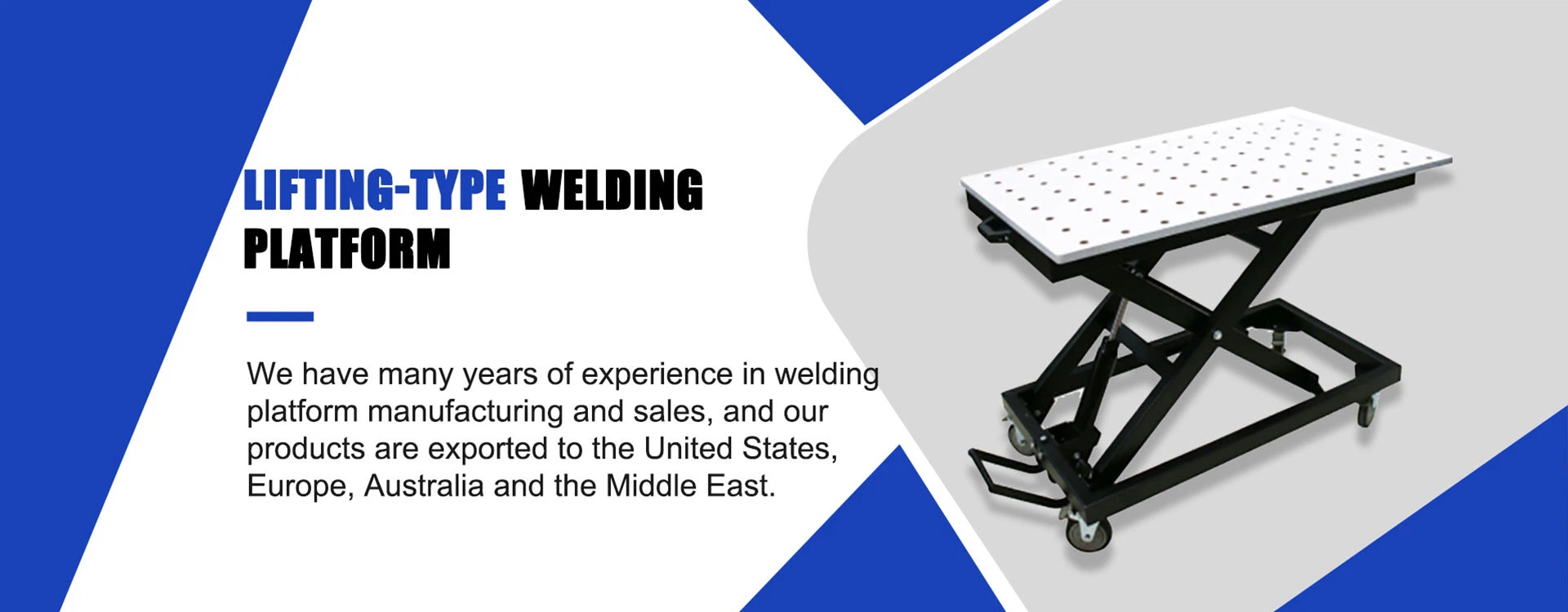
Abnormal Levelness: Use an electronic level or autocollimator to measure at multiple locations on the table. If the readings deviate from the platform's design tolerance (e.g., ±0.1mm/1000mm), or if bubbles are noticeably off-center to the naked eye, pre-tightening is necessary.
Frequent Welding Defects: If the weld exhibits inconsistencies such as undercut, uneven penetration, or excessive weld reinforcement, and welding process and welder operation factors have been ruled out, it is likely due to platform flatness exceeding tolerances.
Abnormal Physical Condition: Abnormal vibrations, unusual noises, or overloading/impacts on the platform can affect support stability, requiring a check of the pre-tightening status.
Operational Procedure: Pre-tightening involves adjusting the outriggers or support bolts to achieve a level platform, ensuring welding accuracy and stability.
Note: Pre-tightening is a mechanical leveling process and cannot replace professional calibration. If the flatness error is large (e.g., exceeding 0.1mm), professional scraping and repair are required.

Send Inquiry