



How do I calibrate a heavy - duty welding table?
Oct 21, 2026
Leave a message
As a supplier of heavy - duty welding tables, I understand the critical role that a well - calibrated welding table plays in the welding process. A properly calibrated welding table ensures precision, stability, and high - quality welds. In this blog, I'll share my insights on how to calibrate a heavy - duty welding table.
Understanding the Importance of Calibration
Before delving into the calibration process, it's essential to recognize why calibration is so important. A heavy - duty welding table is the foundation of any welding project. If it's not calibrated correctly, it can lead to inaccurate welds, misaligned parts, and a host of other problems. For instance, if the table surface is not level, the welded components may not fit together properly, leading to structural weaknesses in the final product. Moreover, an uncalibrated table can cause stress on welding equipment, reducing its lifespan and increasing maintenance costs.
Tools Required for Calibration
To calibrate a heavy - duty welding table, you'll need several tools. These include a precision level, a straight edge, a set of feeler gauges, and a measuring tape. A precision level is crucial for determining if the table surface is perfectly horizontal. A straight edge helps in checking the flatness of the table, while feeler gauges are used to measure small gaps and clearances. A measuring tape is useful for taking overall dimensions and ensuring that the table is square.
Step - by - Step Calibration Process
Step 1: Initial Inspection
The first step in calibrating a heavy - duty welding table is to conduct a thorough visual inspection. Look for any signs of damage, such as cracks, dents, or warping on the table surface and the frame. Check the mounting points and ensure that they are securely attached. Any loose or damaged parts should be repaired or replaced before proceeding with the calibration.
Step 2: Leveling the Table
Using a precision level, place it at different points along the length and width of the table. Start by checking the four corners. If the bubble in the level is not centered, adjust the leveling feet of the table. Most heavy - duty welding tables come with adjustable feet that can be turned to raise or lower specific areas of the table. Make small adjustments and recheck the level until the bubble is centered at all four corners. Then, check the middle section and the diagonals of the table to ensure that the entire surface is level. A perfectly level table is essential for accurate welding, especially when working on large - scale projects.
Step 3: Checking Flatness
After leveling the table, it's time to check its flatness. Place a long straight edge across the table surface. Use feeler gauges to measure the gaps between the straight edge and the table. If there are any significant gaps, it indicates that the table surface is not flat. In such cases, you may need to use a surface grinder or other machining tools to correct the flatness. However, this should be done carefully to avoid removing too much material and compromising the integrity of the table.
Step 4: Verifying Squareness
Squareness is another critical aspect of a welding table. To check the squareness, measure the diagonals of the table using a measuring tape. In a perfectly square table, the two diagonals will have the same length. If there is a difference in the diagonal lengths, the table is not square. Adjust the frame or the joints of the table to correct the squareness. This may involve loosening and tightening bolts or using shims to adjust the position of the table legs.
Step 5: Calibrating Holes and Fixtures
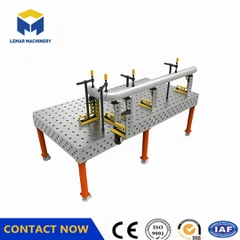
Many heavy - duty welding tables, such as the Professional 3D Welding Table and Modular 3D Welding Table, come with holes and fixtures for clamping and positioning workpieces. It's important to ensure that these holes and fixtures are properly aligned. Use a precision drill or a reamer to correct the size and position of the holes if necessary. Check the alignment of clamps and other fixtures using a straight edge and feeler gauges. The Clamping System Platform should be able to hold workpieces securely without causing any misalignment.
Step 6: Final Checks
Once you have completed the above steps, perform a final inspection. Recheck the level, flatness, squareness, and the alignment of holes and fixtures. Make any necessary adjustments. It's also a good idea to test the table with a sample welding project to ensure that everything is working as expected.
Maintenance for Long - Term Calibration
Calibration is not a one - time process. To ensure that your heavy - duty welding table remains calibrated over time, regular maintenance is required. Keep the table clean and free of debris. Wipe down the surface after each use to prevent the accumulation of welding spatter, dust, and other contaminants. Lubricate the moving parts, such as the leveling feet, to prevent rust and ensure smooth operation. Periodically re - check the calibration, especially after any significant use or if the table has been moved.
Choosing the Right Welding Table
When purchasing a heavy - duty welding table, it's important to choose a high - quality product. Our range of welding tables, including the Welding Table Top With Holes and D28 Welding Table, are designed to meet the highest standards of quality and durability. They are made from high - grade materials and undergo strict quality control measures to ensure accurate calibration right from the start.


Conclusion
Calibrating a heavy - duty welding table is a crucial process that requires attention to detail and the right tools. By following the steps outlined in this blog, you can ensure that your welding table is level, flat, square, and properly aligned. Regular maintenance will help to keep it calibrated over time. If you're in the market for a high - quality heavy - duty welding table, or if you have any questions about calibration or table maintenance, feel free to contact us for a purchasing consultation. We're here to help you find the perfect welding table for your needs and ensure that you can achieve the best results in your welding projects.
Send Inquiry